Two governments quietly pulled a rare financial fire alarm, and within hours the world’s biggest currency pair snapped hard in the other direction.
Story Snapshot
- Japan and the United States confirmed a coordinated yen-buying operation to counter a sharp slide in the currency.
- The move triggered an immediate drop in the dollar and a jump in the yen, breaking a four-decade low.
- Officials say the intervention targeted “excessive volatility and disorderly movements,” not long-term manipulation.
- This is the first joint yen support by Washington and Tokyo in decades, and they openly signal they may do it again.
Japan and the United States step into the currency market
Japan’s Finance Ministry said it carried out coordinated yen-buying with the United States to stop “excessive volatility and disorderly movements” in the currency after a steep slide against the dollar. The ministry framed the move as a direct response to the yen hitting fresh forty-year lows, which threatened to push up living costs for Japanese households already dealing with higher energy prices. Officials made clear they did not see this as routine tinkering, but as an emergency brake on a disorderly market.
The yen’s fall had become severe enough that both countries treated it as a risk to economic and financial stability, not just a problem for traders. Japan’s Finance Minister Satsuki Katayama said the government “will not hesitate to conduct further joint intervention” if needed, signaling that this was not a one-off gesture but the start of a standing defense line against sharp swings. That kind of language matters because it tells large investors the authorities are now an active player in the price range for the dollar-yen pair.
How the coordinated intervention unfolded
The sequence began when Japan conducted major yen-buying and dollar-selling in New York trading, estimated around $50–60 billion, to push back against the currency’s slide. Around the same window, the United States Treasury, working through the Federal Reserve Bank of New York, informed several banks that it might intervene in the yen market and told them to “stand ready for future action.” Those rate checks and readiness calls are widely seen as the United States putting real weight behind Japan’s move, even if Washington has not released detailed trade logs.
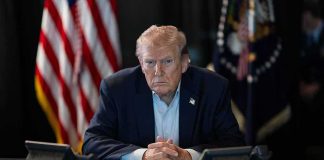
President Trump later said the United States joined the operation “to support the Japanese currency,” describing it as both a sign of friendship and a move he expected would still benefit American interests. Treasury Secretary Scott Bessent acknowledged the action in a post on X, saying the United States stepped in to help fight “disorderly” movements in the yen and was prepared to keep assisting Japan. That public confirmation matters because it removes any doubt that this was a coordinated policy decision, not just parallel moves or rumors on trading desks.
What happened to the dollar and yen after the move
Markets reacted fast. Surprise yen purchases by Japan, combined with the United States calls for quotes and intervention signals, triggered a sharp snap-back in the exchange rate. Bloomberg reported that the yen gained as much as 3.3 percent against the dollar during New York trading after the maneuvers. The dollar weakened visibly, and the widely watched dollar-yen pair broke lower from levels near four-decade highs, giving Japanese importers and households some relief from the worst of the slide.
Japan and the United States both framed this reaction as proof that the operation had “countered excessive volatility and disorderly movements” in the yen over recent months. Japan’s statement stressed that the goal was to stabilize the market, not to drive the currency to a specific cheap or expensive level for trade advantage. That aligns with a joint policy line the two countries set earlier: they agreed that exchange rates should be largely set by markets, but left room for intervention when moves become chaotic and threaten broader stability.
Why this episode is rare and why it matters now
This is the first time since 1998 that Japan and the United States have jointly bought yen to support its value; the last major coordinated action was in 2011, when they sold yen to weaken it after a post-earthquake surge. That history shows the tool is reserved for moments when currency swings collide with national interests, not everyday policy tweaks. Academic work on Japan’s past interventions finds they are most effective when they are large and coordinated with the Federal Reserve System, producing strong but usually temporary moves in exchange rates.
US & Japan jointly intervene in FX. USD/JPY broke below 157, yen jumped 1% intraday. Japan MOF confirms coordinated action with US Treasury. Bessent says "ready to continue." Since 1998, US coordinated FX intervention is 3-for-3. Short yen at your own risk.#Yen #Forex #BOJ pic.twitter.com/XldKC4gknk
— 人类股市观察家 (@YoooJJ8cm) August 3, 2026
Japanese officials say this latest episode follows that principle: use foreign-exchange intervention to “contain excessive fluctuations in foreign exchange rates and to stabilize them,” rather than to rewrite the long-term trend. From a common-sense conservative view, this looks less like “currency manipulation” and more like fire-fighting in a market that was starting to break from fundamentals. Both governments are trying to keep inflation, savings, and trade from being whipsawed by leveraged bets and panic selling, while still claiming to respect market forces most of the time.
Open questions about scale and staying power
Some details remain under wraps. Neither Japan nor the United States has released a full transaction ledger showing exact amounts, timing, and counterparties for their operations, and estimates of Japan’s trades vary around the mid tens of billions of dollars. There is also limited public evidence so far on how direct the United States’ yen buying was versus signaling through banks and rate checks. That kind of secrecy is standard in foreign-exchange work, but it leaves analysts guessing about the true scale and balance of the joint effort.
Research and past experience suggest that such coordinated interventions often move currencies sharply in the short term, but may not lock in a new trend unless they are repeated and paired with broader policy shifts. Japan and the United States have already signaled they “will not hesitate” to act again if volatility returns. For savers, retirees, and workers watching the dollar and yen from afar, the key takeaway is simple: when moves get wild enough, the people in charge of the money system will step in, and when they do, big markets can turn on a dime.
Sources:
youtube.com, bloomberg.com, reuters.com, nytimes.com, economictimes.indiatimes.com, wellington.com, nber.org, x.com, boj.or.jp, facebook.com