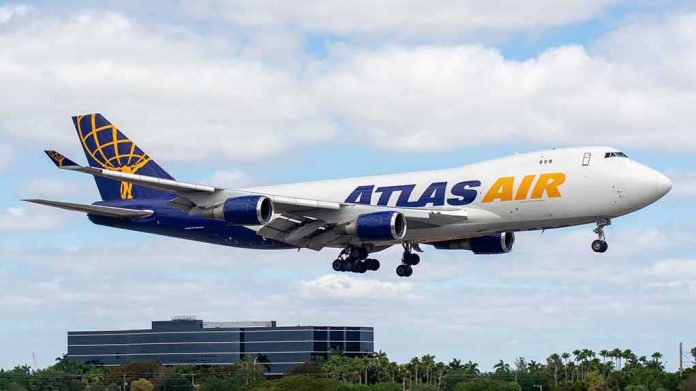
Runway overruns are among aviation’s most stubborn risks, and when a heavy freighter runs out of pavement at a major hub, the consequences cascade from the fence line to the national air system.
The Short Version
- A 21 Air–operated Boeing 767-300 flying for Amazon Prime Air overran a runway while landing at Miami International Airport around 2 p.m. local time.
- The aircraft departed San Juan, Puerto Rico, and came to rest beyond the runway’s end near the airport’s northwest perimeter.
- Miami-Dade officials reported five people dead and five injured; a large fire-rescue response fought flames and managed multiple patients.
- Airport operations were halted under an FAA ground stop; federal investigators opened a runway excursion probe.
What happened: a heavy freighter, a long runway, and not enough stopping distance
The Federal Aviation Administration identified the flight as 21 Air Flight 7598, a Boeing 767-300 cargo aircraft operating for Amazon’s Prime Air network. The jet overran a diagonal runway at Miami International Airport (MIA) shortly after 2 p.m. local time and came to rest beyond the airport boundary on the northwest side. The airplane had departed Luis Muñoz Marín International Airport in San Juan, Puerto Rico, earlier that afternoon, a routine sector for widebody freighters serving South Florida’s logistics corridor. An Amazon spokesperson confirmed the aircraft was operating within Amazon’s air cargo operation under contract with 21 Air.
Miami-Dade authorities described a violent sequence at the perimeter, with the aircraft leaving the runway, breaching the fence, and igniting amid nearby vehicles. Mayor Daniella Levine Cava reported five fatalities and five injuries linked to the crash, a toll that framed the gravity of an event that unfolded on the edge of one of the nation’s busiest airports. Miami-Dade Fire Rescue dispatched roughly 60 units to attack intense flames and manage multiple patients, emblematic of how fast an airport incident becomes a multi-agency urban emergency when it spills beyond the runway environment.
Airport operations and immediate response
Airport officials said the aircraft was disabled at the northwest end of the field, and the scale of the response forced a full stop to operations. All runways and taxiways were initially closed as of 3 p.m., with an FAA ground stop holding inbound departures until responders contained the fire and stabilized the scene. The mix of perimeter traffic control, hazardous-materials management for jet fuel, and medical triage underscored the complexity of a runway excursion that intersects public roadways and industrial zones just outside the fence line.
Amazon stated its priority was the safety and care of everyone involved and confirmed cooperation with authorities. The FAA began the standard accident process, with inspectors on scene and the National Transportation Safety Board’s runway excursion protocols expected to guide recovery of the flight data and cockpit voice recorders, interviews with the crew and controllers, and detailed inspections of landing systems and braking components.
Why runway overruns happen: mechanics of stopping a 767
“Runway excursion” is the umbrella term for leaving the end or side of the runway during takeoff or landing. On landing, an overrun means rollout continued beyond the available pavement—either because the aircraft touched down too far downfield, arrived too fast for the condition, or failed to decelerate as designed due to degraded braking, contaminated surfaces, or system malfunctions. Industry safety bodies have long tracked excursions as a leading accident category in commercial aviation; Flight Safety Foundation’s data show hundreds of landing excursions in their database, with roughly half being overruns rather than veer-offs. IATA and EASA definitions are consistent: an overrun is the landing roll exceeding runway end, often through a multifactor chain rather than a single failure.
Stopping a 767 relies on layered defenses: wheel brakes as the primary energy absorber; autobrakes to set target deceleration; spoilers to dump lift and put weight on wheels; and thrust reversers to augment deceleration by redirecting engine flow forward. On a dry, long runway such as Miami’s main surfaces, a properly flown approach and normal system performance provide ample margin for a freighter’s landing weight. That margin erodes quickly if any element slips—an approach a few knots fast, a float in ground effect, a touchdown past the aim point, a wet or rubber-polished surface, a delayed deployment of spoilers, or a brake or reverser abnormality. The investigation will parse those variables from the recorders and the physical evidence on the runway and beyond.
Context that matters: familiar pattern, high stakes near the fence
Within minutes of a high-visibility airfield event, the operational picture hardens: airport authorities protect the scene, the FAA imposes a ground stop if surfaces are blocked, and public attention locks onto brand identifiers on the fuselage. The Miami event followed that script. Multiple outlets carried consistent core facts—21 Air operating an Amazon-branded 767, a runway overrun near 2 p.m., flames at the perimeter, a sweeping emergency response, and an FAA investigation—reflecting the standard choreography after a serious runway excursion at a major U.S. hub. The overrun subtype is statistically common compared with rarer in-flight structural failures, which is why accident investigators and airport planners have invested decades in mitigation, from stabilized-approach criteria to runway safety areas and engineered materials arresting systems (EMAS) where terrain and space permit.
Runway safety areas, the graded zones beyond runway ends designed to reduce damage in an overrun, are typically 1,000 feet long where feasible at certificated airports. Not every runway can provide the full dimension due to legacy layout and surrounding infrastructure; when space is constrained, EMAS (crushable concrete beds) or other mitigations stand in. Miami’s diagonal and perimeter geometry place aircraft near public roads and warehouses, a reality that elevates risk to people on the ground when a landing goes wrong at speed.
What remains appropriately unresolved—and what will resolve it
Authorities have not publicly detailed where the deceased were located—on board the aircraft or in vehicles struck at the perimeter—nor have they specified the precise sequence of impacts. That distinction, while deeply important to affected families and liability determinations, does not alter the core safety classification: a landing overrun with post-impact fire and third-party involvement at the fence line. The FAA and NTSB will reconstruct the approach path, touchdown point, braking profile, and crew actions using flight-data and cockpit-voice recordings, air traffic control audio, runway skid marks, and maintenance histories. Preliminary factual information often arrives within weeks; definitive causal findings typically follow in a final report months later, sometimes more than a year for complex cases.
For practitioners—pilots, dispatchers, airport operators—the durable lessons tend to echo across events: protect stabilized-approach gates; brief and use timely go-arounds when gates are busted; respect contaminated braking penalties; maintain runway friction and rubber removal; and verify the health of spoilers, autobrakes, antiskid, and reversers after any anomaly. For communities around airports, land-use planning that avoids high-occupancy roads directly off runway ends and preserves adequate safety areas remains one of the most consequential mitigations available.
Deadly Amazon cargo plane crash in Miami investigated by FAA, NTSB – CBS News https://t.co/NiUbGIYQw5
— WeToldYou2016✍🏻 (@seeCFC) September 7, 2026
Why this incident will shape policy conversations again
When a widebody leaves the runway at a Tier 1 hub, the operational shock is immediate and national—ground stops ripple into delays across carriers and regions, cargo networks miss sort windows, and emergency resources concentrate for days. But the more durable effect is incremental: each overrun refocuses attention on runway end protections, approach stability discipline, and maintenance assurance on deceleration systems. Miami now joins that canon. The facts that are settled—the flight identity and route, the overrun and fire at the perimeter, the fatalities and injuries, and the ground stop—give investigators a clear problem frame. The final report will supply the mechanism. The safety community already knows the playbook for prevention; the question is whether policy and practice will apply it with renewed urgency at the specific runways that most resemble this one.
Sources:
businessinsider.com, abcnews.com, theguardian.com, abc7chicago.com, straitstimes.com, nytimes.com, africa.businessinsider.com, globalnews.ca, ntsb.gov