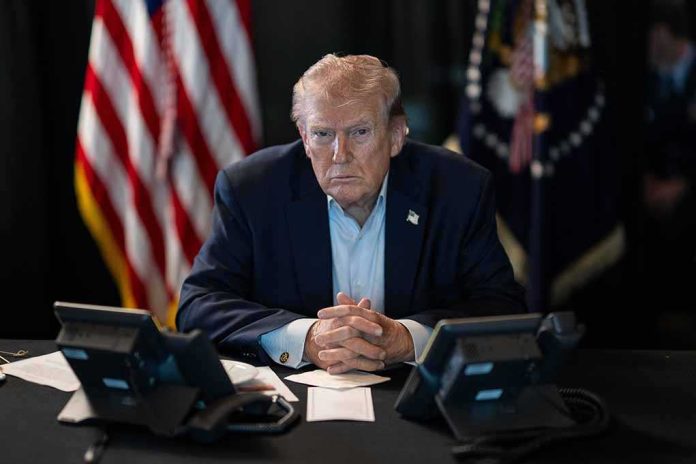
The U.S. House narrowly passed a war powers resolution ordering President Trump to end U.S. hostilities with Iran, signaling a rare bipartisan check on executive war-making authority.
Story Snapshot
- The House approved the Iran war powers resolution by 215-208, with a few Republicans crossing party lines.
- The measure directs the President to remove U.S. forces from hostilities against Iran under the War Powers Resolution.
- The vote fits a long fight over who decides war: Congress or the President.
- Legal debate continues over how binding such concurrent resolutions are after past court rulings.
What the House Voted To Do
The House adopted a concurrent resolution that invokes section 5(c) of the War Powers Resolution. The text directs the President to remove United States Armed Forces from hostilities against the government of Iran. Lawmakers used this tool to state that further action requires explicit authorization. The measure does not appropriate funds or create new penalties. It declares Congress’s position and orders a drawdown under the War Powers framework.
The roll call shows the resolution passed 215 to 208. Democrats supplied most yes votes, and a small group of Republicans joined them. The narrow margin underscores the split inside both parties on how to handle Iran and the limits on presidential action without a formal authorization. The vote count is recorded by the House Clerk and matches public reporting by national outlets that tracked the floor debate and final tally.
How This Fits the War Powers Fight
Since 1973, Congress has tried to reassert its role in decisions to use force. Presidents from both parties have claimed they can act without a new authorization in short or urgent cases. Supporters of this resolution argue the Constitution gives Congress the sole power to declare war. They say the order to remove forces is a needed brake on escalation in Iran without a clear mandate from the people’s representatives.
Opponents often respond that modern threats demand speed and secrecy. They point to past practice where presidents acted first and consulted later. They also question whether a concurrent resolution can impose a binding legal duty after a key Supreme Court ruling on legislative vetoes. That ruling raised doubts about any order that bypasses presentment to the President, which concurrent resolutions do by design.
What the Resolution Means in Practice
If the administration treats the resolution as binding, the Pentagon would wind down direct hostilities against Iran unless Congress later passes a specific authorization. Defensive actions to stop an imminent attack could still occur if reported under the War Powers law’s timelines. The text aims at ending ongoing offensive operations and preventing a slide into a larger conflict without a clear vote to authorize it.
U.S. House voted to end the war in Iran, approving a war powers resolution that would halt President Donald Trump's ability to continue military action without congressional approval.
House votes for a third time to end the Iran war as conflict drags on https://t.co/iNPZ9EcJVC
— Chuck Kennedy (@chuck85258) September 16, 2026
If the administration disputes the resolution’s legal force, the clash moves to politics and oversight. Congress can press for compliance through hearings, funding limits, and a push for a clean up-or-down authorization. The public message is already clear: a majority in the House wants to pause and debate the mission. That stance speaks to broader voter fatigue with open-ended wars and with leaders who act first and explain later.
Why This Resonates Beyond Partisanship
Many Americans, right and left, see Washington drift into conflict without honest goals, measures, or exit plans. Some worry about cost, debt, and strain on troops. Others fear a wider regional war that harms allies and trade. Both groups resent decisions made far from public view. This vote reflects that shared concern: big choices about war should come with a direct, accountable vote, not a patchwork of implied authorities and after-the-fact briefings.
Sources:
thegatewaypundit.com, apnews.com, npr.org, bbc.com, nytimes.com