
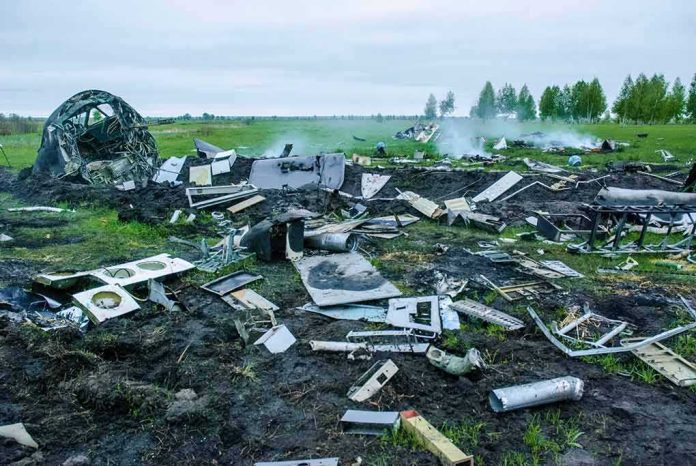
In backcountry aviation, two timelines diverge: the fast certainty of what happened, and the slow discipline of why. The Grand Canyon crash that killed three people near the North Rim falls squarely into that pattern—location and loss established within hours; cause reserved for a methodical investigation that will take months.
At a Glance
- Search teams located a Piper Comanche and a debris field in the Basin area near the Grand Canyon’s North Rim; there were no survivors.
- The aircraft, reported missing late the previous night with three aboard, was found around 10:15 a.m. the next morning.
- The NTSB is leading the investigation with support from the FAA and National Park Service.
- Public reports place the accident on Sunday evening; precise time varies slightly across early accounts.
- Determining cause will follow the NTSB’s established process and could take 12–24 months.
What is firmly established
The National Park Service (NPS) documented the core facts: a small private aircraft and a nearby debris field were located in the Basin area of Grand Canyon National Park’s North Rim the morning after a missing-aircraft report, and all three people aboard were dead. The NPS placed the discovery at approximately 10:15 a.m., following an 11:30 p.m. report the prior night that a Piper Comanche with three occupants was overdue, with its last known location near the Basin. These details—aircraft type, occupant count, location, and sequence—were independently echoed in contemporaneous wire reporting, which also underscored that there were no survivors.
Early agency coordination was clear. The NPS stated that the National Transportation Safety Board would lead the investigation; the Federal Aviation Administration and park personnel would assist as needed. In parallel coverage, the FAA provided a Sunday evening accident time estimate for the crash—around 7:15 p.m.—a detail that anchors the search chronology against the later missing-aircraft call and the next-morning discovery.
How an NTSB field investigation actually proceeds
The public often expects cause on day one; professional accident investigation is designed to avoid that temptation. The NTSB’s own guidance is unambiguous: investigators do not determine cause at the crash site. What begins on-scene is evidence preservation and factual collection—documenting the wreckage distribution, photographing structures and controls, noting terrain, securing records and perishable evidence, and initiating interviews. About a month later, the Board typically publishes a preliminary report, limited to facts gathered to that point. Analysis and causal findings arrive much later, often 12 to 24 months after the event, once lab work, component examinations, meteorological analysis, performance studies, and human factors assessments are complete.
That cadence exists for good reason. General aviation accidents can implicate a web of potential contributors—mechanical condition, maintenance practices, fuel management, weather and visibility, pilot workload and experience, terrain, and air traffic communications, to name the recurring domains. A premature narrative tends to fixate on a single visible factor—a thunderstorm on radar or a rugged ridgeline in photos—when the chain of events usually crosses system boundaries. The Board’s case history is a study in such complexity, with final reports tying together technical findings, operational decision-making, and context that no eyewitness could supply on day one.
Terrain, timing, and search: why the Canyon is different
The Grand Canyon constrains both flying and finding. The North Rim’s Basin area is remote, high-elevation country—scant light pollution at night, sparse ground access, and few quick extraction options. In such terrain, a modest difference in reported times is common across early accounts; the FAA’s approximate accident time, the time of the overdue report, and the eventual discovery time mark three distinct points in the operational arc: last known movement, administrative recognition that a flight is missing, and physical location of wreckage. None of these timestamps, on their own, answers causation; together, they frame the search and rescue picture and help investigators cross-reference radar, ADS-B traces if available, and emergency communications.
Searchers work the problem with layered tools: last known coordinates, flight-plan data if filed, radar returns where coverage exists, handheld and airborne sensors, and, at night, infrared. In this case, Arizona authorities and the NPS coordinated overnight efforts, culminating in visual confirmation the next morning. The “no survivors” statement is not conjecture—it reflects the on-scene assessment once the wreckage was reached, and it is the correct threshold for public communication before the medical examiner’s formal identifications are released.
What is not known yet—and why that’s the point of the process
Three questions matter to the public and to families: who, where, and why. The first two are partly answered; identities customarily await next of kin notification and medical examiner protocols, while coordinates and area description are already in the NPS record. The third—why—will be addressed by the NTSB with assistance from the FAA and the park service, after it has tested the hypotheses that most often recur in general aviation: weather effects at altitude after dark, controlled flight into terrain in rising ground, fuel state, airframe or engine anomalies, and pilot workload or spatial disorientation. The Board’s process is built to sift those possibilities with evidence, not impressions; that takes time by design.
Expect a preliminary NTSB report to outline the factual spine: aircraft registration, route or intended route if known, basic weather, the site description, and what investigators observed. Do not expect it to say “cause”—that word belongs to the final report, after metallurgical exams, component teardowns, avionics data retrieval where possible, and performance analyses are complete. When the probable cause does come, it will be the product of the full docket, not the first day’s photos.
Three people died in a plane crash at the North Rim inside Grand Canyon National Park in Arizona, officials said. The National Park Service located the downed aircraft, a Piper Comanche, and debris field on Monday.
DETAILS: https://t.co/0XRfIOtlNy pic.twitter.com/ThaXJ3OWBM— Las Vegas Review-Journal (@reviewjournal) November 18, 2026
Why these early facts still matter
Early certainty is not trivial. Identifying the aircraft, confirming the occupant count, and fixing the discovery time and location do several things at once: they focus family liaison work, define the initial scope of evidence preservation, set expectations for investigators and the public, and constrain misinformation before it spreads. In remote terrain, official chronology and on-record facts protect both the dignity of the deceased and the integrity of the inquiry. Here, those facts are clear: a Piper Comanche went missing Sunday evening near the North Rim Basin; the wreckage and debris field were found late the next morning; all three aboard died; and the NTSB is in charge of determining what led to that outcome.
Reading the road ahead
From here, the timeline is predictable even if the findings are not. Within weeks, the preliminary report will land in the NTSB’s CAROL database, a concise factual summary that anchors public understanding. Over ensuing months, the docket will accrue: witness statements, maintenance records, radar or ADS-B data, weather reconstructions, and specialist reports. The final analysis—probable cause and contributing factors—will close the loop, not merely to assign fault but to extract safety lessons that feed training, maintenance practices, and sometimes design or procedural changes. That is how a single loss, investigated thoroughly, can improve the margins for thousands of flights to come.
Sources:
nypost.com, fox10phoenix.com, avweb.com, ntsb.gov