
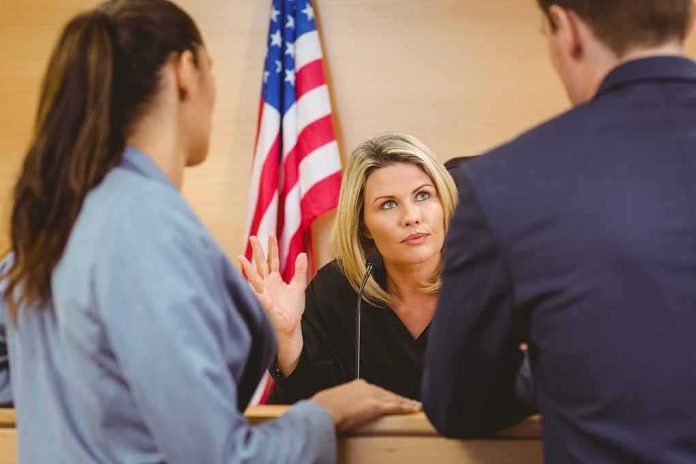
A children’s entertainer walked into a federal immigration court, and the culture war followed her out the door.
Story Snapshot
- Ms. Rachel toured a New York City youth immigration court with Democrat Brad Lander.
- She said kids faced court without lawyers and described fear inside the courtroom.
- Karoline Leavitt blasted her the next day and called it political theater.
- Coverage framed the visit as advocacy, not entertainment.
What Happened Inside the Courthouse
Rachel Accurso, known as Ms. Rachel, visited federal youth immigration proceedings at 290 Broadway in Lower Manhattan on November 23, 2026. New York City Comptroller Brad Lander joined her. Reporters said they observed cases involving minors. Accounts from the visit said some children lacked legal counsel. Local television coverage framed the stop as a push to spotlight those gaps and the pressure on young migrants in court. Agence France-Presse reported she described scared children and urged compassion.
Ms. Rachel’s comments focused on kids’ fear and the claim that children should not stand alone before a judge. She spoke about youngsters “praying to God” for relief and called for policy that centers children’s needs. Rolling Stone and others reported she also promised to help at least one child get a lawyer, and said kids representing themselves is wrong. These are direct appeals to emotion, which draw attention fast but also spark political debate on borders and law.
How Leavitt Turned a Court Visit Into a Flashpoint
Former White House Press Secretary Karoline Leavitt criticized the visit on November 24, one day after the court tour. Newsweek and a fact-checking site dated her remarks to that day. They reported she cast Ms. Rachel as more activist than entertainer and slammed the event’s pairing with a Democratic official. The timing and tone mattered. Leavitt’s attack reframed the story from court access for kids to whether a beloved creator pushes a partisan agenda.
Leavitt’s core claim aligned with a broader conservative view: entertainment figures should not launder politics through kids’ brands. That concern resonates when access, media, and minors mix, because government processes should be even-handed. But a single courthouse visit does not alone prove a lasting activist identity. The record documents one event, humanitarian language, and a Democratic escort, not a full partisan program or formal role. Calling it a stunt is opinion; the cited facts show advocacy framed for cameras.
Is This Advocacy or Partisan Activism?
Coverage from television, wire services, and magazines described the stop as advocacy for children facing deportation without lawyers. That label fits the facts on the ground. A stronger activist label needs proof of sustained partisan work: campaign roles, donations, or organized pressure over time. The present record offers hints, not a dossier. Ms. Rachel has said she is political and has defended speaking out on immigration, LGBTQ issues, and Gaza. That signals a posture beyond pure entertainment, but it remains issue-driven more than party-directed in the reporting cited here.
Karoline Leavitt has criticised Ms. Rachel over her visit to immigrant children facing deportation.
Do you agree with Karoline’s criticism?
A. Yes, she has a point.
B. No, every child deserves compassion.
C. Both sides have a point.
D. Not sure. pic.twitter.com/q7HGPmjpbz— MAGA 2028 🇺🇸 (@Teaseryy) November 25, 2026
Americans can hold two ideas at once. First, children should not face court alone. Second, policy on borders and asylum must be set by officials, not celebrity drop-ins. The best path is sunlight and standards. Courts should publish clear data on counsel rates for minors. Advocates who tour courts should disclose sponsors, goals, and follow-up actions. Politicians who host visits should explain why access matters beyond a news cycle. That transparency honors kids and respects the public.
The Stakes for Parents, Voters, and Media
Parents want safe borders and safe kids. Those aims can align. Congress and agencies can expand access to counsel for minors while tightening screening, tracking court dates, and speeding outcomes. That mix protects due process and deters abuse of the system. Media should spend less time on who posted the spiciest take and more time on numbers that matter: how many children appear without lawyers, how long cases last, and what results follow. Shine the light where it counts.
What to Watch Next
Three questions will tell you if this was a one-off moment or a lasting turn. First, does Ms. Rachel take on a formal role with an advocacy group or campaign? Second, do officials publish concrete steps to improve representation for minors in immigration court? Third, do outlets keep covering courtroom realities after the celebrity leaves? If the answers are yes, the story moves from spectacle to substance. If not, chalk it up as another skirmish in a noisy media war.
Sources:
kark.com, sg.news.yahoo.com, ny1.com, abc7news.com, aol.com, fox16.com