Two federal workers were zip-tied at gunpoint for 15 hours on a forest road because they wore the government’s badge, and the case is now a test of how seriously the system protects — or fails to protect — its own people.
Story Snapshot
- A father and son are charged with kidnapping two female U.S. Forest Service employees in a remote California forest.
- Prosecutors say the workers were zip-tied and held at gunpoint inside a trailer for about 15 hours before rescue.
- The suspects demanded to speak with the Federal Bureau of Investigation (FBI), highlighting anger and distrust toward federal authority.
- The case underscores rising safety risks for frontline federal workers caught in the crossfire of anti-government rage.
What Prosecutors Say Happened in the Forest
Federal officials say the ordeal began when two female U.S. Forest Service employees drove a narrow road in Shasta-Trinity National Forest to do routine field work. Near Gumboot Lake, a man with what witnesses describe as an AR-15-style rifle approached their vehicle and forced them to stop. Court filings and press briefings identify him as 49-year-old Joseph Charles Henrichsen, joined by his 23-year-old son, Phoenix.
According to the criminal affidavit, the women were ordered out of their vehicle, zip-tied, and taken to a nearby trailer on private land. Inside that trailer, prosecutors say they were held at gunpoint for roughly 15 hours while the men made phone calls and issued demands. One call used a victim’s phone to tell authorities that “two fed employees” were being held hostage, and that the suspect wanted to speak with the FBI. The workers were not physically killed, but they faced constant threat of deadly force.
The Standoff, Weapons, and Charges
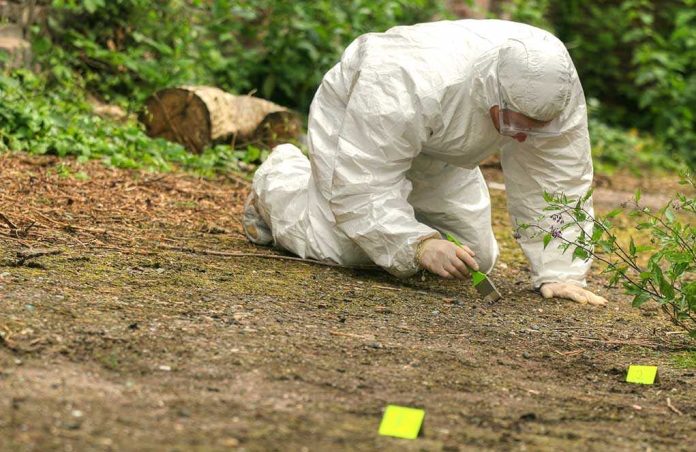
Local, state, and federal law enforcement surrounded the remote trailer as night fell, turning a one-lane forest road into a major crime scene. Officials say Joseph claimed to have grenades inside, along with the rifle, knives, and ammunition, raising fears of a possible explosion if police moved in. Negotiators worked through the evening and into the early morning hours to avoid a bloodbath and get the women out alive.
Just before 2 a.m., the hostages were released; about 30 minutes later, Joseph and Phoenix surrendered and were arrested without shots fired. The United States Attorney for the Eastern District of California, Eric Grant, announced both men now face federal counts of kidnapping a federal employee under Title 18, Section 1201(a)(5). If convicted, they could face up to life in prison and heavy fines, a penalty meant to show that targeting federal workers crosses a bright red legal line.
What We Do Not Yet Know — and Why That Matters
The suspects have appeared in federal court but have not yet entered formal pleas, and no detailed defense has been made public. So far, neither man nor their lawyers have challenged the minute-by-minute account in the affidavit, the zip-ties, the rifle, or the grenade claims. Phoenix’s exact role remains unclear in public records, beyond being charged alongside his father, which leaves questions about how directly he helped restrain or guard the hostages.
Investigators have not publicly stated a clear motive, which leaves a gap that fuels speculation from both sides of the political divide. Some coverage links Joseph to a past hate-crime case in Washington state that was later dismissed for procedural reasons, but that does not yet explain this incident. Without a defense narrative, prosecutors’ version stands almost alone, and many Americans will read that silence as confirmation, even though our system is supposed to wait for trial before deciding guilt.
Frontline Federal Workers in an Era of Anti-Government Fury
This kidnapping is not just an isolated crime; it fits into a wider pattern of rising threats toward workers who carry a federal badge on America’s public lands. Forest Service and land agency employees report more harassment, armed confrontations, and fear that routine field work can turn into a life-or-death crisis. In this case, analysts say the biologists were likely targeted simply because their uniforms marked them as “the government,” not because of anything they personally did.
CASE UPDATE from @FBISacramento: Two Men Charged With Kidnapping U.S. Forest Service Employees After Fifteen-Hour Standoff
This week, the #FBI and law enforcement at all levels joined forces to safely to resolve a hostage situation at the Gumboot Campground in the Shasta-Trinity… pic.twitter.com/vM1476vtZs
— FBI (@FBI) July 20, 2026
For many conservatives and liberals alike, this case speaks to a deeper anger at a federal system seen as distant, self-protective, and unaccountable. Some citizens feel ignored by Washington and lash out at the most visible symbols of federal power, even when those symbols are just scientists checking water or wildlife. At the same time, many Americans worry that the government talks about protecting its workers but fails to fix the conditions that let these standoffs happen again and again.
Why This Should Concern People on Both the Right and the Left
For older conservatives tired of “woke” policies and federal overreach, it can be tempting to see any clash with Washington as a form of resistance. But holding unarmed workers at gunpoint is not resistance; it is a direct attack on basic rule of law and the safety of ordinary people doing their jobs. If such acts become normalized, real grievances with elites get buried under violence that only makes the system more fearful and secretive.
For older liberals frustrated by shrinking safety nets and growing inequality, the case shows how anger at the “deep state” can spill over onto those with the least power inside the system. These biologists are not wealthy insiders; they are field staff following orders. When rage focuses on them instead of on policy makers, it divides people who might otherwise agree that the government is failing its core promise: to keep citizens safe while respecting their freedoms.
What This Incident Reveals About Government and Trust
The peaceful rescue after 15 hours shows that coordinated police work can still protect lives, even in remote places with high risk. Yet the fact that such a standoff happened at all, and that the suspect demanded direct contact with the FBI, suggests a deep belief that normal channels no longer listen. Many see this as one more sign of a government that reacts to crises but struggles to address the frustration building up before the first gun is ever raised.
Whether Joseph and Phoenix Henrichsen are found guilty or not, the case forces hard questions: How do we safeguard federal workers without turning public lands into militarized zones? How do we separate justified criticism of elites from violent acts against everyday employees? And will leaders in both parties tackle these questions, or focus only on the next news cycle while anger keeps growing in the trees and backroads of places like Shasta-Trinity National Forest?
Sources:
military.com, nypost.com, fox.com, independent.co.uk, nbcnews.com, bellinghamherald.com, timelessdishes.org, justfighthim.com, youtube.com