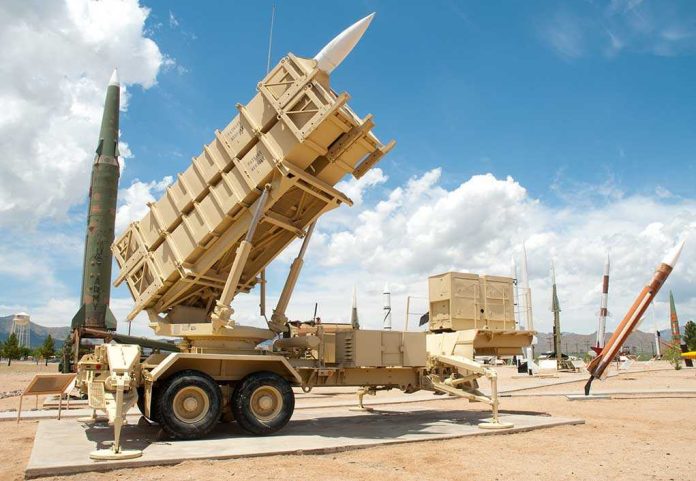
Arms control collapsed first as a matter of trust, then as a matter of technology; once Moscow fielded a ground-launched missile that fit neatly into the very envelope the INF Treaty outlawed, the United States treated the treaty as already broken—and built a system, Typhon, to close the range gap it had forsworn for 32 years.
The Short Version
- The United States determined in 2014 that Russia violated the INF Treaty by developing and deploying the 9M729 (SSC-8) cruise missile, an assessment NATO endorsed.
- Washington withdrew from the INF in 2019 under Article XV, citing Russia’s continued noncompliance, then moved quickly to reconstitute land-based midrange strike.
- The U.S. Army’s Typhon Mid-Range Capability (MRC) reintroduces ground-launched precision weapons between roughly 500 and 1,600 km, using Navy Tomahawk and SM-6 missiles.
- Russia denied wrongdoing, asserting the 9M729’s range stayed within 500 km and accusing the U.S. of treaty infractions; allies found those denials unconvincing.
From violation to withdrawal: why the INF’s ban no longer held
The Intermediate-Range Nuclear Forces (INF) Treaty of 1987 eliminated an entire class of ground-launched missiles with ranges between 500 and 5,500 kilometers. For decades it worked, verified and enforced, until it didn’t. Beginning in 2014, the United States publicly assessed that Russia had breached the treaty by developing and fielding a ground-launched cruise missile—known in NATO nomenclature as the SSC-8 and by Russia as the 9M729—capable of operating inside the prohibited range band. The U.S. pressed the issue for years through diplomatic channels and allied consultations; in 2019, after repeated warnings, Washington suspended its obligations and provided the required six-month notice of intent to withdraw under Article XV, explicitly tying the decision to Russia’s continued noncompliance. NATO allies backed the U.S. charge, stating Russia had developed and fielded the 9M729 and taken no credible steps toward returning to compliance.
Moscow’s rejoinder was consistent and categorical: the 9M729, officials said, never exceeded the 500-kilometer threshold, had not been tested to proscribed ranges, and in any case represented an upgrade of a permitted missile rather than a new, banned system. Russian officials even staged a public display of the missile and launcher to underscore their claims. But they provided no technical access that could persuade skeptics, while leveling counteraccusations that U.S. missile-defense deployments violated the treaty’s spirit or letter—arguments that never gained traction among allies. In arms control, denial without verifiable transparency tends to fail the politics test even before it fails the technical one. That is what happened here.
How Typhon works: reusing naval missiles to fill the “INF gap”
Once Washington treated the INF as effectively dead, the Army moved to reconstitute land-based fires in the very envelope the treaty had prohibited. The result is Typhon—the service’s Mid-Range Capability (MRC)—a mobile battery that repurposes the Navy’s mature missile ecosystem for ground launch. Rather than inventing a new interceptor, Typhon integrates a truck-mobile operations center with launchers derived from the Navy’s Mk 41 vertical launch system, enabling it to fire Tomahawk land-attack cruise missiles for deep, precise strikes and the Standard Missile-6 (SM-6) for fast, multi-mission engagements, including anti-ship roles. In the Army’s long-range precision fires portfolio, Typhon deliberately fills the mid-band between the shorter-range Precision Strike Missile and the developmental Long-Range Hypersonic Weapon, giving joint commanders options from roughly the lower end of the former INF class up to around 1,600 kilometers with Tomahawk.
This architecture matters. By leveraging existing munitions, the Army compressed timelines: instead of the decade-long cycle typical of a new missile, Typhon reached initial fielding swiftly and began appearing in exercises with Indo-Pacific allies. That speed reflects an old lesson relearned—when arms control breaks, adaptation beats invention. It also changes roles: an Army battery that can hold adversary warships or airbases at risk from land is a classic anti-access tool, complicating an opponent’s planning and dispersing allied strike capacity beyond airfields and surface combatants.
The dispute over 9M729: what each side claimed—and why allies lined up
The center of gravity in the compliance fight was always range and launcher. U.S. and allied statements assert Russia developed and fielded a ground-launched cruise missile with INF-range capability—thus, a violation. Russia said the 9M729 stayed within 500 km, was merely an upgrade, and was never tested beyond the cap. The U.S. position hardened as years passed without a verifiable Russian explanation, culminating in the 2019 withdrawal. NATO’s public language is blunt: Russia developed and fielded the 9M729, denied the violation, and took no credible remedial steps. The State Department’s timeline shows concerns raised repeatedly since 2013, formal violation findings beginning in 2014, and the legally executed withdrawal in August 2019 when noncompliance persisted.
Could this have been adjudicated technically? In theory, yes—on-site inspections, telemetry, and launcher access could have clarified whether the missile, as deployed, fit within treaty limits. In practice, by the time Moscow acknowledged the missile’s existence and presented it publicly, the diplomatic runway had ended. Arms-control crises rarely turn on laboratory proof; they end in politics when corroborating allies align and the accused party offers only denial without transparency. That is precisely how this dispute resolved.
What reintroducing mid-range ground fires means for strategy
With INF gone, the strategic question is not whether the envelope will be filled; it already has been. The utility is straightforward. Ground-based, mobile launchers can hide, disperse, and persist; they free scarce air and sea assets for other missions; and they present adversaries with a targeting problem. Typhon does all three. In Europe, that complicates Russian planning against NATO infrastructure; in the Indo-Pacific, it creates landward arcs against maritime targets and shore-based systems without committing ships or aircraft to high-threat envelopes. The Army’s doctrinal shift—integrating land-based anti-ship strike through SM-6 while retaining Tomahawk for deep land attack—turns multi-domain talk into a tangible, cross-service kill web.
Critically, Typhon is not a nuclear system; its value is conventional precision and deterrence by denial. That lowers the escalatory ladder compared with Cold War-era Pershing deployments, even as it restores a once-banned range class. Still, capability begets counter-capability. Russia has signaled symmetrical responses and continues to expand dual-capable missile forces. The enduring lesson for policymakers is that verification and reciprocal constraints are the only durable brakes on this cycle; absent those, the offense-defense race will migrate to where technology and geography reward it most.
What holds up under scrutiny—and what does not
Three conclusions are well supported. First, the U.S. and NATO case that Russia fielded a 9M729 capability inconsistent with INF limits has been consistent across years and institutions, from State Department compliance reports and formal withdrawal notices to NATO communiqués. The allied alignment here is dispositive in political terms, which is how treaties survive or die. Second, Washington’s legal path out of the treaty—suspension and six-month notice under Article XV—was executed as the text prescribes. Third, the Army’s Typhon fills a deliberate range and mission niche using mature missiles, accelerating reentry into a class of ground-launched capabilities once prohibited by INF.
By contrast, Russia’s defense—that the 9M729 never exceeded 500 km and therefore was compliant—remained assertion without reciprocal verification. Public show-and-tell events did not substitute for inspection rights, launcher telemetry, or a credible confidence-building process. In the absence of that transparency, and with years of allied corroboration of the U.S. claim, Moscow’s denial did not carry the argument.
Sources:
19fortyfive.com, 2017-2021.state.gov, armscontrol.org, war.gov, commonslibrary.parliament.uk, congress.gov, nato.int, voanews.com, reuters.com, bbc.com, seapowermagazine.org, battlepolicy.com