Florida delivers swift justice as President Trump’s tough-on-crime leadership inspires states to execute a brutal 1986 murderer, closing a 40-year chapter of pain for a helpless elderly victim’s family.
Story Highlights
- Melvin Trotter, 35 at the time, stabbed 70-year-old Virgie Langford seven times in the stomach during a robbery in her Palmetto grocery store, causing disembowelment and her death hours later.
- Convicted in 1987 of first-degree murder and armed robbery, Trotter faced death sentences upheld by juries (9-3 and 11-1 votes) despite nearly 40 years of appeals claiming low IQ and remorse.
- Executed by lethal injection on February 24, 2026, at Florida State Prison—Florida’s second execution this year after a record 19 in 2025, signaling renewed commitment to law and order.
- Victim identified her attacker before dying; courts prioritized four aggravators like crime cruelty and prior felony over mitigators, affirming justice over activist pleas.
The Brutal 1986 Crime in Palmetto
On June 16, 1986, Melvin Trotter entered Virgie Langford’s grocery store in Palmetto, Manatee County, Florida. The 35-year-old, already on community control for a prior felony, stabbed the 70-year-old owner seven times in the stomach during a robbery. Langford suffered disembowelment, collapsed bleeding, and identified Trotter to a truck driver who found her. She died hours later at a hospital. This vicious attack shocked the small community amid high violent crime rates of the era.
Conviction, Appeals, and Jury Verdicts
In May 1987, a jury convicted Trotter of first-degree murder and robbery with a deadly weapon, recommending death by a 9-3 vote. The Florida Supreme Court affirmed the conviction but vacated the initial sentence, leading to resentencing with an 11-1 death recommendation. Courts cited four aggravators: Trotter’s community control status, felony during robbery, prior conviction, and the murder’s especially cruel nature. Appeals dragged nearly 40 years, raising Eighth Amendment claims over borderline IQ, disadvantaged background, and remorse—all denied.
https://twitter.com/TheSuncoastNews/status/2026574622984958455
The latest appeal on February 17, 2026, rejected challenges to lethal injection methods. Florida law sets IQ thresholds at 70-75 for intellectual disability exemptions; Trotter’s scores fell borderline, with special education history noted but insufficient. Juries and judges consistently weighed the crime’s heinous details against mitigators, upholding capital punishment for such brutality.
Execution and Florida’s Death Penalty Surge
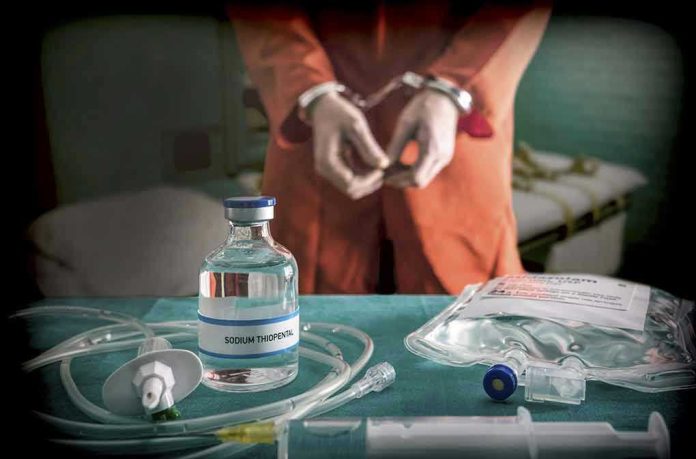
Florida Department of Corrections carried out the lethal injection at 6:15 p.m. on February 24, 2026, at Florida State Prison in Starke. Trotter offered no last words. This marked Florida’s second execution of 2026, following a national-high 19 in 2025—the most U.S. executions since 2009 at 47 total. Lethal injection prevailed in 39 cases last year, despite UN criticism of alternatives like nitrogen hypoxia. President Trump’s pro-capital punishment stance bolsters states like Florida under Gov. DeSantis.
About 45 anti-death penalty protesters gathered outside, including from Floridians for Alternatives to the Death Penalty and Catholic Gators. Grace Hanna highlighted Trotter’s intellectual disability and race; exoneree Ralph Wright Jr. claimed no societal benefit; Lauren Munn questioned morality. Yet state prosecutors and juries prioritized justice for Langford’s family after four decades.
Justice for Victims Amid National Divides
Langford’s family and Palmetto community secure closure from the 1986 trauma. Manatee County sees vindication for a defenseless store owner targeted in her own business. Florida’s execution pace reinforces tough-on-crime policies, contrasting 23 states abolishing capital punishment and three with moratoriums. Short-term, it fuels lethal injection debates; long-term, it may encourage momentum amid error risks in borderline IQ cases. Economic impacts remain minimal, with prison costs offset by case closure and reduced death row population.
Precedents like Ralph Wright Jr.’s 2014 exoneration underscore system flaws activists cite, but Trotter’s case emphasizes aggravators outweighing mitigators. Florida leads U.S. executions, signaling limited government won’t coddle violent criminals under Trump’s America-first leadership. Victims’ rights prevail over prolonged delays that frustrate law-abiding citizens weary of soft-on-crime eras.
Sources:
Independent Florida Alligator: Melvin Trotter execution details
BSS News: Florida execution confirmation
FlaglerLive: Local execution report