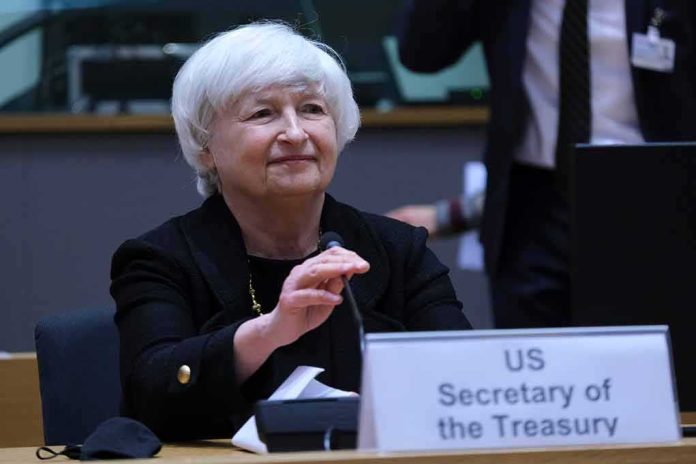
Washington and Beijing pushed back a tariff cliff by extending their “Busan Agreement” trade truce to January 10, buying time but not final peace.
Story Highlights
- The United States and China extended their trade truce to January 10, according to Treasury Secretary Scott Bessent.
- The extension preserves calm for markets while talks continue on a broader economic deal.
- The truce follows a pattern of short rollovers that delay hard choices on tariffs and technology.
- The move arrives as leaders seek to avoid fresh shocks from a November deadline on key measures.
What Changed: The Truce Now Runs Through January 10
Treasury Secretary Scott Bessent said the United States and China agreed to extend the “Busan Agreement” until January 10. He described the step as a way to gain more time for economic talks. Major outlets reported it as a bilateral decision, not a trial balloon or a one-sided move. Bessent also said both sides discussed whether a larger deal might be possible beyond small items, signaling that broader terms remain on the table but unresolved for now.
The extension delays the prior November 10 deadline that risked new tariffs or controls snapping back into place. Market watchers have treated that date as a pressure point for months. Moving the line gives companies and investors a clearer runway into the winter, without guaranteeing an end-state. The agreement avoids immediate escalation but does not erase existing tariffs or restrictions that still shape trade in goods, chips, and critical inputs.
Why It Matters: Calm Now, Hard Choices Later
Recent years show a pattern of short truces that cool tensions while talks continue. Analysts say these rollovers reduce near-term risk but push big fights into the future. The toughest issues include high tariffs, export limits on advanced technology, and rules for market access. Each mini-deal keeps leverage intact for both sides, but it also keeps businesses guessing about next quarter’s rules and costs, which strains planning and investment.
Officials and media have framed similar pauses as practical steps rather than final settlements. Past cycles saw 90-day extensions and later add-ons after leader meetings in major capitals. The message is steady: keep talking, avoid shocks, and see if a broader deal can form later. That strategy may help stock and currency markets today, yet it leaves factories, farmers, and shippers living by rolling deadlines that few can control or predict.
How This Touches Americans Across Politics
Workers and small business owners want stable prices and steady orders, not surprise tariff spikes. The pause can help by holding down costs on parts, tools, and consumer goods. But the truce does not fix long-running pain points like lost factory jobs, supply chain gaps, or dependence on foreign critical minerals. People on the right and left share a view that Washington too often manages around problems instead of solving them for the long term.
🔴 Trump, Xi extend US-China trade truce to January 2; Lai release pressed
US Treasury Secretary Scott Bessent announced the US and China agreed to extend their trade truce by two months, pushing the deadline from November 10 to January 2. "We have agreed today that we will… pic.twitter.com/APcAiqjuT6
— NewsTongue (@NewsTongueX) September 24, 2026
Conservatives question whether short truces delay a needed reset on unfair trade and strategic reliance. Liberals question whether rollovers protect workers, consumers, and smaller firms against shocks and price jumps. Many see the pattern as a sign that powerful interests can ride out the noise while families face the bill. Extending the truce to January keeps talks alive, but the test is whether leaders can swap deadline drama for clear rules that support growth at home.
What To Watch Next: Deadlines, Deliverables, and Scope
Watch the scope of talks that Bessent hinted could become a “bigger deal.” Concrete deliverables would include tariff relief tied to verifiable terms, clearer rules on advanced chips, and guardrails on critical minerals. Absent that, expect another sprint into the next deadline. Markets may cheer each pause, but companies will keep contingency plans ready. The January 10 line now anchors that timetable as both sides try to avoid a new round of tariff and supply shocks.
Sources:
foxnews.com, reuters.com, newsbreak.com, firstpost.com