Iran’s tight grip on Strait of Hormuz shipping coincided with a sharp U.S. gas price jump as midterms neared, raising fresh alarms about the price of American power.
Story Snapshot
- Reuters reported officials believe Iran stretched talks to hurt President Trump before the vote.
- Iran-linked voices claimed a “new order” over Gulf shipping without U.S. say.
- A cargo ship reportedly sank after hitting a naval mine in the Strait.
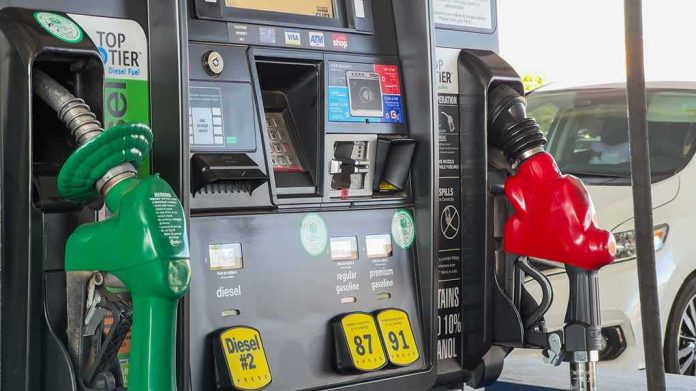
- Gasoline topped $4 as voters felt the war’s costs at the pump.
What changed on the water—and why it matters at home
Iranian power over a narrow sea lane met American wallets at the worst time. Senior officials told Reuters that Iran slowed talks with the United States before the November midterms to weaken President Trump politically. Iran’s media amplified claims that Tehran set a “new order” for shipping in the Persian Gulf and the Strait of Hormuz, saying this happened without any United States role. Together, the message and the moment put pressure on fuel supplies and on voters’ patience.
The Strait of Hormuz is a tight choke point. Tankers must pass through it to move a large share of the world’s oil. The Associated Press reported that Iran’s Revolutionary Guard navy said a cargo ship sank after hitting a naval mine in the Strait. While open questions remain about who laid the mine, the claim underscored real danger to shipping. Any delay or fear in that lane raises costs fast for fuel, insurance, and freight worldwide.
Prices at the pump turned foreign policy into kitchen-table pain
Al Jazeera reported that average gasoline in the United States rose from below $3 per gallon before the war to over $4.27 by October 22, 2026. That kind of rise hits commuters, small firms, and fixed-income households. When prices jump in the final weeks before an election, leaders catch the blame. Research has long shown that oil shocks often hurt incumbents’ odds, even if they did not cause the shock. That pattern raises the stakes of any disruption tied to the Strait.
Reuters described the Strait as functionally closed since the war began and linked the squeeze to midterm politics. That overlap helps explain why both parties sounded anxious. Conservatives see high energy costs as a tax on work and growth. Liberals see fragile families paying more while profits soar. Both sides agree the system looks rigged when a foreign crisis and domestic policy mix to raise daily costs. Voters ask why Washington could not shield them from a known risk.
Claims of intent meet the limits of public proof
The intent claim rests on unnamed senior officials who said Iran prolonged talks to weaken Trump. That is specific, but it is not a public Iranian order or a named source. The Iranian official’s on-record statement asserted control over shipping but did not mention U.S. voters or prices. The mine incident showed danger but did not prove command decisions aimed at the midterms. The public record supports leverage through the Strait; it is less firm on election-focused motive.
At the same time, the policy dilemma for Washington was clear. More pressure on Iran could risk more hits to Gulf infrastructure and still higher prices. Less pressure could leave Tehran room to squeeze shipping and signal strength. Either path threatened American families at the pump. That is the deeper worry crossing party lines: when great-power moves and shadow wars set prices, regular people pay first and most, while elites argue and delay.
Sources:
ocregister.com, apnews.com, chathamhouse.org, iranintl.com