
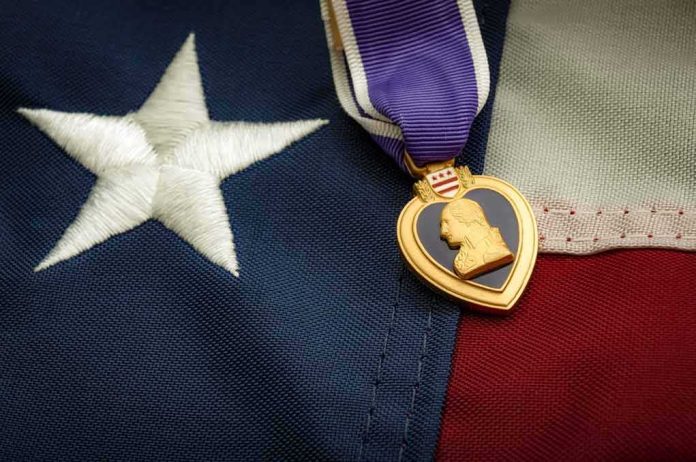
The Presidential Medal of Freedom carries no nominating committee, no evaluation board, and no statutory checklist — it is, by design, whatever a sitting president decides it should be, and that single fact explains nearly everything about why Rudy Giuliani’s selection has become the honor’s most contested moment in a generation.
Key Points
- President Trump awarded Rudy Giuliani the Presidential Medal of Freedom in an Oval Office ceremony, citing his anti-mob prosecutions as Manhattan’s top federal prosecutor and his leadership of New York City after the September 11 attacks.
- The award fulfilled a promise Trump made in September 2025, shortly after Giuliani was seriously injured in a car crash in New Hampshire.
- Giuliani’s son Andrew attended and credited his father’s mayoral policies with cutting New York City’s annual murder count from roughly 2,000 to under 300 in the years that followed.
- The citation made no reference to Giuliani’s 2020 disbarment, his $148 million defamation judgment to Georgia election workers Ruby Freeman and Shaye Moss, or his role contesting the 2020 election.
- The Medal of Freedom has no formal selection process; presidents have used that discretion for decades to honor allies as much as achievements, making this award consistent with — not an exception to — the medal’s history.
What Happened at the Ceremony
President Trump presented Rudy Giuliani with the Presidential Medal of Freedom, the nation’s highest civilian honor, describing him as “America’s mayor who presided over New York City during the 9/11 terrorist attacks.” The ceremony took place in the Oval Office, with Giuliani’s son Andrew in attendance. Giuliani, 82, called the honor humbling and invoked a piece of advice he attributed to Ronald Reagan — that there is no limit to what a person can accomplish if he does not mind who gets the credit. The timing traces back to September 2025, when Trump announced his intention to bestow the medal shortly after Giuliani was seriously injured in a car crash in New Hampshire, a promise the administration kept more than a year later.
The White House framed the honor around two chapters of Giuliani’s career that remain largely uncontested: his tenure as a federal prosecutor who built cases against Manhattan’s organized-crime networks, and his visible leadership as mayor in the hours and days following the September 11 attacks. Andrew Giuliani, speaking outside the White House, told reporters the recognition was specifically “for his leadership on September 11th, for his leadership turning around the city of New York” — and separately claimed that homicides, which averaged more than 2,000 annually in the early 1990s, fell below 1,000 and then below 700 during his father’s administration, with the decline continuing to under 300 in later years.
The Record Behind the Honor
Giuliani’s public-safety legacy is the firmest ground the administration has to stand on. Congressional testimony from 2015 credited his mayoral administration with cutting overall crime by 56 percent and murder by 66 percent, transforming New York from what critics once called the crime capital of the country into the safest large city in America by FBI measures. That record, combined with his visible command presence after the Twin Towers fell — a period the White House has separately marked through formal 9/11 remembrance ceremonies honoring first responders — gives the medal a defensible historical anchor independent of anything that followed in his career.
What the citation does not mention is equally well documented. Giuliani was permanently disbarred in both New York and Washington, D.C. in 2020 after making false claims of widespread election fraud on Trump’s behalf. He was later ordered to pay $148 million to Georgia election workers Ruby Freeman and Shaye Moss after a federal jury found he had defamed them, and he faced since-dismissed indictments in Georgia and Arizona tied to efforts to overturn the 2020 results. Trump separately pardoned him for conduct related to those same efforts. None of that record appeared in the White House’s public framing of the award.
Why the Medal Works This Way
Unlike the Congressional Gold Medal or military honors, the Presidential Medal of Freedom has no formal nomination or vetting procedure. Executive Order 11515 gives the president “wide latitude” to award it to “any person recommended to the President… or any person selected by the President upon his own initiative,” a standard so broad that academic researchers studying recipients from 1963 through 2013 described the medal as a tool of “symbolic unilateral power” — a way for presidents to project their own priorities and alliances onto a national honor rather than a mechanism judged against fixed criteria.
That history makes the Giuliani award less an aberration than a continuation of a pattern. Trump’s first term produced medals for figures already associated with political controversy, including conservative commentator Rush Limbaugh, whose selection drew criticism for similarly polarizing reasons. Scholarship tracking Trump-era medal selections has noted that his choices consistently favor loyalty and cultural alignment alongside, or ahead of, traditional notions of nonpartisan public service — a pattern this latest selection extends rather than breaks.
MEDAL OF FREEDOM: President Donald Trump on Tuesday awarded the Medal of Freedom, the nation’s highest civilian honor, to former New York Mayor Rudy Giuliani. https://t.co/TwiomK7UXh
— WPLG Local 10 News (@WPLGLocal10) November 25, 2026
What the Divide Reveals
The reaction has split cleanly along the same fault line that has defined Giuliani’s public life since 2020. Supporters, including his son, treat the honor as overdue recognition for a mayoralty that genuinely reshaped a city and a 9/11 response that defined a generation’s image of civic leadership. Critics, including legal commentators and the family’s own allies in the Freeman-Moss case, argue that honoring a man found liable for defaming private citizens — and disbarred for doing so — on the nation’s highest civilian stage undermines the credibility of the award itself. One commentator compared the move to honoring Aaron Burr for revolutionary service despite his later disgrace; the comparison is pointed, but it also concedes the premise that Giuliani’s earlier service was real and substantial.
Neither side disputes the underlying facts: the prosecutions happened, the crime numbers fell, the disbarment occurred, the judgment was entered. What divides them is a judgment call the medal’s open-ended design has always forced presidents to make alone — whether a lifetime of public service survives a serious later reckoning, and whether a president gets to decide that question for the country without having to explain his reasoning to anyone.