
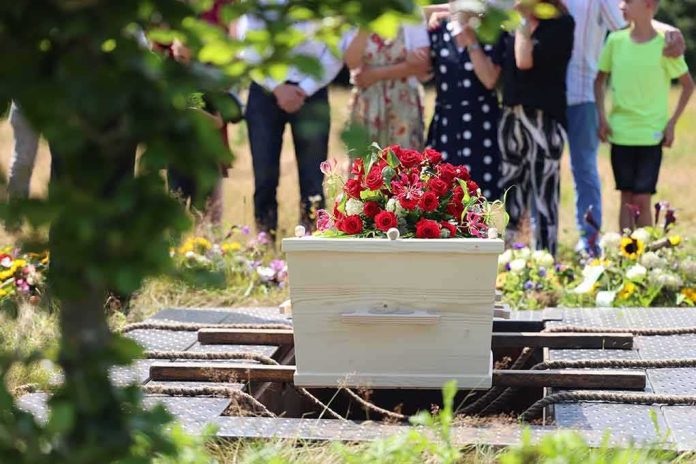
Mourners in Guatemala watched a 15-year-old girl sit up and speak inside her coffin eight hours into her wake.
Story Highlights
- Video from the wake shows the teen moving and talking inside the coffin.
- The girl, Yuleidy Ixcotoyac, had been believed dead after a medical emergency.
- No doctor reportedly confirmed death, and no death certificate was issued.
- Authorities have reportedly opened an inquiry into what happened.
What Witnesses Say Happened At The Wake
Family and friends gathered for a wake in El Jocote, Guatemala, after 15-year-old Yuleidy Ixcotoyac was believed dead following a sudden collapse. About eight hours into the vigil, her mother, Lesvia Ríos, leaned over the coffin and noticed movement. Relatives opened the viewing window, saw Yuleidy’s eyes open, and helped her sit up as cries of relief filled the room. Shared video shows her moving and speaking while mourners reacted in shock.
Reports describe a frantic scene as relatives removed the teen from the coffin and sought help. Some outlets say she later rested at home under family care. The footage spread online quickly and drew global attention, in part because the moment unfolded in front of many witnesses. The family’s account matches what the video appears to show: visible movement, brief speech, and a confused but responsive teenager inside the casket.
How The Teen Was Declared Dead Without A Doctor
Several reports say a doctor did not examine Yuleidy before the wake. Her father, Abraham Ixcotoyac, reportedly checked her breathing and pulse while driving her to get help, believed she had died, and did not reach a clinic. Outlets state no medical professional issued a death certificate, which left the family relying on observation rather than a formal exam to determine death before the funeral events began.
Local and national attention focused on the lack of a medical assessment. Multiple reports say Guatemalan authorities requested medical evaluations and opened an investigation into how the teen came to be presumed dead without clinical confirmation. The situation raises procedural questions that officials will now review. It also underscores the risks families face when emergencies unfold far from reliable, timely medical care and documentation.
Why This Story Taps A Deeper Public Anxiety
People across the political spectrum worry that large systems miss obvious problems until disaster strikes. This case blends two fears: the dread of being buried alive and the sense that institutions do not show up when they are needed most. Here, a teen’s presumed death appears to have rested on a family check, not a doctor’s exam. The viral video made many ask a basic question: who is responsible for confirming the most serious calls we make about life and death.
Medical literature recognizes rare “apparent death” episodes, including delayed return of heartbeat after efforts stop, known as the Lazarus phenomenon. Those cases are rare and usually occur in clinical settings, not at home or on the road. The published record does not suggest people revive after hours of true biological death. It does show that mistakes can happen when assessment is rushed, tools are limited, or no professional is present to verify a pulse and breathing with proper equipment.
The Practical Lessons Families Can Use
Emergencies call for fast, clear steps. When someone collapses and seems not to breathe, call local emergency services, start chest compressions if trained, and seek the nearest clinic or hospital. Ask for a medical professional to assess signs of life with proper tools. In rural areas, neighbors and community leaders can help arrange transport and call ahead to clinics. Written confirmation protects families from tragic errors and guides what happens next if the worst occurs.
For officials, the path is also clear. Train first responders to reach remote areas faster. Promote simple, public guidance on what to do when a person becomes unresponsive. Standardize when and how a death can be declared, and by whom. Those steps do not need big budgets to start saving lives. They need attention, basic gear, and respect for the public’s right to clear, careful processes at life’s most fragile moments.
Sources:
inkl.com, greekreporter.com, wionews.com, infobae.com, lavozdeguate.com, misinforeview.hks.harvard.edu