Iran’s latest drone strike on a U.S.-flagged tanker shows just how quickly Tehran’s “cheap” harassment can collide with America’s red lines and trigger consequences it can’t control.
Quick Take
- Iran hit a U.S.-flagged tanker, the Neha, with one of two drones near Qatar on May 10; no injuries were reported among the 23 crew members.
- Iran also launched drones toward Kuwait and the UAE the same day; both countries reported interceptions and said their forces remained on alert.
- The incident followed U.S. strikes on Iranian shore targets on May 8 after Iran fired on U.S. destroyers, tightening a fast-moving escalation cycle.
- U.S. officials warned publicly that attacks threatening Americans would bring a direct response, while Iran delivered an undisclosed reply to a U.S. peace proposal via Pakistani mediators.
Drone Hit on the Neha Raises the Stakes in the Gulf
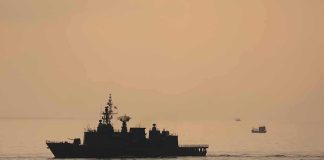
Iran attacked the U.S.-flagged tanker Neha with two drones on May 10 in the Persian Gulf near Qatar, where the vessel was reportedly anchored near Doha without cargo. One drone struck the ship and the second missed, and reporting indicated 23 crew members were aboard with no injuries. The same day, Iran also launched drones toward Kuwait and the United Arab Emirates, with both states reporting successful interceptions.
The location matters because the Gulf is not just a regional battlefield; it is a global economic chokepoint. Shipping disruptions there can ripple into insurance costs and energy pricing, especially when actors signal they’re willing to test defenses near major ports and allied infrastructure. The available reporting does not detail damage to the tanker or follow-on U.S. military actions after May 10, so the immediate operational impact remains unclear beyond the attempted intimidation.
Trump Administration Faces an Escalation Cycle It Did Not Start—but Must Finish
The May 10 drone attack came days after U.S. strikes on Iranian shore targets on May 8, described as a response to Iran firing on U.S. destroyers. Secretary of State Marco Rubio issued a blunt public warning on May 9 that threats to Americans would bring swift retaliation, reinforcing a deterrence posture the administration has leaned on in its second term. That sequence—attack, response, counterattack—fits a familiar escalation ladder.
Iran also reportedly sent a response to a U.S. peace proposal through Pakistani mediators on May 10, but the contents were not disclosed in the research provided. Without details, it is impossible to judge whether Tehran offered meaningful concessions or simply bought time while continuing pressure operations. For Americans watching inflation and energy prices at home, the uncomfortable reality is that overseas instability often shows up later at the gas pump, regardless of political promises.
Why Iran Leans on Drones: Cheap Volume Against Expensive Defenses
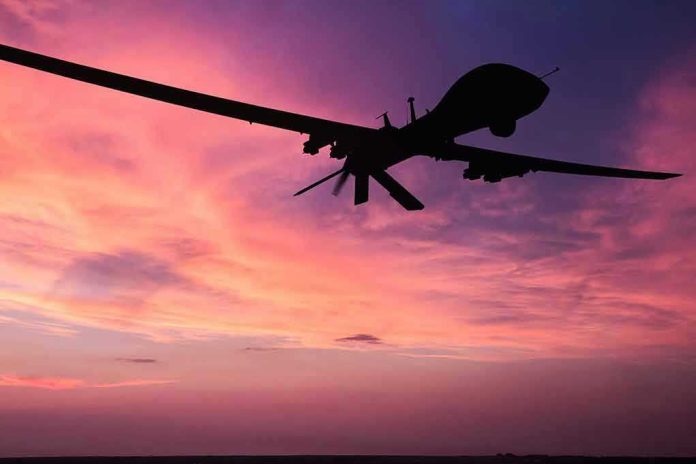
Iran’s regional playbook increasingly centers on mass-produced drones such as the Shahed series, described in the research as low-cost loitering munitions with long range and meaningful payload. Analysts cited in the research argue that drones are used for sustained harassment and economic disruption, partly by forcing defenders to spend high-cost interceptors. The economic imbalance is the core tactic: drones can be far cheaper than the air-defense missiles used to stop them.
Regional data points underline the scale. By mid-March 2026, reporting cited 3,885 projectiles in a broader conflict picture, with roughly 75% described as drones and the UAE absorbing a large share of the attacks. Separate reporting cited more than 3,600 drones launched regionally by 2026. The numbers vary by source and time window, but both paint the same picture: Iran is betting that volume and persistence can strain air defenses and political patience, even when many drones are intercepted.
What Comes Next: Deterrence, Defense Gaps, and Protecting Commerce
The strongest confirmed facts point to a continued risk of tit-for-tat strikes, especially after a direct hit on a U.S.-flagged ship. The research also highlights a structural concern for U.S. partners: even capable systems can be stressed by repeated waves, and the defender’s cost per shot can be punishing. That imbalance is not just a military problem; it becomes a budget problem—exactly the kind of unsustainable spending conservatives have long warned about.
Iran’s Drone Games Are About to Backfire https://t.co/tWMBj7aLkr
— Jim Polk 🇺🇸 (@JimPolk) May 10, 2026
The near-term priority for Washington is straightforward: protect Americans, protect commerce, and deny Iran the ability to normalize attacks on international shipping lanes. The longer-term lesson is equally clear from the research: drone warfare is no longer a side feature of conflict; it is central, and it rewards countries willing to mass-produce and iterate quickly. If Iran believes it can keep testing boundaries without paying a price, the incentive to escalate only grows.
Sources:
https://redstate.com/nick-arama/2026/05/10/iran-hits-us-flagged-tanker-n2202190
https://www.businessinsider.com/iran-war-us-top-allies-fall-behind-in-drone-defense-2026-3
https://www.newarab.com/analysis/what-iran-conflict-means-future-drone-warfare