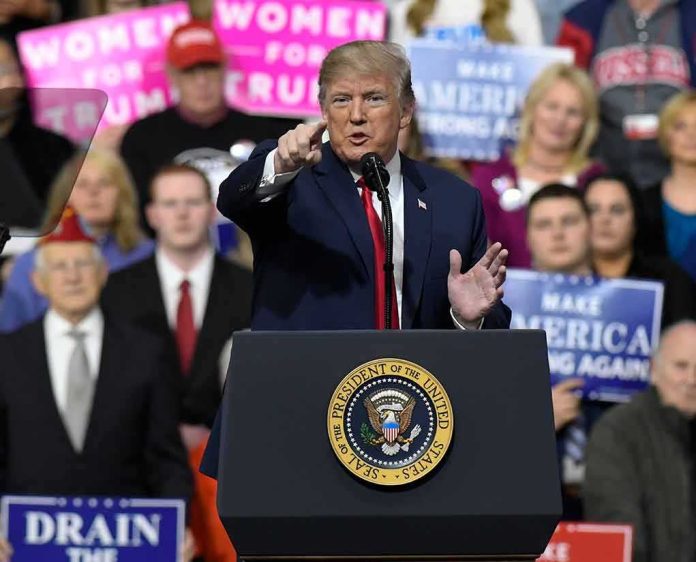
President Trump says Iran would be “obliterated” and “there will be nothing left” if Tehran ever succeeds in assassinating him, turning years of Iranian threats into a clear warning of overwhelming U.S. retaliation.
Story Snapshot
- Trump says he has left firm instructions to bomb Iran “at levels they’ve never seen before” if he is killed.
- U.S. prosecutors have charged an Iran-linked suspect over an alleged plot to surveil and assassinate Trump before the 2024 election.
- Iran’s leaders and supporters have issued open death threats against Trump, including “we will kill you” banners at mass events.
- Legal experts say any actual strike would still require a decision by Trump’s successor under U.S. law and the Constitution.
Trump Draws a Red Line: Assassination Means Iran’s Destruction
President Trump has now said in public that if Iran or its proxy forces ever manage to assassinate him, the response should leave “nothing left” of the regime. In interviews and social media posts, he explained that he has “left instructions” for the United States military to “literally bomb them all… at levels that they’ve never seen before” if anything happens to him. He framed this not as personal revenge, but as a warning meant to stop foreign enemies from thinking they can murder an American president and escape real consequences.
Trump’s comments come after years of open threats from Iran’s rulers and hardline supporters, who have vowed revenge for his 2020 decision to take out Qassem Soleimani, the powerful Iranian commander behind many attacks on Americans. Crowds in Iran have chanted for Trump’s death and carried banners promising to kill him, while regime-linked voices have joked about using drones to strike him at his home. Trump argues that only a crystal-clear pledge of total destruction will make Iran’s leaders think twice before trying to carry out those threats.
Evidence of Iranian Plots and Washington’s Alarm
Federal prosecutors in the United States say Iranian actors have already gone beyond talk and moved into planning. A criminal complaint unsealed in Manhattan describes how Farhad Shakeri, a 51-year-old man with ties to Iran’s Islamic Revolutionary Guard Corps, was tasked to develop a plan within days to surveil and potentially assassinate Trump during the final weeks of the 2024 campaign. According to the Justice Department, this effort was part of a broader push by the Iranian government to target Trump and other American and allied figures as revenge for Soleimani’s killing.
Intelligence services have also raised alarms about fresh plots. Israeli officials shared information with Washington suggesting hardline Iranian elements were exploring another way to kill Trump, and that warning fed into new concern inside the U.S. government. Trump has said American intelligence briefed him on “genuine and specific threats” from Iran aimed at taking his life to cause chaos in the United States. Iran’s foreign ministry has publicly denied all assassination plots, calling them “malicious” accusations, but the mix of charges, intelligence, and street threats paints a serious picture for U.S. security planners.
What Trump’s “Standing Orders” Really Mean Under U.S. Law
Trump’s vow to “obliterate” Iran if he is assassinated raises a big question: can a president truly leave automatic attack orders from beyond the grave? Legal experts and former national security officials say the answer is no. Under the Constitution, the 25th Amendment, and the Presidential Succession Act, power passes immediately to the vice president if a president is killed. In today’s line of succession, Vice President JD Vance would become commander in chief the instant Trump died, and only he could decide whether to follow Trump’s wishes or respond in a different way.
Analysts explain that the United States military does not operate a “dead man’s switch” that fires missiles automatically when a president dies. Normal nuclear and conventional launch rules still apply, even in a crisis. Trump can leave written guidance, private letters, or verbal instructions for Vance and top commanders, and he can order plans to be drawn up in advance. But any actual strike on Iran would still require a conscious, lawful decision by the new president and the chain of command.
High Stakes for American Power, Deterrence, and the Constitution
For many conservative Americans, Trump’s message hits two nerve points at once: national strength and constitutional order. On one side, they see a hostile regime openly calling for the death of a sitting president, cheering slogans that threaten to “kill Trump,” and backing plots that federal agents say were designed to carry out that threat. On the other side, they expect their government to respond from a position of overwhelming strength, not with appeasement, delay, or weak warnings that invite more attacks.
Trump’s promise to obliterate Iran if it kills him is meant to restore deterrence after years of what many on the right view as soft, “globalist” handling of Tehran. At the same time, the limits on automatic retaliation show that the Constitution still guards against one person locking the country into war without checks. Vice President Vance, Congress, and the American people would all matter in any decision that follows. That balance between hard power abroad and rule of law at home is at the heart of Trump’s new warning to Iran, and to anyone else who thinks they can erase the American presidency with a bullet or a bomb.
Sources:
pjmedia.com, youtube.com, bbc.com, wsj.com, cnn.com, time.com, iranintl.com