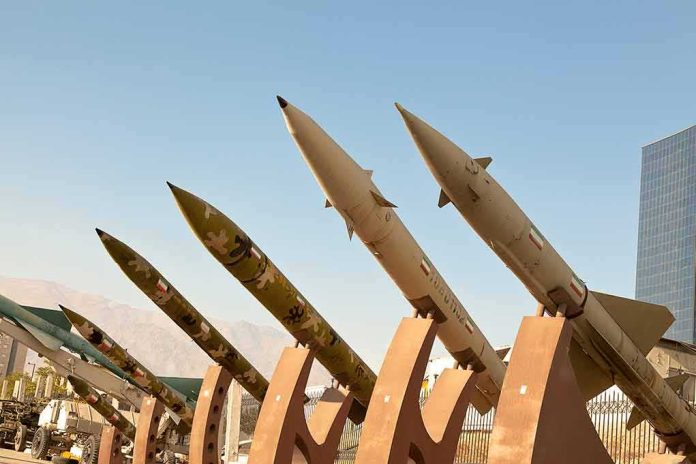
Analysts say the Islamic Revolutionary Guard Corps trains for holy struggle and martyrdom, a doctrine that often blocks real bargaining and pushes toward conflict instead.
Story Highlights
- Research ties the Guard’s worldview to indoctrination, Mahdism, and martyrdom.
- Analysts argue this ideology narrows space for compromise with the West.
- Debate persists over whether doctrine fully prevents deals or only hardens terms.
- U.S. policy choices carry higher risks if talks ignore these limits.
What the Research Says About IRGC Ideology
Middle East Institute research describes a Guard shaped by intense indoctrination, where leaders have boosted training that centers on Mahdism and an end-times lens for struggle with the United States and Israel. That lens teaches members to see sacrifice, and even death, as noble service. Analysts at the Washington Institute add that rigid ideology often guides decisions, making any shift toward pragmatism shallow and brief when core beliefs feel threatened. Together, these findings explain why talks can stall fast.
Tony Blair Institute material and related studies say the Guard’s education stresses Shia Islamist doctrine, clerical rule, and jihad as an ongoing mission, at home and abroad. That mission is not only national defense. It is framed as spreading a religious political order. Such goals can turn standard bargaining into a clash of values. When one side treats a deal as a tool, and the other sees it as a test of faith, terms grow rigid and trust is scarce from the start.
How Ideology Shapes Negotiation and Risk
Policy papers argue that this system prizes loyalty over technical skill, promoting those who show fervor first and expertise second. That choice builds a force that rewards adherence to doctrine in planning and operations. Analysts warn that, under these conditions, confidence-building steps may fail or be reversed when leaders judge them as ideological weakness. This is why outside actors often meet hard lines on missiles, militias, and regional reach, even when sanctions bite and backchannels open.
Other research highlights a key debate: some experts see the Guard as deeply ideological yet still responsive to survival needs, internal factions, and pressure from costs at home. This view does not deny doctrine. It says the system sometimes bends to avoid collapse. That means deals may happen, but only on narrow terms, with strict red lines, and with constant risk of snapback if leaders believe faith, regime security, or prestige are at stake.
Why This Matters for U.S. Policy and Public Fears
Background primers explain that the Guard has grown into a power center with its own economy, foreign networks, and military tools. That reach gives it leverage over Iran’s choices abroad. For Americans across the spectrum, this fuels a shared worry: talks that ignore ideology can misread intent and waste time, while force can spark wider war and higher energy costs. Voters see leaders in Washington rotate strategies yet fail to deliver safety, stability, or lower prices.
Practical lessons emerge. First, set narrow goals linked to clear costs and timelines. Second, assume doctrine will cap concessions on missiles and proxies. Third, build regional deterrence with allies while keeping crisis channels open. This is not about cheering war. It is about matching policy to facts shown in the record: the Guard’s training and creed push it toward steadfast positions, and any deal that survives must account for those fixed beliefs from the start.
Sources:
youtube.com, alexanderhamiltonsociety.org, usip.org, scholarship.claremont.edu, scispace.com, dss.missouristate.edu