
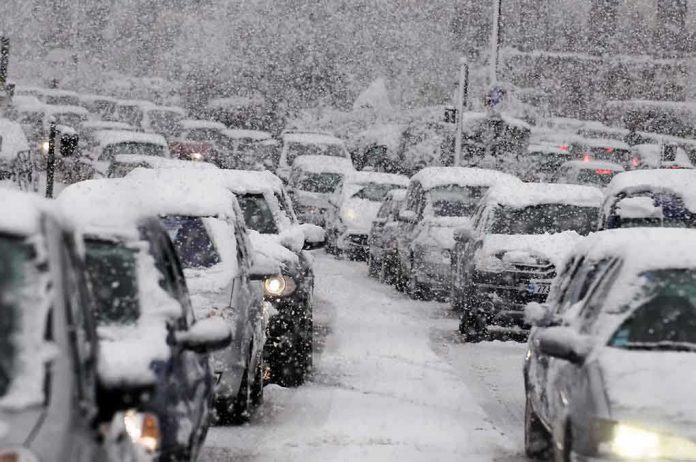
When a million Americans lose power and ten thousand flights vanish from departure boards in a single storm sweep, the bill for our aging electrical grid comes due in ways that hurt far more than your wallet.
Story Snapshot
- Major US storms routinely trigger million-plus power outages and thousands of flight cancellations, costing the economy up to $150 billion annually in lost productivity and infrastructure damage.
- Vulnerable Gulf Coast and Midwest counties face the longest restoration times, with low-income communities enduring compounded harm from food insecurity, medical device failures, and hypothermia risks during extended outages.
- A single three-day widespread power interruption can slash GDP by 1.3 to 2.6 percent, with retail and transportation sectors hemorrhaging two to four percent of output as evacuation chaos and backup failures magnify economic losses.
- Experts agree upfront grid resilience investments outweigh reactive disaster costs, yet utilities and government agencies remain locked in budget battles while outdated transmission lines buckle under climate-driven storm intensity.
The Hidden Math Behind the Blackout
Power outages exceeding one million customers sound catastrophic, but the real damage unfolds in spreadsheets and emergency rooms. Economic models tracking Illinois utilities and Gulf Coast scenarios reveal that even a single day without electricity erases $1.8 to $2.2 billion in GDP, a 1.3 percent national hit concentrated in retail and transportation. High-income households absorb the expenditure shock fastest, dropping spending by two percent, while low-income families in socially vulnerable counties face life-threatening consequences when medical devices fail and carbon monoxide poisoning spikes after eight hours of darkness. The aviation sector compounds this chaos, stranding travelers and severing supply chains as ten thousand canceled flights ripple through an interconnected economy already strained by storm evacuations and inventory losses.
Stretch that outage to fourteen days and the carnage multiplies sevenfold. A two-week blackout drains $15.2 billion from the economy, a 10.4 percent GDP collapse driven by agriculture and construction sectors shedding seven to ten percent of output. Researchers discovered that disequilibrium effects like forced evacuations and spoiled inventory account for 71 to 88 percent of total losses, dwarfing the market price adjustments economists traditionally measure. This finding challenges decades of disaster modeling that underestimated how resilience tactics, from backup generators to emergency relocations, paradoxically amplify short-term economic damage even as they save lives.
Where the Grid Fails First and Longest
Geography determines who suffers and for how long. Ohio State and Duke University researchers mapped power restoration times against social vulnerability indices across Gulf Coast counties from 2017 to 2022, uncovering a brutal pattern: communities with mid-to-high vulnerability scores endure the longest blackouts, even when storm intensity matches wealthier areas. Mississippi River corridors, South Florida, and Louisiana-Mississippi coastal zones top this grim list, where aging transmission infrastructure collides with dense populations lacking resources to weather extended outages. These aren’t abstract statistics but counties where food insecurity doubles during three-day blackouts and hypothermia hospitalizations surge when heating fails in winter storms.
The utilities serving these regions face contradictory pressures. ComEd in Illinois and Entergy across Louisiana and Mississippi must balance federal oversight demanding grid modernization against shareholder expectations for quarterly returns. State agencies like the Texas Public Utility Commission and Florida Division of Emergency Management mandate preparedness plans, but utilities control the actual restoration crews and investment timelines. This power imbalance leaves vulnerable communities dependent on external aid while airlines and factories leverage economic clout to lobby for backup systems and insurance protections that smaller households cannot afford.
Why Preparedness Loses the Budget Fight
The Department of Energy calculates storm-related power outages cost $150 billion annually across the entire US economy, with individual severe weather events ranging from $20 to $55 billion depending on duration and affected regions. Despite this staggering price tag, grid resilience investments stall in appropriations committees and utility boardrooms. The math favors prevention: upfront spending on hardened transmission lines, underground cabling in storm corridors, and targeted upgrades in vulnerable counties yields long-term savings that dwarf reactive disaster response costs. Yet political cycles reward visible emergency aid over invisible infrastructure, and utilities hesitate to raise rates for improvements that may not materialize for years.
Economic modeling from NIH-funded studies and industry risk analyses exposes a perverse incentive structure. Backup generator usage among businesses declined from 13 to 9 percent over recent years, not because storms weakened but because short-term cost pressures outweigh catastrophic risk planning. Experts across academic and government circles agree that computable general equilibrium simulations should guide policy decisions, prioritizing grid modifications in counties where social vulnerability intersects with high storm exposure. The consensus is clear: resilience trumps reaction. The execution remains hostage to budget battles and regulatory fragmentation that leave Americans literally in the dark when the next storm strikes.
This pattern of million-customer outages paired with mass flight cancellations echoes Hurricane Sandy’s eight million blackouts in 2012 and Winter Storm Uri’s 4.5 million Texas outages in 2021. Climate-driven storm intensity escalates against grid underinvestment and urban density in hurricane alleys and Midwest corridors, guaranteeing repetition until structural reforms redirect dollars from disaster cleanup to preventive hardening. The question isn’t whether another storm will darken a million homes and ground ten thousand flights, but whether decision-makers will act before the next weather system proves the price of inaction.
Sources:
Economic Modeling of Widespread Power Outages – PMC
Economic Costs of Utility Disruptions: Why Preparedness Matters – ACRT
New Study Links Power Outages, Social Vulnerability in Gulf Coast – Ohio State News
The Impact of Power Outages – Pinkerton
Grid Resiliency Report – US Department of Energy