Security video shows a landing Cessna striking a hovering state police helicopter, leaving one pilot dead and two troopers hurt, as federal investigators work to confirm why it happened.
Story Snapshot
- Federal Aviation Administration confirmed a midair collision near Carlisle, Pennsylvania.
- Cessna 150 hit a Pennsylvania State Police Bell 407 helicopter during training.
- Airplane pilot died; two trooper pilots were injured and hospitalized.
- National Transportation Safety Board will determine the cause after a full probe.
What Happened Over Carlisle Regional Airport
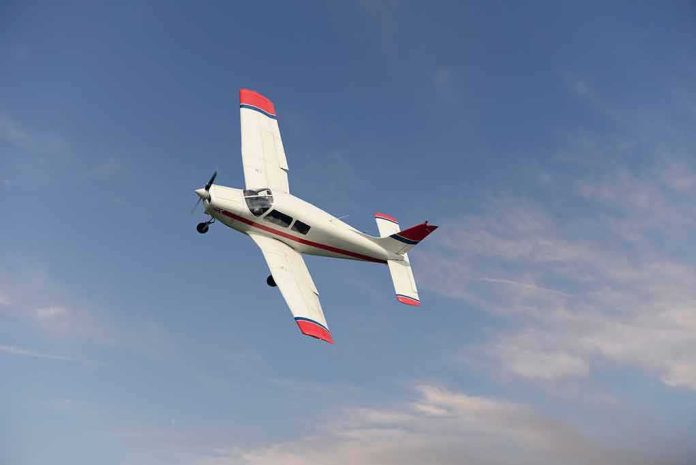
Federal Aviation Administration (FAA) officials said a Cessna 150 and a Bell 407 helicopter collided in the air near Carlisle, Pennsylvania, around 7:50 p.m. on Wednesday, August 19. State and local officials reported the helicopter belonged to the Pennsylvania State Police and was conducting a training exercise at the time of the crash. The airplane’s pilot died. Two trooper pilots in the helicopter were injured and taken to a hospital for treatment, according to public statements from officials.
Pennsylvania leaders visited the troopers and their families after the crash and thanked first responders for their work that night, underscoring the human toll. The FAA said investigators from the FAA and the National Transportation Safety Board (NTSB) will lead the probe and release findings when complete. Early updates focused on the aircraft types, the location, the time, and the immediate response. Officials have not assigned fault or released a full causal chain.
Why Midair Collisions Cluster Near Smaller Airports
NTSB reports and FAA training guides show many midair collisions happen at or near non-towered airports and at low altitude, where pilots rely on “see and avoid” and shared radio calls instead of tower control. Past investigations cite missed visual cues, poor radio use, and traffic pattern conflicts as common factors, especially during approach and landing. In several cases, investigators found that one pilot failed to see and avoid another aircraft that was close and slightly below their flight path.
Those patterns do not determine blame in the Carlisle crash. They do explain why investigators will examine visual lookout, training practices, radio discipline, and flight paths. The NTSB often reviews prior examples to improve safety training and controller briefings. The agency has previously urged changes after midair collisions to address missed traffic advisories and risky approaches around busy patterns. Findings in Carlisle will likely follow that method, with a focus on lessons that can prevent another loss.
What Investigators Will Likely Examine Next
Investigators will map wreckage, analyze video, and pull maintenance and training records. They will study radio calls, flight tracks, weather, and lighting. They will model how each crew saw (or failed to see) the other aircraft on approach. They will compare the sequence to known risk points near non-towered fields described in FAA handbooks and NTSB case files. The goal is to sort contributing factors and recommend fixes that are clear, practical, and fast to adopt.
𝗡𝗶𝗴𝗵𝘁𝗹𝘆 𝗡𝗲𝘄𝘀 𝗮𝘁 𝗡𝗶𝗻𝗲
"…but really at 8:30 because you fall asleep after 9 news"
Here's what's developing right now across our top stories 🧵
━━━━━━━━━━
𝗣𝗶𝗹𝗼𝘁 𝗞𝗶𝗹𝗹𝗲𝗱 𝗶𝗻 𝗖𝗼𝗹𝗹𝗶𝘀𝗶𝗼𝗻 𝗪𝗶𝘁𝗵 𝗣𝗲𝗻𝗻𝘀𝘆𝗹𝘃𝗮𝗻𝗶𝗮 𝗦𝘁𝗮𝘁𝗲…
— OvertheFenceNews.com (@OvertheFencePub) August 21, 2026
For pilots and the public, the bottom line is simple. Approach and landing create a tight window where small mistakes can become deadly. See-and-avoid only works when everyone broadcasts position, scans with discipline, and respects the pattern. Carlisle’s outcome is tragic. But if investigators tie this crash to familiar weak spots, their report can push changes in training, procedures, or tech that save lives the next time aircraft share a crowded final.
Sources:
independent.co.uk, 6abc.com, wgal.com, instagram.com