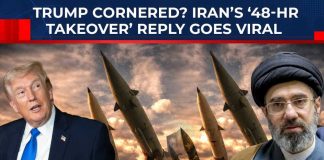
President Trump just told Iran that if they don’t reopen the Strait of Hormuz, he’ll blow up the entire country—and he’s not backing down from that statement.
Story Snapshot
- Trump issued a profanity-laden ultimatum demanding Iran reopen the Strait of Hormuz by April 6th or face military strikes on energy infrastructure
- The president has repeatedly moved deadlines since March 21st while escalating rhetoric, warning Iran will be “living in hell” if they don’t comply
- The Strait of Hormuz carries one-third of the world’s maritime oil trade, making this confrontation a global economic flashpoint
- Trump’s shifting messages contradict themselves, claiming alternately that the U.S. could seize the strait and take oil, or that “it is up to other countries”
The Ultimatum That Keeps Moving
Trump first dropped his 48-hour deadline on March 21st, threatening to bomb Iranian energy facilities unless Tehran reopened the Strait of Hormuz. Then something curious happened: he pushed back the deadline, citing progress in talks. The new date became April 6th. But on April 4th, Trump reset the clock again, warning that “time is running out 48 hours before all hell will rain down on them.” This deadline whiplash raises a fundamental question about credibility when the ticking clock keeps getting rewound.
Language That Abandons Diplomatic Norms
The president’s public statements represent a sharp departure from traditional diplomatic communication. Trump declared Iran would be “living in hell” and stated flatly that if negotiations fail, “we’re blowing up the whole country.” These aren’t carefully calibrated signals designed to preserve maneuvering room—they’re absolute declarations that paint the president into a rhetorical corner. Either he follows through and triggers a major regional war, or he demonstrates that his ultimatums mean nothing. Neither outcome serves American interests particularly well.
The Strategic Waterway at the Center
The Strait of Hormuz isn’t just another shipping lane. This narrow passage between Iran and Oman funnels approximately one-third of global seaborne oil trade through a chokepoint just 21 miles wide at its narrowest point. Iran has long understood this geography gives it asymmetric leverage against militarily superior adversaries. Any disruption to this waterway sends shockwaves through global energy markets, affecting prices at gas pumps from Dallas to Dubai. Trump’s approach frames reopening the strait as an American demand backed by military force rather than an international freedom-of-navigation issue.
Contradictions in Strategy
Trump has sent remarkably inconsistent messages about American intentions. He’s stated the United States could “easily open it and take the oil for itself”—suggesting unilateral military action and resource seizure. Yet he’s also claimed “it is up to other countries” to address the situation. These contradictory positions undermine strategic clarity. Does America intend to act alone or build an international coalition? Is this about freedom of navigation or resource acquisition? The mixed messaging creates confusion among allies and adversaries alike about what the United States actually wants.
What Happens When Deadlines Pass
The April 6th deadline looms, yet Trump has already demonstrated willingness to extend his timeline when talks appear productive. This pattern creates a credibility problem. Adversaries learn that announced deadlines are negotiable, that inflammatory rhetoric doesn’t necessarily predict action, and that the gap between words and deeds can be exploited. The danger isn’t just that Iran might call the bluff—it’s that miscalculation on either side could trigger a conflict neither party actually wants. Wars have started over less volatile combinations of pride, rhetoric, and strategic miscalculation.
The global economy watches nervously as this confrontation unfolds. Energy markets price in risk premiums. Regional powers calculate their exposure. And American military planners prepare contingencies for a potential conflict that would make recent Middle Eastern engagements look modest by comparison. The difference between tough negotiating tactics and reckless brinkmanship often becomes clear only in hindsight—usually after something irreversible has already happened. Trump’s approach to Iran tests which side of that line his strategy actually falls on.
Sources:
Trump Sends Iran Final Warning