
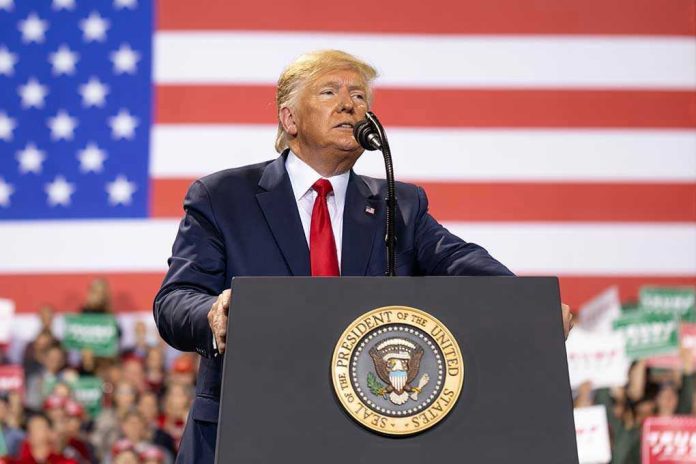
President Trump’s claim that roughly 275,000 “illegal aliens” were removed from Social Security rolls is fueling a bigger fight over whether Washington can police benefits without punishing legal residents or relying on shaky numbers.
Quick Take
- Trump said his administration removed nearly 275,000 noncitizens from Social Security rolls and argued the move protects seniors and taxpayers.
- The White House and Social Security Administration tied the effort to an April 2025 directive focused on eligibility checks, fraud enforcement, and data cleanup.
- Independent confirmation of the exact 275,000 figure—and any “billions” saved—has not been publicly released in the sources provided.
- Critics argue the removals could include people who lost lawful status (such as certain TPS recipients) and warn of database errors affecting legitimate records.
What Trump said happened—and what’s verified so far
President Donald Trump said in an August 2025 public event marking Social Security’s 90th anniversary that his administration had removed nearly 275,000 “illegal aliens” from Social Security system rolls. He suggested many of the people affected had already left the country but were still getting checks, and he linked the action to a broader promise to protect seniors’ benefits. The core figure comes from Trump’s own remarks and repeating statements by his administration, not an independent SSA data release.
The evidentiary gap matters because the story blends multiple categories that are easy to confuse: removing names from databases, terminating benefit payments, correcting records, and removing people from the country. In the material provided, there is no published, itemized SSA dataset showing who was removed, what benefit programs were affected, or how many cases involved actual improper payments versus administrative changes. That limitation doesn’t disprove fraud; it simply means the public can’t yet audit the specific headline number.
The April 2025 directive: eligibility enforcement meets database cleanup
The administration’s enforcement narrative rests heavily on an April 2025 White House fact sheet and an SSA press release describing steps to prevent ineligible noncitizens from receiving Social Security Act benefits. Those steps included expanding fraud work, increasing coordination with law enforcement, and targeting suspicious records—including extremely old ages—through inspector general activity. Trump also highlighted that the agency had identified millions of records listing implausible ages, including over 120 and over 160, which points to longstanding data integrity problems that predate his second term.
For conservative voters who see government as bloated and poorly managed, the old-record problem is the part of the story that should not be controversial: a federal program that handles enormous sums needs clean, auditable data. At the same time, the scale of “cleanup” can be misread as proof of mass, ongoing check fraud when it may include dormant records, deceased individuals, or legacy file issues that do not necessarily reflect current payments. The provided sources do not quantify how much of the cleanup directly translated into stopped benefit outflows.
Who was actually affected: “illegal aliens” vs. legal-status changes
A central dispute is whether “nearly 275,000” refers strictly to undocumented immigrants fraudulently receiving benefits, or a broader pool that could include people who lost lawful status because of policy decisions. Reporting cited in the research argues the statistic may sweep in people whose protections were revoked or expired, making them newly ineligible even if they had previously been authorized to work. That distinction is politically explosive: conservatives prioritize benefit integrity and rule-of-law enforcement, while many liberals view broad removals as bureaucratic overreach that can hit lawful families.
Another complication is administrative error. The research references a 2025 episode in which a government efficiency effort mistakenly marked thousands of immigrants as deceased in SSA systems. Even a relatively small error rate becomes a major public trust issue when the target is retirement or disability checks that Americans depend on. None of the provided sources show how many disputed cases were corrected or how quickly affected individuals could appeal, leaving unanswered questions about due process and safeguards for lawful beneficiaries.
The fiscal argument: savings claims collide with competing math
Trump’s messaging emphasized protecting seniors and saving taxpayers, with allied arguments pointing to large national costs attributed to illegal immigration. The White House fact sheet cited outside estimates about fiscal burdens, and the administration framed enforcement as a direct way to reduce improper payments and deter illegal immigration incentives. However, the sources provided do not include a government accounting that ties the “275,000” figure to a specific dollar amount saved in Social Security outlays, much less “billions,” which remains an assertion without published supporting totals here.
Critics counter with a different financial lens: undocumented immigrants can pay payroll taxes through work while being ineligible for many benefits, meaning removals and deportations could reduce contributions to the system. That argument doesn’t negate the need to stop improper payments or identity theft, but it does highlight why the policy debate often devolves into dueling statistics. Without transparent SSA reporting—broken down by program, eligibility category, and confirmed overpayment recovery—the public is left evaluating politics rather than verifiable program performance.
Why this fight resonates in 2026
Republicans control Washington in 2026, but the deeper frustration spans parties: many Americans believe federal agencies can’t deliver basic competence, whether it’s border control, benefit integrity, or accurate recordkeeping. Trump’s announcement speaks to a conservative demand for enforcement and limited government that works—stop fraud, secure systems, and prioritize citizens who paid in. The pushback reflects a liberal fear that centralized power and rushed enforcement can sweep up lawful residents, with limited transparency and limited recourse.
WATCH: Trump Announces Nearly 300,000 Illegal Aliens Removed from Social Security Rolls, Historic Purge Will Save Taxpayers Billions While Protecting Seniors’ Benefits https://t.co/x30hHf38sS #gatewaypundit via @gatewaypundit
— jillabean (@JillaRudd) May 2, 2026
The practical takeaway is that the headline number is less important than whether the administration can publish clear, reviewable metrics: how many payments were actually improper, how many cases involved identity theft, how many people were removed due to status changes, and what appeal protections exist. Until that happens, the story will keep functioning as a political Rorschach test—either proof that government can finally enforce the rules, or proof that government still can’t be trusted to separate fraud from bureaucracy.
Sources:
Press Release (April 16, 2025) — Social Security Administration
Transcript: Donald Trump Signs a Social Security Proclamation in the Oval Office (08/14/25)
Social Security’s 90th birthday: Trump administration continues to tout faulty stats
Mass Deportation: Analyzing the Trump Administration’s Impact on Democracy
Social Security and undocumented immigrants