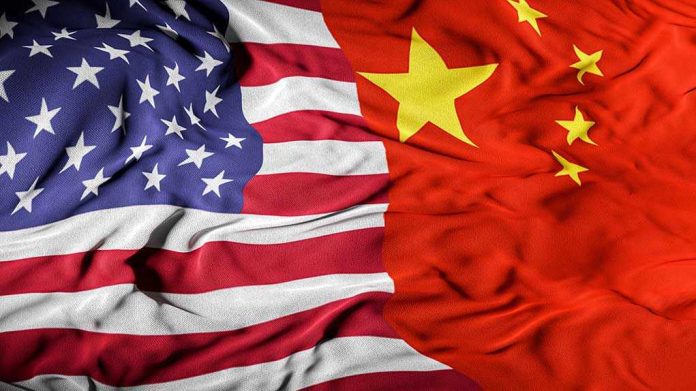
Democrats who once mocked Trump’s China tariffs are now talking tough—just as a new tariff escalation and a Trump-Xi summit put real economic pain and national leverage on the line.
Story Snapshot
- Rep. Madeleine Dean’s new China-hawk messaging is colliding with resurfaced footage of earlier Democratic support for China tariffs.
- The Trump administration has imposed steep new tariffs reported at 104% on Chinese goods, with Beijing responding with 34% retaliatory tariffs.
- Trump has threatened an additional 50% tariff increase if U.S. demands are not met by a deadline, raising the stakes ahead of a planned summit with Xi Jinping.
- China has signaled broader retaliation beyond trade, including a reported move affecting U.S. films and hundreds of millions in box office revenue.
Democrats’ tariff whiplash collides with a fast-moving trade fight
Rep. Madeleine Dean (D-PA), a member of the House Foreign Affairs Committee, has been featured in recent commentary about getting “tough” on China, while conservative media circulates older clips showing prominent Democrats supporting punitive tariff ideas long before Trump made tariffs central to U.S. policy. The friction is political, but the policy context is real: Washington and Beijing are already exchanging major tariff blows, and voters will feel the consequences quickly.
Democrats have long tried to draw a distinction between opposing Trump’s approach and supporting “toughness” in principle. That argument gets harder when the public sees a timeline where Democrats criticized Trump-era tariffs as reckless, yet earlier Democratic figures—such as Sen. Chuck Schumer in 2005—advocated dramatic tariff rates against China. For older Americans frustrated with globalism and manufacturing decline, the apparent shift reads less like evolution and more like politics chasing headlines.
What changed in 2026: tariff escalation, retaliation, and summit diplomacy
The current flashpoint is not rhetorical. The Trump administration has implemented tariffs reported at 104% on Chinese goods, while China has hit back with 34% retaliatory tariffs. Trump has also threatened an additional 50% tariff increase if demands are not met by a deadline. A planned summit with China’s Xi Jinping is expected to loom over near-term decisions, because both governments are signaling that neither wants to appear weak.
China’s response has also highlighted how trade conflict spreads into other parts of national life. The research points to a Chinese move to restrict American films, putting an estimated $500 million in U.S. box office revenue at risk. That kind of retaliation matters beyond Hollywood: it shows Beijing looking for pressure points inside the U.S. economy. For Americans already worried about inflation and supply-chain fragility, this is the kind of escalation that can quickly spill into prices and jobs.
The economic reality: leverage vs. higher prices, with workers in the middle
Tariffs are often described as a simple “get tough” tool, but the near-term tradeoffs are usually immediate. Higher tariffs can raise prices on consumer goods and components, particularly in categories heavily sourced from China. At the same time, the research outlines why many voters still support tariffs: they can protect domestic producers, encourage reshoring, and reduce dependence on a strategic rival. The likely outcome is mixed—benefits in protected sectors and pain in import-heavy supply chains.
Why the hypocrisy narrative sticks—and what it says about trust in government
The “gotcha” framing works because it taps into a deeper, bipartisan suspicion that Washington elites treat policy like a costume change. Conservatives see years of Democratic criticism of tariffs followed by a sudden pivot toward tougher messaging. Many liberals, meanwhile, worry that both parties talk about helping workers while letting powerful interests manage the outcomes. The shared frustration is institutional: citizens sense that leaders prioritize positioning, not consistency or results, even when the stakes involve national security and prosperity.
Heading into the Trump-Xi summit window, the most useful takeaway is practical rather than partisan: Americans should watch for whether either party can explain a clear end-state. The research provides plenty of claims, but limited detail on measurable goals—such as which Chinese practices must change, what tariff levels would remain, and what sectors would be shielded from blowback. Without those specifics, “tough on China” risks becoming another slogan that keeps Washington employed while families absorb the costs.
Democrat Suddenly Wants to Get Tough on China After Mocking Trump’s Tariffs (VIDEO)
READ: https://t.co/mgFPPudRCJ pic.twitter.com/RmCXKDxufx
— The Gateway Pundit (@gatewaypundit) May 10, 2026
Republicans currently hold unified control of the federal government, so accountability for outcomes will ultimately fall on the governing party, even as Democrats attempt to obstruct. Still, the resurfaced Democratic tariff history is a reminder that China policy has always been politically malleable. If tariffs are going to be a long-term tool rather than a campaign prop, voters will want transparent benchmarks, congressional oversight that isn’t performative, and an honest discussion of who pays in the short run and who benefits in the long run.
Sources:
chad-wolf-chinas-ai-mockery-shows-fight-americas-underway
democrat-suddenly-wants-get-tough-china-after-mocking