
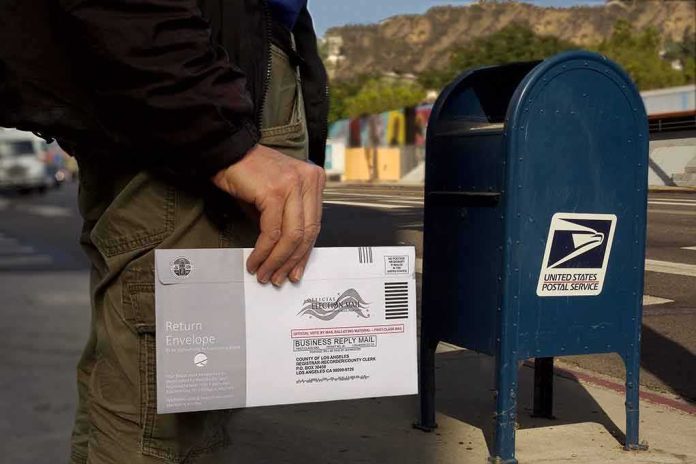
A Supreme Court decision kept new mail-ballot rules on hold, and the Postal Service chief says the computer system behind them is now frozen.
Story Snapshot
- Postmaster General David Steiner said USPS stopped work on the ballot-tracking computer system due to an injunction.
- Courts blocked enforcement of the Trump-backed mail voting rule for 2026, and the Supreme Court left that block in place.
- The administration argued the changes were modest, legal, and within Postal Service authority over mail handling.
- USPS indicated it would not apply the new requirements for the 2026 election while litigation continues.
USPS Halts Work After Court Injunction
Postmaster General David Steiner said the United States Postal Service has stopped work on a computer system tied to new mail-ballot requirements because a court injunction remains in effect. “There’s an injunction so we’re not doing anything,” Steiner told reporters, confirming a full pause on development and deployment. His statement followed weeks of legal wrangling over a federal rule meant to set baseline standards for ballot envelopes and tracking, which had been central to the administration’s election-mail plan.
The pause means the Postal Service will not roll out technology intended to give better visibility into ballot envelopes moving through the mail stream, at least for now. The system was designed to help standardize how ballots are processed, labeled, and tracked so they move quickly and securely. Without it, the agency returns to current practice for the 2026 cycle. That choice reflects legal limits, not a shift in mission, Steiner suggested, as the organization follows the courts’ directions while serving voters and states.
Courts Keep New Rule on Ice for the 2026 Elections
Federal courts blocked the Postal Service from enforcing the new mail-ballot rule, finding it likely clashed with existing law. The Supreme Court declined to lift the block ahead of the 2026 midterms. That left the earlier injunction in place and prevented the agency from applying the rule this fall. The practical result is status quo procedures for election mail in 2026, even as the legal fight over federal and state roles in election administration continues.
The Postal Service publicly acknowledged those limits when it finalized the rule but noted it would not act on it for the 2026 election unless it won relief from the courts. That aligned with the later Supreme Court action. The agency’s memo language and public posture stressed continuity for election mail amid the injunctions, signaling that any new steps would wait for a clear legal green light before changes touched ballot handling this year.
Administration’s Case: Modest Standards, Clear Authority
The administration argued the changes were narrow and lawful. It framed the rule as standard-setting for mail design and address information so the Postal Service could process ballots faster and with better tracking. Supporters said states that rely on federal mail should follow reasonable Postal Service rules that govern how items move through the network. They argued that the core of the plan was basic operational hygiene, not a bar to voting by mail.
Advocates for the rule also pointed to benefits for visibility and law enforcement when ballot envelopes carry clear, uniform markings and data. They said that helps spot delays, confirm movement, and protect chain of custody. Those claims did not persuade the courts for 2026, but they outline the policy aim: treat ballots like other sensitive mail with firm standards that speed delivery and reduce errors, while keeping states informed about their election mail in transit.
What the Pause Means for Voters and Election Integrity
Voters will use familiar mail-ballot steps this year because the injunction froze the new system and rules. States keep their current ballot designs and processes, and the Postal Service continues long-standing handling methods. That avoids last-minute changes that could confuse voters. It also means the planned national standard and tracking tool will not help reduce mismatched designs, routing errors, or blind spots in the mail stream for the 2026 cycle.
The system built to gatekeep mail-in voting just got frozen – and its own chief seems relieved.
Postmaster General David Steiner confirmed to the AP that USPS has halted work on the computer system central to Trump's mail-voting restrictions, days after the Supreme Court rejected…— Top Stories (@TopStories77) September 18, 2026
For readers who want secure elections and clear rules, this fight is not over. The court orders control 2026, but the legal question of where federal operational rules end and state election authority begins remains active. If the administration returns to court with a tighter record and clearer limits, it may try again. Until then, the Postal Service follows existing practice, and states carry the load on ballot design choices that can make mail delivery either smooth or risky.
Sources:
washingtontimes.com, newser.com, theguardian.com, apnews.com