
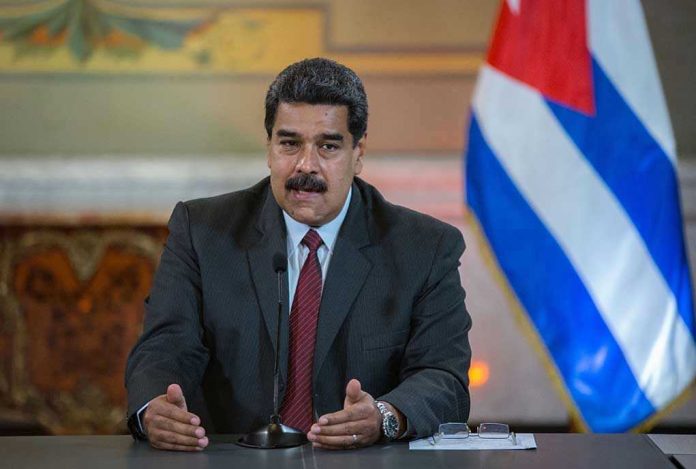
In a stunning reversal after two decades of rupture, the United States and Venezuela publicly announced a new military partnership in Caracas, pledging joint training, intelligence sharing, and defense upgrades.
Story Snapshot
- U.S. Defense Secretary Pete Hegseth and Acting President Delcy Rodríguez jointly announced renewed military cooperation in Caracas.
- The deal includes joint training, intelligence sharing, and defense equipment, but few operational details are public.
- Both sides framed the move as restoring ties long frozen since 2005.
- The announcement follows reports of a U.S. operation that removed Nicolás Maduro earlier this year, raising legitimacy questions.
What Was Announced in Caracas
U.S. Defense Secretary Pete Hegseth appeared with Acting President Delcy Rodríguez at the Miraflores palace on November 18, 2026. They said the countries would restart defense cooperation after years of estrangement. Hegseth said the forces would train together, share intelligence, and work on equipment and new capabilities. Rodríguez said the partnership would strengthen training and modernize the armed forces. Both described the effort as a formal reset of ties.
Hegseth framed the plan around shared security concerns. He named foreign actors, narco-terrorists, criminals, and border threats as targets. Rodríguez spoke about common threats as well. Officials cast the cooperation as a way to make daily life safer and more stable. The tone was practical and focused on results. That message appealed to people tired of rising crime, drug flows, and weak borders across the region.
Scope, Promises, and the Missing Fine Print
Public statements said the deal covers joint training, intelligence sharing, and defense equipment. The plan hints at technology access and broader modernization for Venezuela’s forces. But neither side released the full text of the agreement. There is no published timeline, staffing numbers, equipment lists, or budget. Without these details, the claims of rapid change remain promises, not proof. That gap invites scrutiny from both supporters and critics.
Officials called the move a reestablishment of ties, which signals a major turn after a long freeze that began under Hugo Chávez. Outside outlets described it as the first such step in roughly two decades. That scale matters. Deep freezes often create rust in institutions. Training pipelines, logistics links, and trust all need time to rebuild. Measurable outcomes will likely lag the headlines by months or even years.
The Shadow of Maduro’s Removal
The announcement came after reporting that U.S. forces removed Nicolás Maduro in a January operation. That sequence makes the new partnership look fast and unusual. It also raises questions about consent, leverage, and political legitimacy in Caracas. Some coverage highlighted those tensions. The administration’s message stresses security results. Still, the history will color how many voters view the deal at home and abroad.
Venezuelan officials, for their part, stressed sovereignty. They said any cooperation must follow the constitution and keep Venezuelan command in charge of its troops. That stance seeks to calm fears of outside control. It also sets a test for the months ahead. If joint work respects those lines and shows results against crime and trafficking, support could grow. If not, critics will say the partnership was imposed.
Why This Matters to Americans
Americans across the spectrum worry about drugs, crime, border chaos, and rising costs. They also distrust secretive deals made by elites. This agreement touches all those nerves. If it cuts drug flows and weakens cartels, it could help communities and relieve pressure at the border. If it hides costs or shifts control without oversight, anger will grow. Transparency, clear goals, and public metrics will decide which path the deal takes.
US War Secretary Pete Hegseth announced a military cooperation agreement with #Venezuela during his visit to Caracas, according to Venezuelan state television.#Hegseth described the agreement as the "reestablishment of our defense partnership" and said it opens room for the… pic.twitter.com/f4yXmJxAqY
— Al Mayadeen English (@MayadeenEnglish) November 18, 2026
Here is what to watch next. First, whether joint training events are scheduled and completed. Second, whether seizures and interdictions rise in the months after. Third, whether any equipment transfers are disclosed with end-use rules. Fourth, whether Congress and Venezuela’s institutions receive formal notifications. Concrete data, not podium lines, will show whether this is real change or a press event with no engine under the hood.
Sources:
english.elpais.com, militarytimes.com, latimes.com, yahoo.com, upi.com