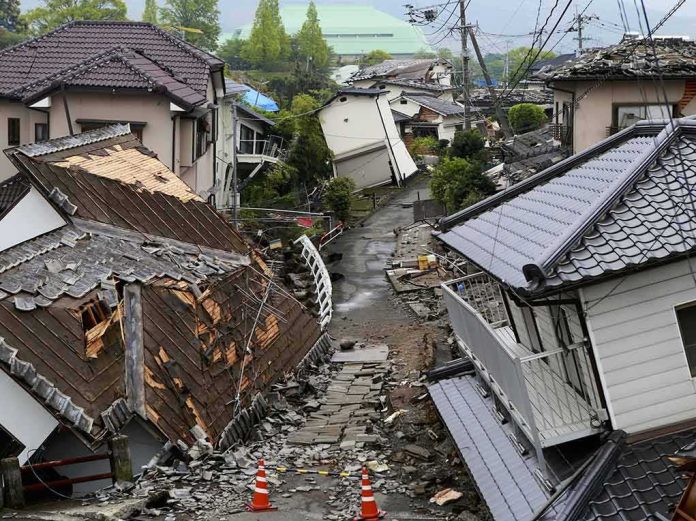
A deadly week of earthquakes across five regions stirred global fear, but scientists say the events were separate and not linked.
Story Highlights
- Two huge Venezuelan quakes hit 39 seconds apart in a confirmed seismic doublet.
- Seismologists report no causal tie between Venezuela, Japan, Afghanistan, the Philippines, and California events.
- United States agencies stress global quakes often cluster in time without being connected.
- Basic readiness, strong building codes, and clear alerts save lives when major faults slip.
Venezuela’s Doublet: What Happened in Those 39 Seconds
United States Geological Survey (USGS) records show a magnitude 7.2 foreshock struck northern Venezuela and a magnitude 7.5 mainshock followed 39 seconds later. The agency classifies the pair as a seismic doublet on the same fault system, with complex rupture interaction in one zone. Local and international reports describe heavy damage, a national emergency, and a rising toll as rescue work unfolded after the back‑to‑back hits. This was Venezuela’s strongest earthquake sequence in more than a century, according to relief reporting.
Reporters on the ground detailed severe shaking, building failures, and crowded hospitals as people sought care. Early counts from wire services listed dozens dead and hundreds hurt, while other outlets later reported higher estimates as rescue crews reached blocked areas. Damage snapshots from engineering teams and aid groups highlighted collapsed structures and stressed transport links, slowing relief. Officials urged calm, asked people to avoid damaged buildings, and warned about aftershocks as assessments continued.
Are the Global Quakes Connected? What the Science Says
Seismology experts explain that earthquakes often appear to “cluster” in time, but that does not mean they are linked across oceans. The USGS says earthquakes occur in known patterns along major plate boundaries, and large events can happen close together in time simply by chance. The Venezuelan doublet is a physical pair in one fault zone. The other reported quakes in Japan, Afghanistan, the Philippines, and California occurred in separate tectonic systems, so scientists see no causal chain among them based on current data.
Public anxiety grows when several strong quakes strike within days on different continents. Media and social posts often ask if a global “trigger” is at work. Historical catalogs and scientific explainers show that multiple magnitude 7 events in the same week happen from time to time, without a shared cause. Agencies focus on rapid response and clear messaging to reduce panic and guide safety steps. That helps families act fast on shelter, utilities, and evacuation when warnings and aftershock notices arrive.
Why This Matters at Home: Preparedness, Not Panic
American readers saw headlines about Japan and California during the same week and asked what it means for safety here. Experts point to the basics: secure heavy items, store water and food, keep a flashlight and radio, and plan a family meetup spot. States along the Pacific, the New Madrid region, and other known zones run drills and improve alerts. The goal is simple and local. When a fault moves, early warning seconds and strong buildings can cut injuries and save lives.
Conservatives also worry about government promises that fail when it counts. Transparent facts beat hype. The science is firm that Venezuela’s two quakes were a linked doublet in one fault, while the wider week’s quakes were separate events in other systems. That means we should not stoke fear with grand theories. We should demand strong infrastructure, honest risk maps, and accountable spending that hardens schools, bridges, and hospitals without waste or political agendas.
Sources:
insiderpaper.com, miyamotointernational.com, earthquake.usgs.gov, aljazeera.com, en.wikipedia.org, cnn.com, reliefweb.int, cloud-storage.globalquakemodel.org