Rallies like President Trump’s stop in Vandalia, Ohio are not casual stump speeches; they are turnout machines designed to concentrate partisan energy exactly where party strategists believe it will matter most, and they work in sharp, local bursts rather than as sweeping national pivots.
At a Glance
- Trump’s Vandalia rally was a targeted midterm mobilization stop backing Ohio Republicans in competitive statewide races.
- The event followed a predictable operational playbook: high-profile headliner, local candidates on stage, disciplined calendar timing, and a venue chosen for media reach.
- Academic evidence shows presidential rallies can lift support and turnout briefly and locally; they are tactical, not transformative.
- Policy messaging at the rally fused national themes (immigration, costs, energy) with Ohio-specific economic claims and infrastructure concerns such as data centers.
What Happened: A Rally Built for Mobilization
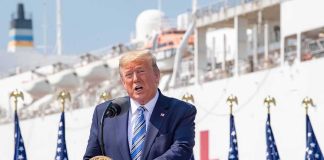
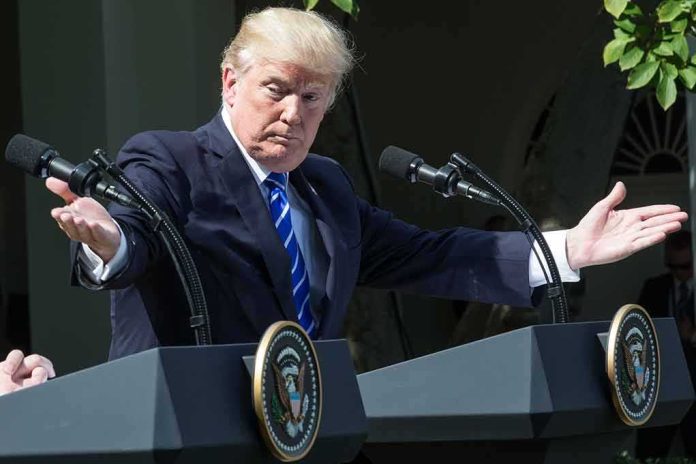
President Trump headlined a midterm rally at the Butler-Vandalia Student Activity Center in Vandalia, Ohio, to boost Republican candidates on the ballot. The event was scheduled, ticketed, and framed as a “Midterm Rally” by the Republican National Committee, with doors and start times publicized for Saturday, Oct. 3, 2026, and a precise venue address—hallmarks of a formalized, party-integrated mobilization stop rather than a freelance campaign flourish. Local and national outlets carried live programming and previews around the appearance, underscoring the intended dual audience: in-person attendees for turnout activation, and the larger at-home electorate reachable via television and streaming.
The lineup paired the national headliner with Ohio Republican candidates and surrogates, weaving the party’s statewide ticket into Trump’s speech arc. Coverage placed the rally explicitly inside the final-month sprint to Election Day, calibrated to capture early voting windows and to press the habitually supportive but inconsistently voting cohort to make a concrete plan to cast a ballot.
How Rally Politics Actually Works
Presidential rallies are logistical instruments more than persuasion seminars. Research across multiple election cycles indicates these events can bump short-term support for the headliner and increase stated intention to vote—effects that are strongest among co-partisans and “leaners” and that decay with time and distance from the venue. A separate working paper tracking tour stops similarly finds county-level turnout uplifts where a presidential campaign invests a visit, again emphasizing proximity and timing as the essential levers. In other words, campaigns use rallies to stack votes at the margins where they can be found quickly—less about flipping hardened opponents, more about converting enthusiasm into actual ballots within the window that counts.
Modern parties also exploit the signaling value of location and crowd size—both to communicate momentum to donors and volunteers and to saturate local media markets at comparatively low cost. Communication scholarship describes rallies as a hybrid of logistics and optics: the city tells a story, the cameras carry it, and the candidate’s brand supplies the accelerant. The Vandalia stop fits that mold precisely—near a major metro, inside Ohio’s political bloodstream, and timed to the 30-day run-up to voting.
The Ohio-Specific Message Architecture
Trump’s Ohio pitch typically knits national ideological staples—border enforcement, inflation, energy prices—with state-grounded claims about investment and jobs. Reporting around the Vandalia event echoed that blend, including boasts about corporate investment and promises coded to local economic anxiety, such as corralling electricity costs and defending industrial growth narratives. Ohio’s political economy makes this pairing rational: a manufacturing heritage still central to civic identity, a grid facing new load proposals (including data centers), and exurban counties where national-cultural arguments resonate but voters also want credible assurances on costs and employment pipelines.
That is why the staging often featured a Senate candidate and a gubernatorial hopeful in the same camera frame: the message needed to bind federal posture (tariffs, immigration, macro energy policy) to statehouse execution (siting, permitting, rates oversight, workforce), translating national promises into local consequences. In that structure, a presidential rally becomes a distribution hub for cues—down-ballot Republicans borrow the headliner’s brand to validate their own policy claims and to inherit his mobilization apparatus for get-out-the-vote.
Effects and Limits: What the Evidence Supports
Well-measured rally effects are real but bounded. The most robust findings show short-lived bumps: increases in candidate favorability among Republicans and Republican-leaners, higher stated intention to vote, and incremental small-dollar contributions—shaping the near-term information environment without reconfiguring the race’s fundamentals. County-level turnout analyses of tour stops likewise detect measurable, local increases when the presidential campaign touches down, consistent with the “mobilize your own” theory of modern rallies. These effects justify a packed schedule of appearances in the last 30 days—stacking small gains across multiple markets can cumulatively tip close races.
The limits matter just as much. Rallies do not, on average, erase structural headwinds: underlying partisanship, incumbency advantages, district maps, economic baselines, and candidate quality remain the primary drivers of outcomes. Media often frame these moments as inflections in a national horse race—“is the headliner helping or hurting?”—but the more accurate lens is operational: does the stop place the right message in front of the right universe of persuadable or low-propensity co-partisans at the right time? The Vandalia rally’s design suggests that is precisely how party professionals were thinking about it.
Why Vandalia, Why Then
Campaigns choose venues for four reasons: vote density, media reach, logistics, and symbolism. Vandalia sits just north of Dayton, providing access to suburban and exurban vote pockets while tapping into a media market that blankets a wider region. The Butler-Vandalia Student Activity Center offers predictable security, ingress/egress, and production values that television loves. The Saturday slot compresses the day’s news cycle and maximizes attendance for working voters. And pairing the president with the marquee statewide candidates concentrates earned media on the aligned ticket rather than diffusing it across separate events.
Finally, the calendar mattered. With early voting and registration milestones clustering in the first week of October in Ohio, a rally at month’s open can both dramatize deadlines and hand local parties thousands of opt-in contacts for immediate GOTV follow-up. That is a veteran field operation’s cadence, not an improvised tour.
The Broader Takeaway for Readers
If you watch these events for dramatic reveals, you will miss their point. They are instruments—discipline over drama. The Vandalia rally inserted a familiar national message into Ohio’s specific political economy, handed the microphone to down-ballot Republicans who need the president’s coalition to actually vote, and saturated a key media market during the period when marginal gains pay off most. The academic literature aligns with that tactical reading: rallies move numbers, locally and briefly, which is exactly what professional campaigns want in the home stretch.
Trump touts ‘golden age’ at Ohio rally, urges voters to deliver GOP midterm wins ~ https://t.co/pBcakPnr1u #FoxNews
— MikeKirby (@mikekirbyone) October 4, 2026
Sources:
nbcnews.com, fox19.com, events.gop.com, daytondailynews.com, wcpo.com, local10.com, fox10tv.com, wdtn.com