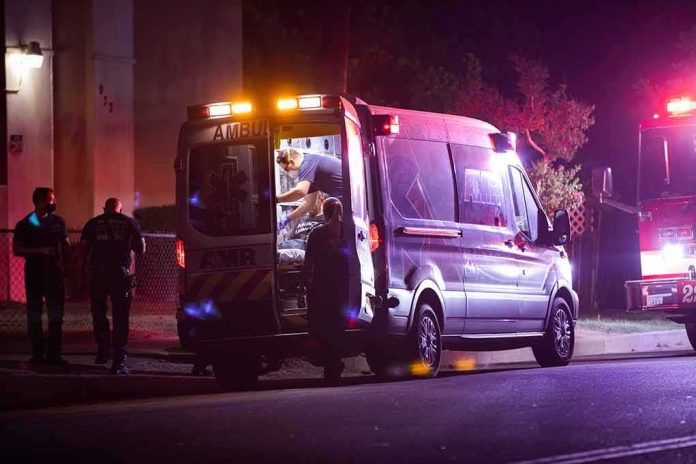
A packed Bangkok music bar turned into a deadly trap in minutes, killing 27 people and exposing yet another failure to keep ordinary citizens safe.
Story Snapshot
- At least 27 people were killed and dozens injured when a massive fire tore through a popular Bangkok bar.
- Thailand’s prime minister confirmed the death toll and ordered an investigation, but the cause is still officially “under review.”
- Early reports point to an electrical problem and blocked or locked exits, raising hard questions about safety enforcement.
- The tragedy fits a long pattern of deadly nightclub fires in Thailand where promised reforms never fully arrive.
What We Know About the Deadly Bangkok Bar Fire
Thai officials say a huge fire ripped through a popular music bar in Bangkok, killing at least 27 people and injuring more than 60 others. The blaze broke out in the early hours, when the bar was busy with both local residents and tourists. Prime Minister Anutin Charnvirakul visited the site and said, “We have recovered 27 bodies, others are being sent to hospital.” Emergency workers moved bodies out in rows as stunned survivors watched from behind police lines.
Rescue teams described a scene of chaos as thick smoke and flames spread quickly through the building. Survivors told reporters they had only seconds to escape and that there was “no way out” once the main room filled with smoke. Many victims were found near doorways and stairwells, suggesting they were trying to reach exits when they were overcome. Officials say at least 22 people are in critical condition, meaning the death toll could still rise.
Cause Under Investigation and Early Safety Concerns
Prime Minister Anutin Charnvirakul has said the cause of the blaze is still under investigation and called it a “very regrettable accident.” Investigators arrived at the scene soon after firefighters left and began examining wiring, lighting, and other equipment. Early reports from Thai media and international outlets say an electrical short circuit, possibly linked to a circuit breaker, may have started the fire. Eyewitnesses claim they saw sparks and then an explosion near the bar’s stage area just before flames spread.
Survivors and local reports also raise serious questions about basic fire safety at the bar. Some witnesses say emergency exits were locked or blocked, forcing people to fight toward a single crowded doorway. Video shared online appears to show flames blasting from the main entrance while people are trapped inside with no clear escape route. Authorities have not yet released full building inspection records, so there is still no official confirmation about whether exits were properly maintained and open.
A Tragedy in a Larger Pattern of Nightclub Fires
For many Thai citizens, this disaster feels painfully familiar, not like a one-time freak event. In 2009, the Santika Pub fire in Bangkok killed 66 people and injured more than 200 after flames raced through flammable decorations during New Year’s Eve celebrations. That earlier tragedy prompted government promises to tighten fire codes and enforce safety rules in clubs and bars. Yet deadly incidents have continued, including a 2022 fire at the Mountain B pub in eastern Thailand that killed at least 13 people.
🚨🇹🇭 BREAKING: Reports are emerging of a devastating fire at a bar in Bangkok.
🔥 Videos circulating online appear to show people fleeing the blaze as thick smoke engulfs the area.
Authorities are responding, but the number of casualties has not yet been officially confirmed.…
— Kirikaar (@Kirikaar77) July 12, 2026
This history matters because it shapes how people view the government’s response today. Each time, leaders vow stronger enforcement and say they will protect ordinary people from unsafe venues. But many citizens see a pattern where inspections are light, rules are bent, and powerful owners often avoid real punishment. Media coverage of the current fire already frames it as part of a wider failure to enforce safety laws, not just a single unlucky blaze.
Why This Story Resonates Beyond Thailand
For Americans watching from afar, this tragedy echoes worries at home about whether government really protects regular people or mostly shields well-connected businesses. In Thailand, critics say promised safety reforms often fade once the headlines move on, leaving workers and families exposed. In the United States, many on both the right and the left feel something similar about workplace safety, infrastructure, and disaster planning. They see leaders talk tough after each crisis but rarely fix the deeper problems.
Conservatives upset about global elites and bad regulations, and liberals angry about inequality and neglect, share a core fear here: ordinary lives seem expendable when profit and politics come first. A crowded bar with locked exits in Bangkok looks a lot like unsafe factories, aging bridges, or weak fire codes anywhere. The lesson is simple but hard to swallow. When rules exist only on paper, disasters do not stay “over there.” They show what happens when safety becomes optional.
What to Watch for Next in the Bangkok Investigation
In the coming weeks, key questions will test whether this tragedy leads to real change or becomes one more sad story in a long list. Will investigators release clear findings on the electrical system and name who is responsible if negligence is proven? Will the government publish building inspection records and exit door logs so the public can see whether rules were broken and who missed warning signs? And will victims’ families receive fair compensation, or face long legal battles against powerful bar owners?
For now, the official story is simple: a deadly fire, 27 people gone, and a promised investigation. The deeper story is about trust. Thai citizens, like many Americans, are asking whether leaders will finally treat safety as more than a talking point. If history repeats, promises will be made, reports will be written, and life will go on with little changing. If this time is different, the Bangkok bar fire could become a turning point where public pressure forces real enforcement, not just regret after the fact.
Sources:
thegatewaypundit.com, sciencedirect.com, facebook.com, boisestatepublicradio.org, youtube.com, 11alive.com, wkzo.com, aljazeera.com, reuters.com, instagram.com, bbc.co.uk, firstcoastnews.com, firstpost.com