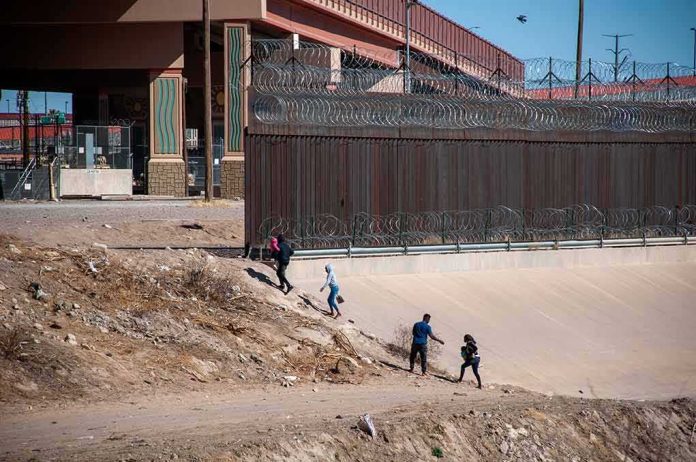
Israel’s sweeping ban on Palestinian workers after October 7 has crippled tens of thousands of families and an entire economy, while big American outlets mostly reduce it to a one-word excuse: “security.”
Story Snapshot
- Israel canceled nearly all Palestinian work permits after October 7, stranding close to 200,000 workers and their families.
- Israeli ministers openly frame Palestinian labor as a security threat and push to replace it with foreign workers from other countries.
- The ban has driven West Bank unemployment and poverty sharply higher and cut hundreds of millions from Palestinian incomes each month.
- Major U.S. and Western outlets often echo “security” talking points while downplaying how this policy punishes an entire population.
What Israel Did After October 7
Right after the Hamas attacks on October 7, Israeli authorities canceled virtually all permits that allowed Palestinians to enter Israel for work or medical care, citing security concerns and attempted terror attacks. Before the war, well over 100,000 Palestinians from the West Bank and Gaza crossed into Israel daily for jobs that paid roughly double what most could earn at home. By early 2025, one rights group reports that the number working inside the pre-1967 lines fell from about 178,000 to just 35,300.
The ban did not only block new permits. Israel also canceled permits for Palestinians from Gaza who had been living and working in the West Bank for years, leaving them at risk of arrest or deportation if they hit a checkpoint. Human rights reports say Israeli forces arrested and detained thousands of Palestinian workers and medical patients with valid permits on October 7, even though they were not linked to the attacks. These moves turned a targeted border closure into a sweeping dragnet that hit almost every Palestinian household tied to Israel’s labor market.
Security Justifications Versus Collective Punishment
Israeli officials defend the ban as a basic matter of public safety. The government points to the Hamas massacre and says workers from Palestinian areas could aid future attacks or gather intelligence. One official think tank close to the security establishment calls the bar on more than 140,000 West Bank workers a response to fears about their “allegiance” after the war began. The same analysis admits the move heavily strains the Palestinian Authority’s economy and also hurts Israeli sectors that relied on this labor.
At the political level, ministers have gone further. Israel’s economy minister Nir Barkat argued in early 2024 that the state should “not be the employment agency for Palestinian workers,” saying the country needs “working hands from peace-seeking countries, and not from Palestinian workers who will endanger Israeli public security.” He urged Israeli businesses to reject workers from the Palestinian Authority “period.” Human rights groups seize on this kind of language to argue the ban is not a narrow safety step but part of a broader project to squeeze Palestinians out of economic life and even off their land.
The Economic Fallout for Palestinians and Israelis
For Palestinians, the fallout has been severe. One Israeli security institute estimates that over 140,000 West Bank workers lost access to jobs in Israel since the war began, putting the Palestinian Authority’s economy at risk of collapse. Another research group says the closure of the Israeli labor market has doubled unemployment in the West Bank, with joblessness jumping into the 30 percent range and poverty rates nearly doubling. Families that once relied on a single construction wage to support large households now face no income at all.
International and Palestinian economists describe a chain reaction. Losing high Israeli wages cuts household spending in the West Bank by double-digit percentages, which then hits local shops, factories, and farms. A United Nations–linked study from the Second Intifada era showed how similar closures destroyed tens of thousands of private sector jobs and wiped out hundreds of millions of dollars in Palestinian income. Today’s restrictions repeat that pattern on a larger scale. Israel’s decisions on permits, crossings, and withheld tax revenue now drive much of the Palestinian downturn.
Israel Is Paying a Price Too
Israel is not escaping the cost. Construction, farming, and industry depended for decades on Palestinian labor. A policy brief from a Palestinian think tank estimates the Israeli economy is losing more than $800 million each month because of labor shortages in these sectors. Israeli analysts warn that the ban has made it harder to restart stalled building projects and may slow long-term growth as businesses struggle to find trained workers to replace Palestinians.
Rather than roll back the ban, the government has moved to swap Palestinian workers for migrants from Asia, including countries like India, Sri Lanka, China, and Thailand. Supporters say this reduces security risks. Critics note it deepens a long pattern where Israel “summons, exploits, expels, or replaces” Palestinian labor based on its needs, rather than treating these workers as neighbors with stable rights. That pattern feeds Palestinian claims that labor policy is being used as a tool of population control, not just border defense.
How the Media Frames the Ban
In the United States and much of the West, media coverage has focused on dramatic battlefield events in Gaza and Israeli politics, often treating the worker ban as a side detail or a routine security measure. When outlets like the New Yorker describe the policy, they usually note the economic pain but frame the decision mainly as Israel “barring nearly 200,000 Palestinian laborers” after an attack. They rarely dwell on how indefinite the ban has become or how deep its social impact runs in Palestinian towns.
Scholars who study news coverage say this fits a larger pattern. Research on U.S. and European media finds that Western outlets often echo official Israeli security language while casting more doubt on Palestinian claims and underreporting Palestinian suffering. That tilt affects how American audiences, including conservatives and liberals, understand stories like the worker ban. For many viewers, “security” becomes a magic word that ends the debate, even when governments never present clear evidence that these specific workers posed any special threat.
Why This Resonates With Americans Across the Spectrum
For many Americans, the story hits a nerve that crosses party lines. Conservatives who worry about border security and terrorism still know what it feels like when Washington shuts down whole industries and shrugs off the economic fallout. Liberals who focus on workers’ rights and inequality see a clear case of a powerful state stripping a weaker population of its ability to work and feed their families. Both groups are familiar with leaders saying “safety” while ordinary people pay the price.
Here, a government with advanced intelligence tools chose a blanket ban that punished almost 200,000 workers, many with long records of quiet daily crossings, without making public any large set of specific cases against them. At the same time, that government seeks foreign labor to keep its own economy moving. When Americans watch their own media soft-pedal these facts, it adds to a growing sense that global elites protect each other, that some lives count less than others, and that basic promises about fairness and work are being traded away behind closed doors.
Sources:
alhaq.org, palestine-studies.org, facebook.com, inss.org.il, amnesty.org, btselem.org, al-shabaka.org, en.wikipedia.org, un.org