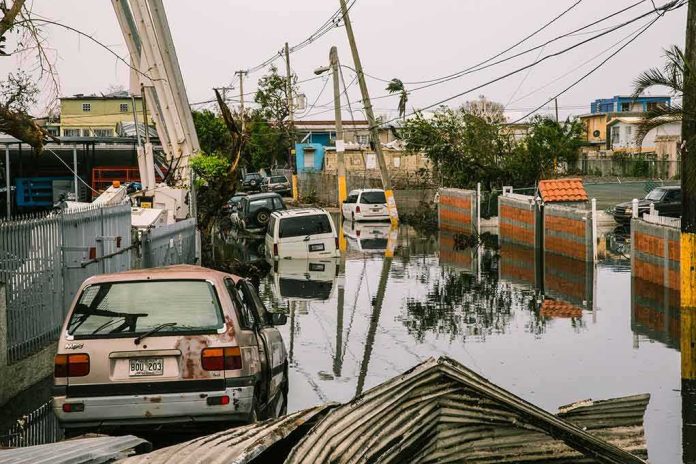
President Trump approved emergency aid after record Indiana floods killed at least five people and forced mass rescues across multiple counties.
Story Highlights
- State confirmed at least five storm-related deaths, with impacts from floods and high winds.
- Governor Braun declared a statewide disaster emergency and activated the National Guard.
- President Trump approved an emergency declaration to unlock federal assistance.
- Indianapolis crews conducted dozens of water rescues as rivers hit historic crests.
Confirmed Deaths And Where The Danger Hit
Indiana emergency officials said at least five people died during this week’s storms, with fatalities linked to flooding in central Indiana and high winds in the northwest. Reuters reported deaths across Jennings, Lake, Porter, LaPorte, and two in Delaware County, showing how risk stretched across the state. Some cases remained under review, but officials described the threat as immediate and widespread, moving from fast water to falling trees and power lines as storms passed.
Indianapolis-area responders pulled people from cars, homes, and neighborhoods as water rose fast. The Indianapolis Fire Department reported more than fifty water rescues, with evacuations of residents and pets from low-lying zones near 78th Street and Keystone Avenue. Local reporters documented boats searching flooded blocks and urged people to avoid driving through high water. Officials said rapid calls for help came as rain overwhelmed streets and creeks that drain into the White River.
State Actions: Emergency Order And Guard Activation
Governor Mike Braun declared a statewide disaster emergency and said the state had mobilized local partners and the Indiana National Guard. Braun asked Washington for immediate help to support rescues, sheltering, and infrastructure protection. The order aligned agencies under one command structure and sped aid to counties with washed-out roads, strained shelters, and damaged utilities. State emergency managers warned that some travel limits and road closures would remain in place until waters fell and crews could inspect damage.
President Trump approved an emergency declaration for Indiana, allowing federal aid to support lifesaving efforts and protect public health and property. Federal Emergency Management Agency (FEMA) assistance follows the Stafford Act’s emergency standard, which focuses on urgent threat reduction rather than final damage totals. That decision unlocked resources for debris removal, emergency protective measures, and coordination support. Federal teams began planning with state leaders to assess needs as rivers continued to crest in some areas.
Local Evacuations, Shelter Options, And River Records
City and county leaders urged people in flood zones to leave before the water rose again. Indianapolis Mayor Joe Hogsett asked residents in vulnerable areas to evacuate early, while Noblesville’s mayor warned drivers to stay off closed roads. Shelters opened at the Washington Township Adult Center, Broad Ripple Park Family Center, and the Hamilton County Fairgrounds to take in evacuees and pets. Officials said those sites would adjust hours and capacity as river forecasts and on-the-ground needs evolved.
Rainfall of 10 to 12 inches in pockets pushed rivers to rare levels. In Noblesville, the White River crested near 23.9 feet, topping a record that stood since 1913, according to local reporting and river gauge updates. Citizens Energy Group shut down the White River North Water Treatment Plant to protect equipment as floodwaters advanced, while utilities worked to restore power where lines and substations were threatened. Travel watches and advisories spread across counties as crews marked sinkholes, washed-out shoulders, and unstable bridges.
Why Tallies Change And What Comes Next
Early counts of deaths, rescues, and evacuations often shift during floods as agencies confirm details and pull in reports from multiple jurisdictions. National guidance explains that federal emergency aid can be approved before final damage figures so responders can save lives and limit harm. Research shows many flood deaths happen in vehicles, which matches what local teams warned about as drivers met swift, hidden currents at night or at closed crossings. Officials said they would reconcile rescue logs and fatality records after immediate threats eased.
[Take 13/15 · 𝕏-3]
### 𝕏-3. Midwest flash floods worsen; Indiana requests federal aid as storms continue
*(as of 2026-08-16)***1. The Frame**
**What people think this is about:** A worsening natural disaster crisis in the Midwest, with deadly flash floods in Indiana…
— GrumpyNews, emotionally clean news. (@GrumpyNews_) August 16, 2026
Residents face a long cleanup once waters recede. State and federal teams will survey damaged homes, roads, and public facilities to guide next steps. People in flooded areas should follow local guidance on reentry, document damage, and avoid using unsafe power or gas systems. Leaders across parties often argue about causes and spending, but in disasters the mission is simple: protect life, stabilize the scene, and restore basic services quickly so families can recover.
Sources:
aljazeera.com, indystar.com, reuters.com, cfjctoday.com, nbcnews.com, ipm.org, abcnews.com, x.com, forecast.weather.gov