
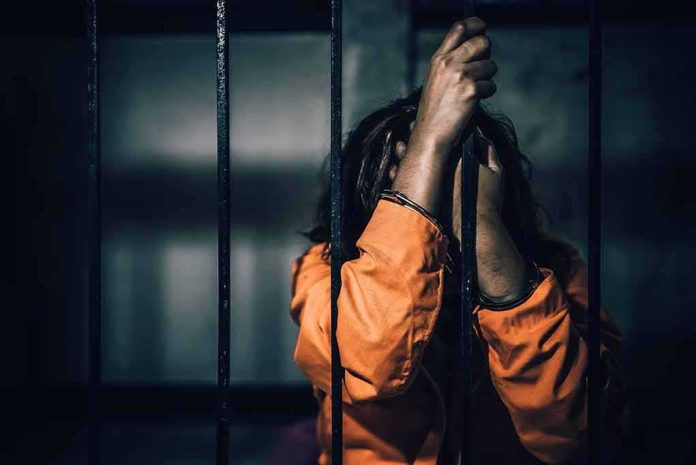
The danger in automated license-plate surveillance is not the camera’s pixel but the human impulse to treat a probabilistic lead as proof; when that happens, a routine alert can metastasize into a wrongful arrest, as it did for Lindsey Isaacs, and the safeguards that should stand between a database hit and a jail cell fail in sequence.
The Short Version
- Isaacs testified under oath that a Flock ALPR record entered the chain of investigation that led to her arrest and 13 days in jail for a crash she did not commit.
- Witnesses reportedly described a maroon Dodge Durango with a partial plate; investigators focused on Isaacs’ black Durango linked by an ALPR capture a few miles away.
- Photographs later undercut claims that Isaacs’ vehicle bore collision damage; prosecutors declined to pursue the case and charged another driver instead.
- Flock argues its systems only generate leads, not arrests—useful in investigations when treated as fallible signals and verified rigorously.
What the record establishes about the Isaacs case
We have an unusually clear backbone for a wrongful-arrest chronology because Isaacs placed it under oath before the Senate Judiciary Subcommittee: an automated license-plate reader (ALPR) capture of her black Dodge Durango “became part of an investigation that ultimately led to my arrest on three counts of vehicular homicide and 13 days in jail.” Her testimony details confinement conditions with specificity—roughly 86 hours locked alone in a cell and additional days in maximum security—specificity that typically signals contemporaneous documentation rather than post hoc embellishment. Multiple outlets recounted the same arc: a Flock camera recorded her vehicle two to three miles from a fatal hit-and-run; witnesses described a maroon Durango and partial plate “458”; the investigation focused on Isaacs; and after 13 days behind bars, the case against her collapsed while another person was pursued instead.
The physical-evidence claims also cut against the original theory. Reporting from the hearing indicates troopers asserted that Isaacs’ SUV showed crash-consistent damage; defense photographs from an impound lot, later presented, allegedly showed no such damage. That discrepancy—objective imagery versus interpretive assertion—was among the factors cited when prosecutors stepped back. The Seventh Circuit State Attorney’s office declined to prosecute Isaacs, and attention shifted to another driver, underscoring that the state itself abandoned the inculpatory narrative rather than pressing it through trial.
How ALPR systems actually work—and where errors creep in
ALPRs like Flock’s are high-volume sensor networks: cameras capture passing vehicles, extract the alphanumeric plate, and tag make, model, and color for fast search across time and geography. Properly used, the output is a lead generator—an index, not a verdict. The error surface spans far beyond “did the camera misread the characters?” It includes hot-list staleness (is the sought plate actually wanted now?), partial plates (which multiply candidate vehicles), human interpretation of color and trim, and the perennial cognitive trap of treating a hit as dispositive rather than as a hypothesis to test. Policy analyses and field studies have documented material misread and false-hit rates and a growing roster of wrongful stops and arrests when officers act on alerts without independent corroboration—vehicle condition, driver identity, time-distance feasibility, and live confirmation with dispatch.
In pattern terms, the Isaacs episode is not an outlier. The Institute for Justice has cataloged at least two dozen wrongful stops or arrests tied to ALPR errors since 2018, with most since 2023. Academic and practitioner reviews similarly warn that fixed-reader “hits” in field tests can be wrong at meaningful rates unless confirmed, and that the principal risk is procedural drift: treating a database match as probable cause rather than as a prompt for further investigative steps.
Flock’s position—and what it does and does not rebut
Flock Safety’s public stance is straightforward: its cameras do not arrest anyone; they produce leads. The company also asserts that, in Isaacs’ matter, the camera data accurately placed her vehicle about three miles from the crash roughly two minutes before—information it characterizes as exculpatory because it did not identify her as the driver in the collision itself. On that reasoning, any arrest decision reflects investigative judgment, not machine error.
There is truth in the distinction. A lead is not guilt, and responsibility for verification sits with the humans who decide whether a hit survives contact with conflicting facts—here, a different color vehicle reported by witnesses and an impound photo set that contradicted damage claims. But the line between “lead” and “liability” becomes academic once a system’s alert predictably triggers escalation without guardrails. If agencies operationalize ALPR hits as de facto identifications, vendors can insist on semantics while the real-world effect is indistinguishable from overclaim. In Isaacs’ case, the sworn and corroborated public record supports a simple conclusion: the ALPR capture did not prove involvement, yet it materially shaped an investigation that ended in a wrongful arrest and incarceration.
Where the genuine uncertainties remain
We do not, in the public materials here, have the full arrest affidavit, the ALPR hit file with image metadata and confidence, or the detailed prosecutorial memo explaining the eventual charging of another person. Those documents would let an analyst apportion fault precisely—was the failure a misread, a partial-plate overfit, a color-mismatch discounted as trivial, or confirmation bias after an initial hit? Absence of that record does not undercut the core facts. It does constrain the technical diagnosis of failure mode, which matters for crafting fixes that actually work—policy, training, UI safeguards, and procedural checks that force corroboration before a warrant or custodial arrest.
Standards that prevent a lead from becoming a wrongful arrest
Experienced investigators already know the antidotes; the issue is making them non-optional. A defensible ALPR protocol includes: corroboration beyond the hit (visual confirmation of plate and state, unique vehicle features, and condition); reconciliation of conflicting witness information rather than rationalizing it away; time-distance feasibility analysis to test whether the same vehicle plausibly could be at both capture and crime scenes; and strict documentation of each inferential step. Supervisory sign-off before using an ALPR hit to support probable cause should require positive evidence, not the absence of disproof. Technically, systems should surface confidence scores, highlight inconsistencies (color mismatch, partial plate), and default to friction rather than acceleration when uncertainty is high. These are not theoretical niceties; in cumulative practice they are the difference between a productive lead and an avoidable wrongful arrest.
🚨NEW: False Automated License Plate Recognition Lead Triggers Nightmare Arrest and Solitary Confinement for Innocent Florida Driver
FULL LAWSUIT 👇🏽 https://t.co/8zkemAgGRf
A Florida woman has delivered harrowing testimony detailing her wrongful arrest and brutal mistreatment… pic.twitter.com/iVGn1l9P63
— Amy Leigh (@IAmyLeigh) September 24, 2026
What Isaacs’ case signals for policy and practice
Isaacs’ testimony did not merely tell a personal story; it anchored a Senate hearing focused on the governance of a nationwide surveillance network that now indexes the movement of ordinary drivers at scale. That makes her case a policy case study. The strongest lesson is not that ALPRs should be abandoned; it is that their legitimate investigative value evaporates—and their civil-liberties cost spikes—when agencies treat probabilistic outputs as dispositive. The way forward is familiar: warrant requirements for historical location queries beyond a narrow time window, strict retention limits, immutable audit logs with real penalties for misuse, mandatory confirmation steps codified in policy and UI, and transparent, external accuracy testing published in a way the public and courts can interrogate. Those requirements protect both the innocent driver and the integrity of a good case built well. The Isaacs record, as it stands, shows what happens when that discipline fails.
Sources:
lifesitenews.com, thehill.com, lawcommentary.com, judiciary.senate.gov, wftv.com, fox13news.com, news-journalonline.com, cnn.com, cbs12.com, iapp.org, foxnews.com