
Hostage recovery is not a single handoff on a tarmac; it is a carefully staged process that carries a returnee from acute deprivation back to ordinary life, and sometimes the most memorable details of that journey are the smallest objects in a bag.
At a Glance
- Evan Gershkovich says the recovery kit he received after his August 2024 release included a Viagra tablet, which he kept as a memento.
- His release came in a major U.S.–Russia prisoner exchange that returned multiple detainees to the West; he landed at Joint Base Andrews the same day.
- Post-release support for former hostages typically combines immediate medical care, psychological decompression, and structured reintegration rather than ad hoc gestures.
- Gershkovich has described the psychological readjustment that followed, including therapy and writing, consistent with established recovery models.
What Happened: A vivid anecdote from a standard playbook
Evan Gershkovich, the Wall Street Journal reporter detained in Russia for 16 months, has said publicly that the “recovery kit” he received upon repatriation included a Viagra tablet and that he saved it as a souvenir. He attributed the kit’s preparation to the CIA and contrasted that with the State Department’s usual role, presenting the pill as an unexpected inclusion rather than a necessity with a clear purpose. The detail is memorable precisely because it is incongruous, but the surrounding facts are not: on August 1, 2024, Gershkovich returned to U.S. soil in the largest post–Soviet-era prisoner exchange between Washington and Moscow, greeted by family and U.S. officials at Joint Base Andrews that day.
Public images and reporting documented the airlift home and the dignified reunion, but not the personal kit itself; the Viagra detail remains his firsthand account. That said, putting structured care in a returnee’s hands—medical items, comfort basics, and information—fits the well-established choreography of reintegration for people emerging from hostile detention.
How Recovery Works: From medical triage to psychological decompression
Professional practice treats release as the beginning of a staged recovery, not its end. In the first hours, clinicians screen for dehydration, malnutrition, infections, and untreated injuries; in parallel, they manage sensory overload and restore agency, often by controlling pace and privacy after months of surveillance. The next layer is psychological decompression—structured conversations, sleep support, and a buffer from immediate media exposure—followed by a longer runway of therapy, peer support, and workplace reintegration. The American Psychological Association’s guidance is straightforward: safe environment, family contact, medical attention, and access to counseling resources, with time to narrate the experience on the survivor’s terms.
Gershkovich’s own account aligns with that model. In interviews after his return, he described the shock of resuming ordinary life, likening it to “coming down from the International Space Station,” and he credited talk therapy and writing as tools that helped metabolize the experience—classic modalities in trauma recovery that privilege narrative, pacing, and consent.
Why a “kit” matters: Logistics, dignity, and control
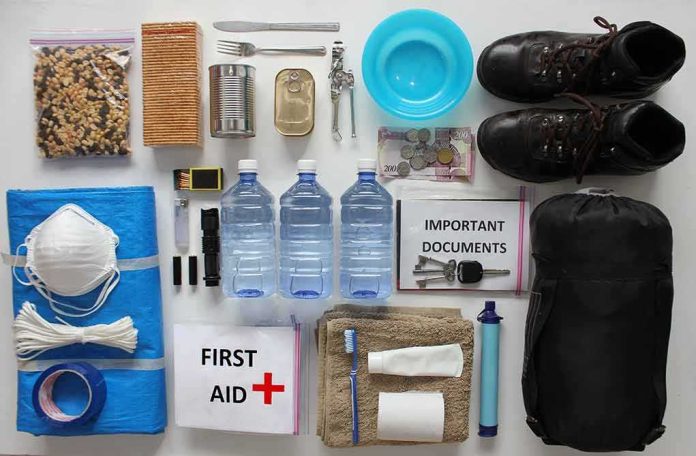
Recovery kits are pragmatic instruments. They consolidate immediate-use items—basic hygiene supplies, clothing layers, medications for common post-captivity complaints, and information packets—so a returnee does not have to reenter public space empty-handed or reliant on ad hoc charity. A well-designed kit also restores a measure of control: the individual decides what to open, when to use it, and what to ignore. That discretion is not symbolic; after prolonged coercion, small choices accrete into psychological safety. Whether a given item is included for medical prophylaxis, comfort, or contingency planning, the underlying principle is the same: reduce friction, preserve privacy, and signal that structured care is already in motion.
In that light, the unexpected presence of a single pill—however incongruous—sits adjacent to a broader truth: these kits are not souvenirs from a dramatic rescue; they are the first tangible interface between a complex support system and a human being stepping out of captivity.
The August 2024 exchange: Scale and choreography
The prisoner swap that carried Gershkovich home was notable for its scale and coordination across allied services. Contemporary reporting counted 24 people moved in the exchange: 16 to the West and eight to Russia, stitched together through parallel legal and diplomatic channels. The Americans, including Gershkovich and Paul Whelan, returned via U.S. military airlift and were photographed on board and on arrival; families and senior officials met them at Joint Base Andrews the same day. Those logistics are not mere backdrop—they enable the rapid handoff from diplomatic custody to medical and psychological care, which starts on the aircraft and continues in controlled facilities on landing.
The handoff is designed to be seamless: flight medics, debriefers, and reintegration specialists are briefed on likely medical and psychological needs; personal effects, communication with family, and privacy protocols are synchronized; and media is kept at a distance until the individual has reestablished basic stability. In practice, that choreography is what turns a geopolitical transaction into a humane homecoming.
Evan Gershkovich was handed a ‘recovery kit’ on his way back to the US
🔗 https://t.co/fpnOnUyyf6 pic.twitter.com/lNK3eqCFnh
— The Telegraph (@Telegraph) October 10, 2026
What Gershkovich’s account adds—and what it doesn’t
The Viagra anecdote adds texture to an otherwise invisible phase of statecraft: the quiet, logistics-heavy work of caring for returnees in the liminal hours between release and home. It also illustrates how recovery support mixes the clinical with the ordinary—bandages and toothbrushes next to snacks, a printed phone list next to a spare sweatshirt. Gershkovich’s description of the CIA assembling his kit is one person’s account of that process. Agencies have not published inventories or confirmed the point, which is unsurprising in a space where patient privacy and operational discretion typically prevail.
What the account does make clear is that the system around him functioned as practitioners intend. He moved quickly from detention to controlled transport, received structured support, and then engaged longer-term care that matches best practices in the field: individualized treatment, continuity of support, and reintegration at a pace set by the survivor rather than the news cycle.
The broader lesson: Measure recovery in systems, not souvenirs
Stories about detention and release often gravitate toward singular artifacts—a note smuggled from a cell, a wristband from a military flight, a curious item in a kit. Those objects are valuable precisely because they are legible to outsiders. But the real measure of a recovery system is whether it consistently delivers safety, medical competence, psychological grounding, and dignified reintegration. In August 2024, the United States and its partners executed a complex exchange and transitioned multiple returnees into that system. Gershkovich’s subsequent descriptions of therapy, writing, and restored confidence suggest the scaffolding held where it mattered most: in the life he rebuilt after the headlines faded.
Sources:
feedpress.me, telegraph.co.uk, pbs.org, apnews.com, reuters.com, tandfonline.com