
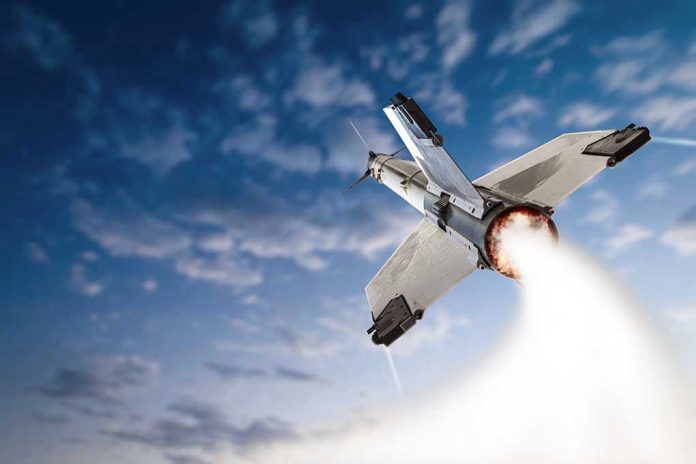
Media critics are melting down over an AI “Space Force” meme while ignoring the real issue: how political images are weaponized to smear Trump and distract from policy.
Story Snapshot
- Reports say Trump shared AI-stylized “Space Force” and missile imagery on Truth Social, prompting media outrage [1]
- Coverage highlighted a mushroom cloud and “TARGET DESTROYED” text, casting the posts as dangerous or absurd [1]
- A 2019 episode shows Trump previously shared an official-looking Iran launch image, reinforcing his dramatic visual style [2]
- No primary post archive is provided here, leaving gaps on exact wording, timestamps, and intent [1]
What Was Actually Posted, According to Available Reporting
The Daily Beast reported that President Trump shared multiple AI-generated images on Truth Social portraying himself in a futuristic command setting, including one with a prominent mushroom cloud and the words “TARGET DESTROYED,” and another with “SPACE FORCE” superimposed [1]. The outlet said the spree also featured visuals tied to Iran-related conflict. These descriptions indicate stylized, synthetic imagery rather than documentary photos, though the original posts and precise captions are not included in the available record [1].
Mediaite and other aggregators framed one image as Trump “firing missiles at Earth from space,” a description that amplified the spectacle while treating the visuals as emblematic of a larger “propaganda” problem. The Daily Beast’s language emphasized shock value, calling the spree “bizarre,” but still acknowledged the artificial nature of the content. That admission matters: if viewers know the images are synthetic, claims of literal deception become harder to sustain based on these reports alone [1].
How This Fits Trump’s Longstanding Visual Signaling
A 2019 precedent shows Trump used potent visuals to communicate on security issues well before generative tools exploded in popularity. He posted a high-resolution image of an Iranian rocket launch site after a failure and paired it with a message that the United States was not involved, wishing Iran “best wishes and good luck” [2]. Reporting at the time noted the image had attributes consistent with an intelligence product, underscoring Trump’s willingness to use striking visuals for policy signaling and public positioning [2].
That history helps explain the current flap. Trump’s brand often merges bravado, defense symbolism, and national strength into shareable images. The new AI-stylized “Space Force” content operates in that same lane—assertive, flag-planting messaging that leans into deterrence and American dominance in space and missile defense. Critics label it “bonkers,” but supporters see clear signaling: peace through strength, technological superiority, and unapologetic patriotism in an era of rising threats [1].
Media Claims Versus Evidence Gaps
The strongest facts here come from descriptions in secondary reporting, not from the original posts or platform metadata. The Daily Beast’s account identifies AI generation, the mushroom cloud graphic, and the “SPACE FORCE” overlay, but it does not provide the raw files, timestamps, or full captions. Without those, observers cannot test context, intent, or sequence. This documentation gap limits claims about public confusion or deliberate deception tied to the imagery itself [1].
Assertions that the images “blur reality and propaganda” go beyond what the record can prove right now. The reporting does not include evidence that viewers mistook the graphics for real military action or official orders. It documents sensational presentation and polarized reactions, but it stops short of showing measurable misunderstanding. In a saturated media environment, that distinction matters, because expressive political art—however tacky to some—differs from false official announcements [1].
Why Conservatives Should Care About the Frame
Conservatives have seen this movie: hostile outlets spotlight Trump’s style to overshadow substance. Here, the focus on spectacle risks eclipsing serious debates about space defense, missile deterrence, and Iran’s behavior—topics where American strength and clarity are vital. The same press that shrugs at left-wing narrative art suddenly treats right-of-center imagery as destabilizing, even when reporters concede it is obviously synthetic and symbolic rather than literal evidence [1].
Trump Posts Image of Himself Firing Missiles at Earth From Space
President Donald Trump posted an AI-generated image of himself destroying Earth from space on Sunday in a post promoting the U.S. Space Force.https://t.co/yBJO2vA5Cy
— FACTO NATION (@factonation) May 18, 2026
That double standard carries policy costs. When the conversation fixates on aesthetics, it drains attention from readiness, budget priorities, and deterrent posture—areas where the Trump administration’s emphasis on capability and resolve resonates with voters tired of softness abroad and chaos at home. Strong communication, including brash visuals, can reinforce a simple message: America leads, adversaries think twice, and space is the next high ground. Voters should judge results, not performative media outrage [1][2].
What Would Clarify the Record
Transparency would help. An archive of the original posts with timestamps and captions would settle disputes about wording and sequence. A technical review could confirm generation methods and further establish that the images were stylized illustrations. Short of that, the fairest reading is the most documented one: these were AI-generated, symbolic visuals aligned with Trump’s established communication style. Critics can dislike the tone, but the evidence does not show deception, only disagreement over expression [1][2].
Sources:
[1] Web – Trump, 79, Regurgitates Crackpot Nuclear Slop in Wild Posting Spree
[2] Web – Trump Tweets Intelligence Image After Iran’s Rocket Explosion And …