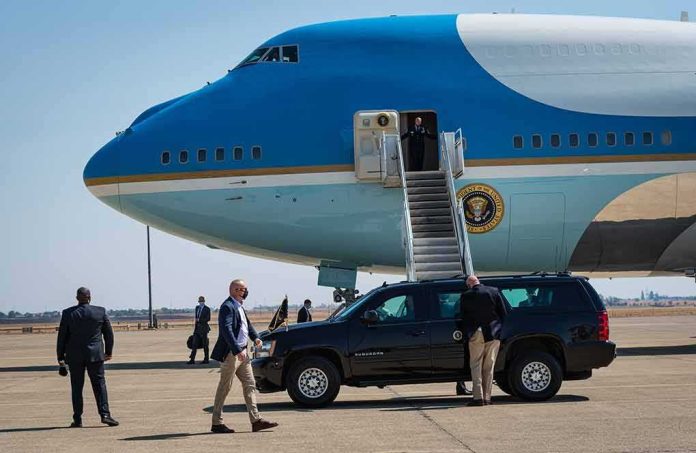
While American troops fight in Iran and families struggle at home, the nation’s top defense official is flying to Kentucky to wade into a House primary — and even members of his own party are asking what, exactly, Washington’s priorities are.
Story Snapshot
- Rep. Lauren Boebert is a firm “no” on new Iran war funding, saying taxpayers are tapped out and the “industrial war complex” is cashing in.
- Defense Secretary Pete Hegseth is pushing a roughly $200 billion war supplemental while also stumping in Kentucky’s most expensive House primary.[2]
- Boebert and Rep. Thomas Massie frame the Kentucky trip as proof Washington’s war machine and political machine now run on the same fuel.[3]
- The clash highlights a growing left–right concern that wartime decisions serve donors and party bosses more than soldiers and ordinary Americans.
What Boebert Is Actually Objecting To
Colorado Representative Lauren Boebert has drawn a hard line against new funding for the war in Iran, telling reporters she is a firm “no on any war supplementals” and saying she is tired of “the industrial war complex getting all of our hard-earned tax dollars.”[2] Boebert argues that while Washington debates tens or hundreds of billions for overseas conflict, people in her district “cannot afford to live,” making more war money impossible to justify.[2] She frames her stance as defending “America First” priorities at home.[3]
Boebert’s break with President Donald Trump and his Pentagon is not a minor disagreement about procedure; coverage describes her rejecting more money for the Iran campaign “under any circumstances” because she believes it violates an “America First” approach.[3] That categorical language puts her directly at odds with party leadership and the administration’s strategy. Her criticism resonates with voters on both sides who see endless supplementals as proof that the war machine always seems funded, while basic needs and debt reduction rarely are.[2][3]
Hegseth’s Wartime Funding Push And Kentucky Trip
Defense Secretary Pete Hegseth has publicly defended the Iran war strategy and asked Congress for a massive new war package. In a March news conference, he said “first, $200 billion, I think that number could move,” adding that “it takes money to kill bad guys” and that he would return to Congress for authorization.[2] Hegseth has labeled Iran war critics “reckless, feckless and defeatist” in congressional testimony, signaling that he views opposition as undermining the mission rather than principled oversight.
At nearly the same time, reporters in Kentucky documented Hegseth flying to the state to back Ed Gallrein in a Republican primary challenge against Representative Thomas Massie. Coverage describes Hegseth as campaigning in northern Kentucky and appearing on stage at a rally with Gallrein, in what was framed as part of a Trump administration effort to oust Massie. Massie, a frequent critic of both war funding and establishment spending, told supporters that was “why they’re sending the Secretary of War to my district tomorrow,” underscoring how unusual the appearance felt even inside the party.
Why Campaigning During War Feels Like A Red Flag
The raw facts do not prove that Hegseth’s Kentucky trip broke rules or directly harmed military operations; public reporting does not yet show travel logs, duty rosters, or improper use of government assets. What the record does show is the symbolism: while the Pentagon seeks about $200 billion more for an overseas war, its top civilian defense leader takes time to intervene in the most expensive House primary in United States history, on the side of the administration’s preferred candidate.[2]
For voters who already believe “the elites” in Washington protect their own power first, that visual is powerful. Boebert and Massie have each warned that the Iran campaign and its funding are dividing Republicans, putting some lawmakers closer to donors and the defense industry than to their base.[3] Critics on left and right see a familiar pattern: when war money and election politics mix, the same insiders benefit, while rank-and-file troops and taxpayers carry the risk and the bill.[1][2][3]
Deeper Fault Lines: America First, The Deep State, And Public Trust
This fight over one trip and one supplemental taps into a much bigger distrust of federal institutions. Conservatives who embraced “America First” see Boebert’s stance as proof that even Republican presidents and defense chiefs can slide back toward globalist, interventionist habits once in office.[2] Liberals frustrated with the war and with income inequality see confirmation that the system reliably finds money for bombs, contractors, and politically connected districts, but not for housing, health care, or debt relief.[1][2][3]
'Really Difficult to Grasp': Lauren Boebert Rips Secretary of War Pete Hegseth for 'Doing Campaign Events in Kentucky' in 'The Middle of a War' https://t.co/zunfmCSz46
— Mediaite (@Mediaite) May 21, 2026
Historical experience also hangs over the debate. Americans remember how the Iraq and Afghanistan wars blurred lines between national security and campaign messaging, with Pentagon leaders and politicians sharing stages as costs mounted and goals shifted.[1][2][3] The current Iran war, paired with record debt and rising prices, makes many citizens feel the country is drifting further from the founding idea of limited, accountable government. Hegseth’s Kentucky rally may be legal, but to a growing cross-partisan public, it looks like one more sign that Washington’s war priorities and political priorities have fused.
Sources:
[1] YouTube – Lauren Boebert’s hard ‘no’ on Pentagon Iran funding request
[2] Web – Colorado Congresswoman Lauren Boebert against funding for war …
[3] Web – Lauren Boebert’s hard ‘no’ on Pentagon Iran funding request puts …