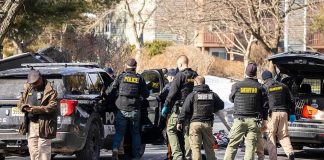
A 29-year-old Columbia police officer was shot and killed after responding to a domestic dispute, and the suspect also died, officials said.
Story Snapshot
- Officer Christopher DeLong, 29, died after a shooting tied to a domestic dispute, police said.
- A second Columbia officer was wounded and is recovering, according to officials.
- The suspect died at the scene, the police chief said at a news conference.
- Domestic calls are among the most dangerous for officers, federal data show.
What Police Say Happened
Columbia Police Chief W.H. “Skip” Holbrook said two officers responded to a reported domestic dispute at a park area in Columbia, South Carolina, on Saturday. Soon after they arrived, gunfire broke out. Officer Christopher DeLong, age 29, was shot and later died from his injuries, Holbrook said. A second officer was also shot and is recovering, according to local reports. The suspect died at the scene, police said at the briefing held later that day.
Local outlets identified the fallen officer as Christopher DeLong and reported he had served with the Columbia Police Department. Columbia’s chief asked the community to pray for DeLong’s family and the wounded officer. A separate station reported the shooting happened near Southeast Park and confirmed the suspect’s death. Reporters noted that the South Carolina Law Enforcement Division is involved in the investigation, which is standard after shootings with officers.
Known Victims And Condition Updates
Authorities named the fallen officer as Christopher DeLong, 29, and said he died from gunshot wounds. The second officer’s name was not widely shared in early reports, but officials said that officer was injured and receiving care. The police chief spoke of deep loss and thanked other agencies for support. A television station in Columbia reported the park area remained closed while crime scene teams worked through the day and gathered evidence.
Police did not release many details about the suspect, including a possible motive, pending next of kin and investigative steps. One local station said only that the suspect died after the exchange of gunfire. The police department urged patience while state investigators review body camera video, witness accounts, and ballistics. That process can take days or weeks. Early updates stressed the domestic dispute call as the start of the chain of events.
Why Domestic Calls Turn Deadly So Often
Domestic dispute calls often carry high risk because emotions run hot and weapons may be close at hand. Federal research found that 116 officers were killed while responding to domestic disturbance calls between 1996 and 2010, and 95 percent of those homicides involved a gun. Training guides and memorial fund analyses have long flagged these calls as among the most dangerous. Officers enter tight spaces, face split-second choices, and often know little about the scene before they arrive.
Law enforcement agencies across the Midlands are reacting to the death of Columbia Police Officer Christopher DeLong, who was killed in a shooting on Saturday.https://t.co/vetYq5dUzN
— WACH FOX (@wachfox) August 30, 2026
This shooting taps a broader fear many Americans share: basic public safety feels fragile. People on the right see a justice system that releases repeat offenders and ties officers’ hands. People on the left see families in crisis and too few mental health resources. Both sides see a system that reacts late and protects itself first. Clear facts, faster transparency, and steady support for victims and first responders can help rebuild trust as the investigation runs its course.
Sources:
wrdw.com, bignewsnetwork.com, krcgtv.com, jnix.netlify.app, stacks.cdc.gov, law.justia.com