When you strip away the headline theatrics, the essential facts of a street shooting near a Queens park tell a focused story: a 14-year-old was shot in the leg just before 5 p.m., stabilized at a local hospital, and the gunman—clad in black—escaped on foot as police opened an active hunt. Those are the durable truths to understand first.
The Short Version
- A 14-year-old boy was shot in the leg near 153rd Street and Jamaica Avenue, by Rufus King Park, shortly before 5 p.m., police said.
- EMS took the teen to Jamaica Hospital, where he was listed in stable condition.
- The shooter, described as dressed in all black, fled on foot; no arrest had been made as of the initial reports.
- Investigators had not confirmed a motive or whether the victim was targeted.
What Happened, According to Police
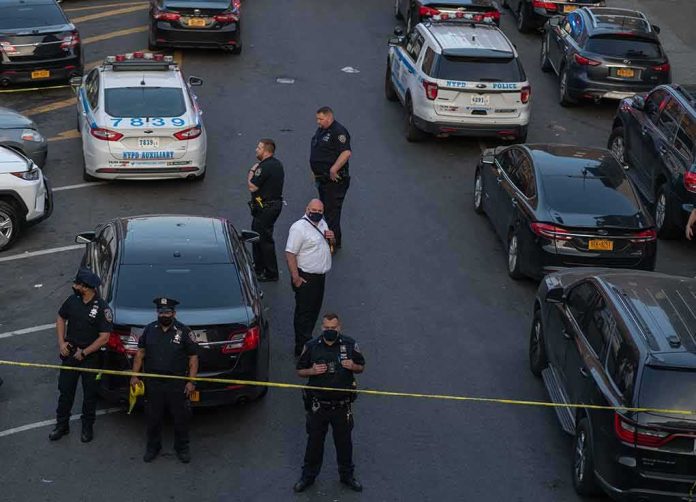
Police accounts reported by New York outlets place the shooting near the corner of 153rd Street and Jamaica Avenue, at the edge of Rufus King Park, just before 5 p.m. A 14-year-old sustained a gunshot wound to the leg. Emergency medical services transported him to Jamaica Hospital, where he was reported in stable condition. The suspect—described as wearing all black—ran from the scene on foot. Detectives had not announced a motive, clarified whether the youth was the intended target, or made an arrest at the time of publication.
Those points form a coherent early picture of the incident: time, place, injury, immediate medical outcome, suspect description, and investigative status. They are also specific enough to orient both investigators and community stakeholders without overreaching into speculation about why the shooting occurred or who exactly was responsible. In the first hours after gunfire on a city block, these are the details that reliably surface and endure.
Location, Timing, and the “Near the Park” Shorthand
Rufus King Park functions as a landmark in Queens reporting; “near the park” is a common locational shorthand that flags proximity rather than asserting the shot was fired on park grounds. Here, reports anchor the event to 153rd Street and Jamaica Avenue—an intersection abutting the park—just before 5 p.m., a high-traffic hour when footfall, bus routes, and street activity are still thick. That matters for both safety and evidence: busy corners typically mean more potential witnesses and more cameras. Corner bodegas, traffic-signal cameras, and municipal lenses near park entries often figure prominently in post-incident canvasses, which can document a fleeing suspect’s direction, gait, and clothing with more reliability than memory alone.
In practice, the NYPD’s first investigative cycle in a case like this runs on a short list: secure the scene, render aid, identify and separate witnesses, collect ballistic evidence (if present), pull camera feeds, and push a preliminary suspect description across precinct and borough channels. The on-foot flight described here fits a familiar pattern for fast, close-quarters gunfire—single or few shots, a brief chase vector, and then dispersal into the grid where alleys, transit, and ride-hails complicate pursuit.
Victim Status and Trauma Care
Stable condition at Jamaica Hospital signals a non-life-threatening injury as assessed by clinicians, not a trivial one. Leg gunshot wounds span wide clinical territory—from superficial graze to fractures or arterial hits—so “stable” is a snapshot of vital signs and immediate risk rather than a descriptor of long-term outcome. For families and schools, though, the term remains the most consequential early indicator; it tells you the youth is alive, receiving care, and not, at that moment, in extremis.
From an investigative angle, a stabilized juvenile victim can often provide key clarifications once medically appropriate: where he was standing, who he noticed, any prior contact, words exchanged, and whether the shooter appeared familiar. Even a few details—height range, footwear, a visible item like a backpack—can help reconcile video fragments into a usable track.
Suspect Description and Early Leads
“All black” is both specific and limited: it conveys a readily observable palette—hoodie, pants, perhaps a face covering or hat—without yielding identifiers that stand up in court. Clothing color helps triage camera reviews and coordinate radio runs; it rarely suffices for a positive ID. The lack of an arrest in the opening hours is unsurprising. Most one-victim street shootings without immediate custodial stops hinge on video assembly and witness interviews over the following days, followed by lab work if shell casings or bullets are recovered. When investigators have enough convergent evidence, they issue a wanted bulletin—occasionally with stills clipped from surveillance—and seek public tips.
That cadence is consistent with Queens precinct practice observed across prior youth-involved shootings near parks, where initial public information emphasizes injury, location, and suspect flight. It is a functional formula: inform the neighborhood, protect the victim’s privacy, and hold space for an evidence-driven theory of motive to emerge rather than hardening an early guess into a conclusion.
Why Early Crime Reports Sound the Way They Do
Newsrooms rely on police as the authoritative first source for breaking crime facts. That’s not a quirk of this case; it is the dominant structure of incident reporting. Across studies of crime coverage, law enforcement consistently accounts for the largest share of initial sourcing and shapes the public’s first mental model of an event. Reporters receive the time, place, injury, and suspect descriptors from police, then validate what they can on scene and with hospitals. The arrangement is symbiotic—officers need dissemination to surface witnesses and tips; journalists need verified kernels to inform the public—yet it also narrows early detail to what police are prepared to confirm, which is usually spare and procedural.
Understanding that pipeline helps readers separate strong early facts from unknowns that should not be reverse-engineered into narrative. Here, the strong facts are straightforward: a teen, a leg wound, a specific corner, EMS transport to Jamaica Hospital, a suspect in black who ran, and no arrest yet. Motive, targeting, and pre-incident sequence remain open; they will either be filled in by witness accounts and video or remain prudently unclaimed until an arrest affidavit lays them out.
A gunman in an all-black outfit remains at large after shooting a 14-year-old boy in the leg near Rufus King Park in Queens.https://t.co/Oha1Uf1xPf pic.twitter.com/75wnJhgZgL
— Next Stamina (@NextStamina) September 7, 2026
What Comes Next: Evidence and Community Impact
The next phase turns on evidence density around 153rd and Jamaica. If cameras captured a clear face, a distinctive logo, or a sequence showing entry and exit routes, detectives can composite a viable identification quickly. If not, they will lean on street-level canvassing—business owners, bus drivers, park regulars—who often recall small but distinctive elements: the way the suspect ran, a limp, a patterned belt. Ballistics, if present, can eventually link the gun to other incidents. Meanwhile, hospital-based violence intervention teams, now standard at many trauma centers, frequently engage adolescents and families at bedside to reduce retaliation risk and connect them to support.
For the neighborhood, the meaningful takeaway is not the headline’s theatrical attire note but the temporal and geographic core: late afternoon, busy intersection, youth injured, suspect loose. That profile cues parents, schools, and park users to the real-world risk posture—heightened situational awareness at departures and crossings near the park—until the case resolves. It also underscores a recurring truth in urban public safety: most shootings are compressed in time and space, solved by quiet, painstaking work with video, witnesses, and forensics, not by viral clues or instant narratives.
Sources:
qns.com, fox5ny.com, nydailynews.com, nypost.com, queensda.org, facebook.com