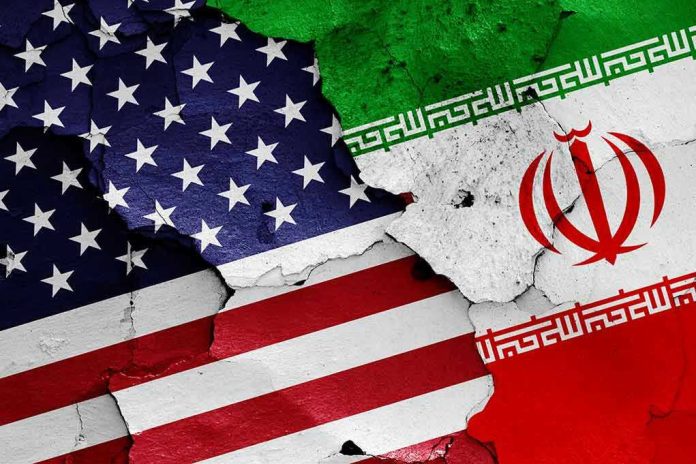
Iran’s streets are on fire again, and this time Donald Trump says America “stands ready to help” a revolt that could redraw the entire map of the Middle East.
Story Snapshot
- Nationwide Iranian protests over inflation have morphed into a direct revolt against clerical rule and Supreme Leader Ali Khamenei.
- Security forces have opened fire with snipers and military rifles, with human-rights monitors counting more than 100 dead and officials suspecting several hundred.
- Donald Trump publicly declared the United States “stands ready to help” Iranians seeking freedom, while advisers study options from cyberattacks to military posturing and possible strikes.
- Tehran has answered with threats to hit U.S. bases, ships, and Israel if Washington intervenes, raising the risk of a regional showdown.
How A Bazaar Protest Turned Into A Nationwide Rebellion
Protests started where Iran’s rulers least wanted them: in Tehran’s bazaars, the traditional heartbeat of commerce and a barometer of public patience. Runaway inflation squeezed merchants and customers until frustration spilled into the streets. Demonstrations quickly jumped from complaints about prices to chants of “Death to Khamenei” and calls for an end to clerical rule. When religious power loses the markets and the streets, any regime built on divine authority starts to look painfully mortal.
Marchers did not stay confined to cosmopolitan Tehran. Crowds surged in Mashhad and Qom, two of Shi’a Islam’s holiest cities and longtime strongholds of the Islamic Republic. Protesters there shouted that clerics must “go and get lost,” a direct rejection of the ruling theology. A viral clip captured an elderly cleric denouncing Ayatollah Ruhollah Khomeini’s legacy as “sedition” and calling the government criminal, while a woman off‑camera chanted “Death to Khamenei.” When the regime’s own religious heartlands echo with that message, it signals more than a bad week for the economy.
The Crackdown: Snipers, Blackouts, And Bodies In Overflowing Hospitals
Iran’s response followed a grim script honed over past uprisings. Security forces deployed snipers, military rifles, and surveillance drones, turning demonstrations into killing zones. Human-rights monitors such as HRANA confirmed at least 116 deaths while warning that the real number is much higher. One Tehran doctor told TIME that more than 200 protesters were killed across six hospitals in the capital alone, mostly by live fire. When medical staff talk of bodies piling up, official casualty figures lose all credibility.
Authorities moved just as aggressively against information as against people. Large swaths of the country went dark as the regime shut down the internet, throttling social media and messaging apps used to coordinate protests. The blackout made independent verification nearly impossible, which is precisely the point. Yet shaky phone videos still slipped through, showing crowds facing gunfire and chanting against Khamenei. The regime can close networks, but it cannot fully erase the fact that Iranians keep risking death to show their anger.
Trump’s Promise To Help And Washington’s Calculus Of Risk
Donald Trump waded into this crisis with capital letters and an unmistakable signal: “Iran is looking at FREEDOM, perhaps like never before. The USA stands ready to help!!!” For dissidents who remember American silence after earlier Iranian crackdowns, that message stands out. Axios reporting, summarized by Iran International, indicates his team is examining a spectrum of options to back the movement and pressure Tehran, from cyber operations and information warfare to more visible military moves and even possible strikes.
Advisers debating these choices reportedly split along familiar conservative lines. Some argue that credible military power, such as deploying a carrier strike group, deters Tehran and reassures protesters that the regime cannot kill with impunity. Others caution that overt U.S. strikes could hand Khamenei a propaganda gift, letting him reframe a homegrown revolt as a foreign plot and justify even harsher repression. Common sense and experience from Iraq and Syria suggest that American power works best when it strengthens local legitimacy instead of replacing it.
Tehran’s Threats, Regional Stakes, And The Conservative Lens
Iran’s leaders are not pretending this is business as usual. Supreme Leader Ali Khamenei has vowed not to back down, while parliamentary speaker Mohammad Bagher Qalibaf warned that any U.S. attack would turn Israel and every American base and ship in the region into legitimate targets. He went further, claiming Iran could act preemptively based on perceived threats, not just respond afterward. These statements are designed to scare Washington away from intervention by dangling the prospect of a multi-front regional war.
Conservative Americans evaluating this showdown will weigh two instincts: support for people demanding freedom against a theocratic regime, and skepticism toward open‑ended foreign entanglements. Iran’s rulers accuse “terrorists” linked to foreign powers of burning mosques and killing innocents, a familiar narrative used to excuse domestic crackdowns. Human-rights groups, doctors, and leaked intelligence paint a different picture: a state using military tools on its own citizens, then blaming outsiders while it shuts off the lights. Aligning with the protesters’ desire for self‑government and basic rights fits both moral clarity and strategic prudence, so long as American help strengthens Iranian agency rather than overshadowing it.
Sources:
TIME: “Iran Threatens to Retaliate Against U.S. As Trump Considers Strikes”
Iran International: “Trump weighing options to back Iran protests – Axios”