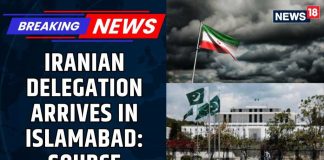
As evidence mounts that a U.S. missile likely hit an Iranian girls’ school, Washington’s shifting story is raising as many questions about honesty and accountability as it is about the tragedy itself.
Story Snapshot
- Pentagon still has not publicly concluded its investigation into the Minab school strike, months after the attack.
- Media and independent investigators say preliminary U.S. findings point to American responsibility, possibly from outdated targeting data.
- Top commanders insist the school sat on an Iranian Revolutionary Guard missile base, but on‑site reporting disputes that claim.
- Human rights groups say over 100 children were killed and demand full transparency and accountability from the U.S. government.
How The Minab School Tragedy Unfolded
On February 28, 2026, the first day of the war with Iran, a missile slammed into the Shajareh Tayyebeh Elementary School in the city of Minab, killing well over one hundred children and staff, according to multiple independent investigations.[1][3] Satellite imagery, videos from the scene, and local testimony reviewed by Amnesty International and open‑source analysts show a direct hit on the school and heavy damage to nearby buildings in a dense civilian neighborhood.[3][5] For many Americans, the images recall past failures in Iraq and Afghanistan, where poorly vetted strikes shattered trust.
Initial coverage in Western outlets reported what U.S. internal investigators were finding behind closed doors: preliminary military assessments suggested American forces were likely responsible for the strike.[1][4] Reporting summarized from The New York Times and others pointed to the possibility that outdated coordinates, reportedly provided by the Defense Intelligence Agency, fed a precision strike package that no longer matched realities on the ground.[1] That scenario aligns with past Pentagon explanations where bad intelligence, not intent, was blamed when civilians paid the price, but it does not make the loss of so many children any less horrific.
From Denial To “Complex Investigation” – Washington’s Story Shifts
In the days after the attack, President Trump publicly accused Iran of hitting its own school, even as early internal reviews reportedly pointed toward American involvement.[1] When U.S. media later reported that a Tomahawk cruise missile, a very distinctive American weapon, likely struck the area, he said he had not seen evidence and suggested Iran itself possessed such missiles.[1][6] That public posture of deflection contrasts sharply with leaks that U.S. investigators were already narrowing in on American responsibility tied to targeting errors, creating a credibility gap that frustrates many citizens who want straight answers from their government.
At the Pentagon, officials leaned heavily on process language rather than clear attribution. Defense Secretary Pete Hegseth announced a formal “command investigation,” stressing that U.S. Central Command had appointed a general from outside the chain of command to lead the probe and promising that it would take “as long as necessary.”[2][4] Admiral Brad Cooper told Congress the investigation was “ongoing” and emphasized that the United States does not deliberately target civilians.[4] Yet he also reportedly quipped, in a line captured in one broadcast, that “we will not take responsibility for something we very obviously did,” underlining the tension between what insiders appear to concede and what can be said officially while lawyers and bureaucrats review every word.[4]
Was It A Missile Base Or A School? Competing Narratives On The Ground
The core factual dispute now centers on what exactly was at Minab: a purely civilian school or a school located on an active Iranian Revolutionary Guard cruise‑missile base. Admiral Cooper told lawmakers the school “is located on an active [Revolutionary Guard] cruise missile base,” arguing that made the investigation more complex and implying a legitimate military target existed at that location.[3][4] However, Sky News correspondent Dominic Wagghorn, reporting from the rubble in Minab, said the site appeared on maps as a primary school for at least a decade and showed no visible signs of a missile base.[6] That on‑the‑ground reporting undercuts the Pentagon’s public justification and fuels suspicion that language about a “complex” battlefield is being used to blur a simple, painful reality.
Independent analysts have added detail but not full closure. Bellingcat’s geolocation work and video analysis confirm that U.S. strikes hit an Iranian Revolutionary Guard compound near the school as part of broader opening salvos in southern Iran.[1][5] Amnesty International’s field review concluded the school itself was individually struck as part of attacks on adjacent structures, citing blast patterns, crater analysis, and images of debris consistent with a Tomahawk‑type missile.[3][5] Those findings support the view that the school was inside a U.S. bombardment footprint, yet they still cannot by themselves answer whether planners misidentified the building, failed to account for known civilian risks, or accepted collateral damage that violates American values and the laws of war.
Accountability, Transparency, And What Conservatives Should Demand
Months later, families in Iran have buried their children, international lawyers are debating whether a war crime occurred, and the Pentagon still has not released a final report, targeting packet, or casualty assessment to the public.[1][3] Human rights advocates say the United States violated international humanitarian law by failing to take all feasible precautions to avoid civilian harm and call for those responsible to be held accountable.[3] Former U.S. officials who worked on civilian harm mitigation have criticized the Pentagon for its opaque communication and slow acknowledgment of possible American involvement, warning that this secrecy erodes trust at home and abroad.[2][5]
A U.S. military investigation into a strike at a girls' school in Iran has been "complex" given that it was located on an active Iranian cruise missile base but the probe is approaching its conclusion, U.S. Admiral Brad Cooper, #strike #bradcooper #minab #iran #iranwar #News pic.twitter.com/0Ul28U7Uyd
— quantum finance system (@SystemFina63988) May 20, 2026
For conservatives who value a strong military and limited, accountable government, the Minab case poses hard questions. No serious person believes Iran’s theocratic regime is a reliable narrator, and there is every reason to assume Tehran is weaponizing this tragedy for propaganda.[1] But that does not excuse Washington from giving its own citizens the truth. A constitutional republic cannot sustain endless wars run on autopilot, shielded by classified reports and shifting public excuses when children die. Congress should insist on the full release of the civilian‑harm investigation, including targeting data, intelligence assessments, and any internal debates over responsibility.[1][3][5] Only with real transparency can Americans ensure their military fights justly, correct broken processes, and prevent future tragedies that stain the nation’s conscience and fuel enemies abroad.
Sources:
[1] Web – 2026 Minab school attack – Wikipedia
[2] YouTube – Minab School Strike: Iran Releases Photos of ‘Criminal’ US Troops …
[3] Web – USA/Iran: Those responsible for deadly and unlawful US strike on …
[4] YouTube – Video Analysis Shows Two Waves of Bombings in Iran Elementary …
[5] Web – New Videos Reveal Further Details About Iran School Strike
[6] YouTube – Minab School Attack ‘A War Crime’ Says Iran, Global Outrage Over …