The moment a U.S. president casually announces, “We’ve just seized a tanker on the coast of Venezuela,” you are not hearing news, you are hearing a warning shot in a much bigger geopolitical game.
Story Snapshot
- The U.S. seizure of an oil tanker near Venezuela signals more than a single enforcement action; it telegraphs leverage.
- Energy, sanctions, and regime survival collide every time a barrel of Venezuelan crude tries to move.
- Presidential rhetoric around such seizures is crafted to shape narratives at home and pressure adversaries abroad.
- How Washington treats tankers near Venezuela today hints at how it may wield economic power tomorrow.
Why One Seized Tanker Matters Far Beyond Venezuela’s Coast
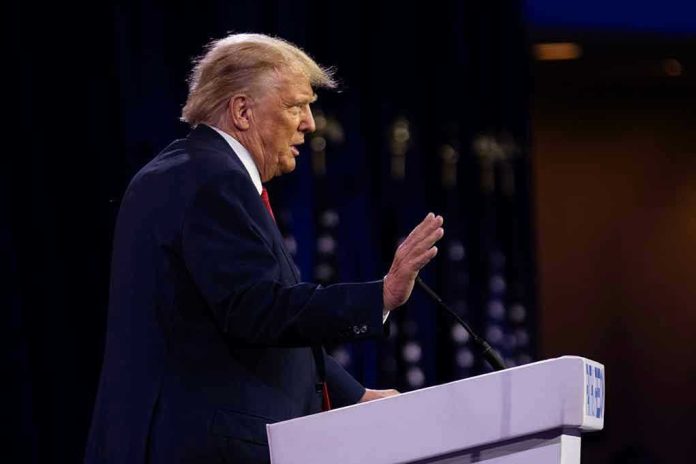
Donald Trump’s line, “We’ve just seized a tanker on the coast of Venezuela,” sounds almost offhand, but the context is anything but casual. When the U.S. intercepts an oil tanker in that region, it aims straight at the core of Nicolás Maduro’s survival strategy: turning Venezuelan crude into hard currency despite sanctions. One ship is never just one ship. It is access to markets, dollars, and the political oxygen that keeps an authoritarian regime on life support.
The tanker’s location “on the coast of Venezuela” matters because it turns an abstract sanctions policy into a very concrete message: Washington is not merely blacklisting names on paper; it is willing to reach into contested waters and physically stop the trade that keeps Caracas afloat. That kind of move tells every intermediary—shipping companies, insurers, traders, and foreign governments, that dealing in Venezuelan crude is not a theoretical risk but a practical liability that can end with a U.S.-directed boarding party.
Sanctions, Oil, And The Logic Of Squeezing Regimes Without Firing Shots
Sanctions on Venezuela’s energy sector did not appear out of thin air. They grew out of years of documented corruption, economic collapse, human rights abuses, and fraudulent elections that turned a once-wealthy petrostate into a cautionary tale. American policymakers chose to weaponize access to global markets instead of sending troops. When the U.S. seizes a tanker, it enforces that strategy at the most sensitive choke point: the moment oil leaves port and seeks a buyer.
For a conservative mindset grounded in law, order, and accountability, the logic is straightforward. If a regime loots state assets, jails opponents, and rigs institutions, then it should not enjoy unrestricted profit from selling state-owned oil into global markets as though nothing happened. A tanker seizure is not about punishing ordinary Venezuelans for wanting fuel; it is about cutting off the cash flows that insulate an entrenched elite from the consequences of its own misrule.
The Message To Allies, Adversaries, And American Voters
When a president goes on record announcing such a seizure, the audience is not limited to Caracas. Allies in Europe and Latin America hear a signal: Washington expects them to align their enforcement with U.S. sanctions, not undercut them with quiet side deals. Rival powers hear something else: the United States still controls enough of the financial, legal, and naval architecture of global trade to make sanctions bite where it chooses.
Domestic voters, especially those who prioritize strong borders and strong foreign policy, hear a different layer. They see a commander in chief willing to confront hostile or destabilizing regimes without committing the country to open-ended wars. Whether one agrees with Trump’s broader style or not, the tanker remark is calculated to project toughness: we do not have to invade; we can grab the lifeline that keeps your friends in power and show it to the cameras.
Energy Power, Precedent, And The Risk Of Overreach
Every high-profile tanker seizure also sets a precedent. If Washington confidently acts near Venezuela today, it normalizes the idea that strategic choke points, straits, coasts, and shipping lanes are fair ground for enforcing economic pressure. That can be valuable leverage when dealing with hostile regimes that depend on commodity exports, from oil to minerals. It also raises a question that serious conservatives often ask: where is the line between firm enforcement of law and mission creep that turns into endless policing of the world’s trade routes?
A principled approach says: target actions that clearly violate law or sanctions, explain the legal basis plainly, and resist the temptation to use seizures as theatrical stunts or partisan props. When the government grabs a tanker, it should be because the underlying transaction truly undermines sanctions or aids a hostile regime, not because someone wants a headline. Power restrained by rules is credible; power used for spectacle erodes trust.
What This Episode Signals For America’s Future Use Of Economic Pressure
Trump’s tanker remark near Venezuela fits into a broader shift: Washington increasingly reaches for economic instruments, tariffs, sanctions, export controls, and asset freezes to achieve goals that past generations might have pursued with Marines and aircraft carriers. That reflects public fatigue with foreign interventions and an intuitive conservative preference for tools that do not send American kids into harm’s way unless necessary.
The catch is that economic pressure works best when it stays tethered to clear objectives and realistic endgames. Seizing a tanker can concentrate minds in a presidential palace, but it cannot, by itself, rebuild a ruined economy, restore independent courts, or heal a fractured society. Those outcomes depend on internal change, not American ships. The real test of wisdom is whether U.S. leaders wield tools like tanker seizures as part of a coherent strategy, or merely as dramatic moments that feel strong but leave the underlying mess untouched.