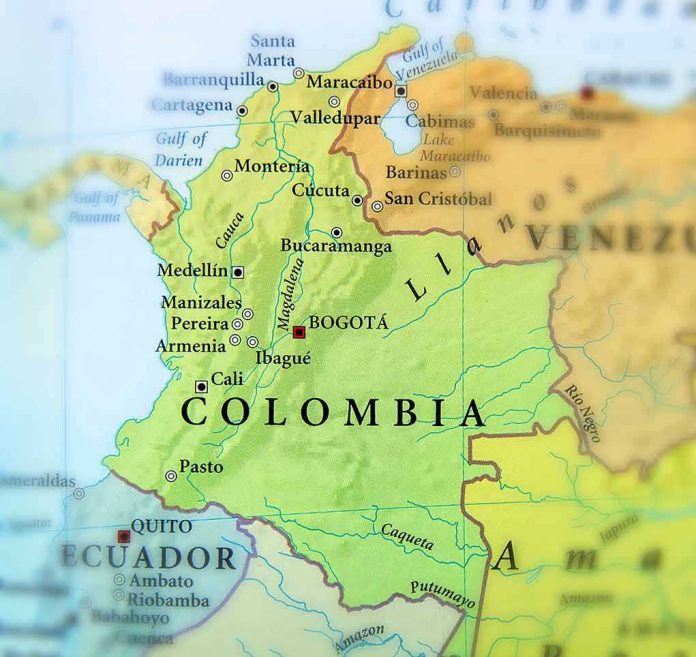
A former guerrilla commander now leads Colombia as president and just vowed to grab his rifle again against Donald Trump’s direct threats, igniting fears of war in America’s backyard.
Story Snapshot
- Colombian President Gustavo Petro, ex-M-19 guerrilla, declared on January 5, 2026, he’d “take up arms” after Trump’s weekend insults and Venezuela raid.
- Trump called Petro a “sick man who likes making cocaine,” imposed sanctions, and removed Colombia from U.S. drug war allies amid Caribbean military ops.
- Petro warned U.S. bombs could spawn new guerrillas from peasants, unleashing a “popular jaguar” if he faces detention.
- UN and Mexico decry U.S. overreach; Colombia’s right-wing eyes 2026 elections with Trump’s backing.
Timeline of the Explosive Clash
U.S. Delta Force raided Caracas over the January 3-4 weekend, capturing Venezuelan President Nicolás Maduro. Trump immediately targeted Petro with insults, warning him to “watch his ass” and accusing him of cocaine production for America. Colombia lost its drug war ally status. Sanctions hit Petro’s family without evidence. Petro, who disarmed with M-19 in 1989, posted his armed vow on X the next day.
This sequence reveals Trump’s aggressive push into Latin America, blending military action with personal attacks. Petro’s response draws from his guerrilla past, signaling he’d revive it for sovereignty.
Petro’s Guerrilla Roots and Defiant Words
Gustavo Petro joined M-19 as a young urban guerrilla in the 1970s and 1980s. That group disarmed via the 1989 peace deal, paving his path to Colombia’s first leftist presidency in 2022. On January 5, he wrote on X: “I swore not to touch a weapon again… but for the homeland, I will take up arms again.” He cautioned U.S. strikes on rural groups would kill children and peasants, birthing thousands of mountain guerrillas.
Petro defended his anti-drug policies as robust yet rejected blind bombings. He predicted detaining him, loved by many Colombians, would loose a “popular jaguar.” Facts back his rural radicalization warning; history shows U.S. interventions often fuel insurgencies, clashing with common-sense restraint over endless wars.
Colombia’s president says he’s ready to take up arms against the United States.
I understand defending national sovereignty—but against the U.S.?
The U.S. military isn’t just stronger than any single South American military; it’s stronger than all of them combined across air,…
— Dr. Richard Works (@DrWorks) January 6, 2026
Trump’s Strategy and Regional Power Play
Trump’s administration launched Caribbean strikes on narcoboats, seized Venezuelan oil tankers, and now holds Maduro. An aircraft carrier looms nearby. Trump backs Colombia’s right-wing opposition for 2026 votes, aiming to oust Petro electorally. Sanctions and delisting punish Colombia’s drug fight stance without proof of Petro’s guilt. This fits Trump’s pattern: bold moves secure oil and curb leftists.
Conservative values prize strong borders and drug crackdowns, yet Trump’s evidence-free claims risk alienating allies. Sources confirm insults but note no solid links tying Petro to cartels, urging caution against overreach that invites chaos.
Global Backlash and Stability Risks
UN Secretary-General António Guterres demanded sovereignty respect at an emergency Security Council meeting. Mexico’s Claudia Sheinbaum declared the Americas belong to no power. Pro-Maduro rallies erupted in Caracas. Colombia faces trade hits, severed intel sharing, and civilian risks from strikes. Peasants and refugees brace for fallout.
Long-term, 2026 elections could flip Colombia rightward with U.S. aid. Petro’s threat spotlights blowback dangers: imprecise ops breed guerrillas, echoing past failures. Common sense favors targeted enforcement over invasion sparks that empower rivals like China or Russia.
Sources:
Colombian president ready to ‘take up arms’ in face of Trump threats