Jordan’s Civil Defense pulled a small child alive from Venezuelan quake rubble after nearly six days, a rare win in a disaster short on clear facts.
Story Snapshot
- Jordanian rescuers found a toddler alive under debris almost six days after the quakes.
- Officials and footage confirm the rescue and rapid transfer to a hospital.
- Reports disagree on the child’s exact age, but not on the rescue itself.
- Key details on the wider disaster remain thin, fueling public frustration.
Verified Rescue In A Fog Of Disaster Data
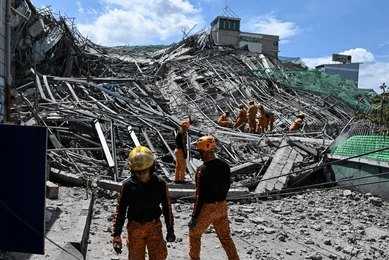
Reuters reported that Jordanian emergency workers rescued a child early Tuesday, the only known survivor found on day six, with Venezuela’s acting president confirming it on Telegram. Jordan’s Civil Defense issued a statement that its team freed a three-year-old alive after nearly six days under rubble in La Guaira state. A video released by Jordanian authorities shows the rescue itself, giving visual proof that matches the official accounts. These aligned sources make the core fact clear.
Jordanian officials said the team provided first aid and moved the child to a hospital right away. That step fits standard search-and-rescue practice after crush injuries and dehydration. Reuters also posted about the operation on its social channel, reinforcing the timeline and location details carried in its main report. While the wider quake response has gaps, the child’s rescue, transfer for care, and the on-scene video record hold up under basic checks.
What We Know And What We Do Not
Most outlets name the child as Klieber or Kleiber Morán and place the rescue at the Los Corales Garden 1 building in La Guaira state. The age, though, is not consistent. Several reports say he is three, while the British Broadcasting Corporation describes him as two. That is a narrow but real conflict. In fast-moving disasters, such mismatches often come from language barriers, stressed witnesses, or rushed updates.
Key facts about the larger disaster remain unclear. Some coverage mentions deaths “over” an unspecified figure and offers no firm quake date in transcripts, which limits context. That lack of detail feeds a common frustration that both the left and the right share: officials and media can spotlight a gripping rescue while leaving the scope, costs, and failures in the dark. People want straight numbers, clear timelines, and accountable leaders. They rarely get them when it matters most.
Why The Jordan Team Was There
International rescue teams often deploy when local crews are stretched thin. Jordan’s Civil Defense has experience in collapsed-structure searches, which explains its quick role in La Guaira. Cross-border help like this saves lives, yet it also exposes deeper system gaps. When states struggle to share basic data after a quake, families are left guessing about loved ones, and rumors race ahead of facts. The result is noise online and distrust offline.
Officials could fix some of this with simple steps. They could publish a day-by-day timeline, a running casualty ledger, and a list of active sites searched. They could also release a short medical update on the rescued child that confirms age, condition, and next of kin, with consent. These are not heavy lifts. They are basic duties in a crisis when truth is already hard to find. Clear data does not just inform; it calms and guides.
How To Read Conflicting Reports
Readers should anchor on what multiple strong sources agree on. Here, three pillars match: an official Jordan Civil Defense statement, head-of-government confirmation, and on-scene video. That makes the rescue itself solid. Next, weigh disputes by how much they change the core event. The age mismatch matters for records, not for the fact of survival. Finally, treat single-source claims about tolls or timelines with care until they are backed by documents or direct briefings.
JUST IN – Three-year-old rescued six days after Venezuela earthquakes: Jordanian civil defense
— Insider Paper (@TheInsiderPaper) June 30, 2026
People across the spectrum see the same pattern. Leaders praise heroism but dodge clear numbers. Agencies post clips but slow-walk data. That habit deepens the sense that institutions protect themselves first. The Jordanian team did what public servants should do: act fast, save a life, and show their work. The next test is whether officials give the public the full record of this rescue and the hard truths about the disaster that made it necessary.
Sources:
youtube.com, reuters.com, ynetnews.com, instagram.com, facebook.com, nst.com.my