A Defense Secretary and Senator walked into a congressional briefing and left Alexandria Ocasio-Cortez so furious she called it the most unprofessional encounter of her political career.
Story Highlights
- AOC slammed Defense Secretary Pete Hegseth and Senator Marco Rubio for providing zero intelligence during boat strike briefings
- U.S. military operations near Venezuela have destroyed over 20 boats and killed 95+ people since September 2025
- Military experts claim strikes on survivors violated Pentagon war manual prohibiting attacks on “shipwrecked” individuals
- Congress demands release of strike video footage through military policy bill amid administration secrecy
The Briefing That Broke Congressional Decorum
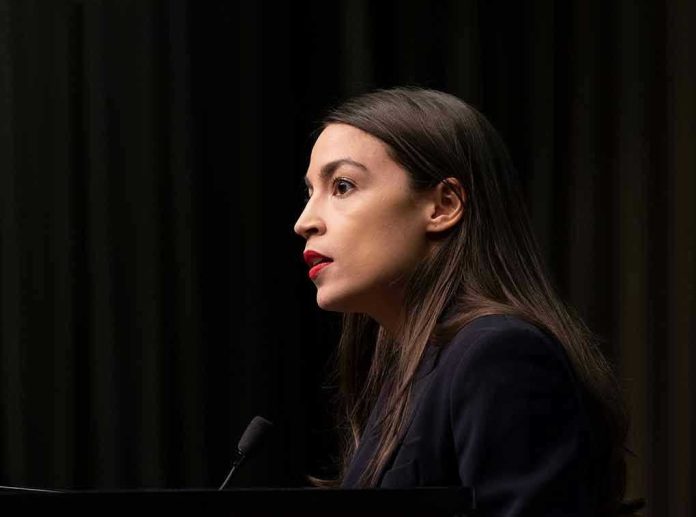
Representative Alexandria Ocasio-Cortez emerged from a classified Capitol Hill briefing with rare public fury, describing the session with Defense Secretary Pete Hegseth and Senator Marco Rubio as utterly devoid of substance. Her raw reaction, captured on video just hours after the meeting, revealed frustration that transcended typical partisan disagreements. The briefing concerned U.S. military boat strikes near Venezuela that have escalated dramatically under the Trump administration.
The strikes began September 2, 2025, when U.S. forces destroyed a boat near Venezuelan waters, killing most aboard and leaving two survivors clinging to an overturned vessel. What happened next has become the center of congressional scrutiny: a second strike targeted those survivors despite their apparent surrender signals. Pentagon officials initially dismissed reports as “completely false” before later confirming the operations through social media posts showing boats engulfed in flames.
Military Operations Under Legal Scrutiny
The campaign has destroyed more than 20 boats and killed at least 95 people in what the administration frames as counter-narcotics operations. Admiral Frank “Mitch” Bradley, who ordered the second strike, privately acknowledged to Congress that the survivors posed minimal threat. They were waving signals, had no backup communications, and were unlikely to successfully overturn their damaged vessel. These admissions directly contradict earlier administration claims that survivors were “trying to stay in the fight.”
Michael Schmitt, former Air Force lawyer and U.S. Naval War College emeritus professor, declares the strikes illegal under Pentagon war manuals. “They’re shipwrecked,” Schmitt states, explaining that laws of war prohibit firing on powerless survivors regardless of potential rescue scenarios. This expert analysis challenges the administration’s shifting rationales and raises serious questions about command decisions in the field.
Congressional Oversight Meets Executive Resistance
Hegseth refuses to publicly release video footage of the September 2 strike, despite mounting congressional pressure. The Senate Armed Services Committee has inserted language into the annual military policy bill mandating transparency, but the administration maintains operational security concerns. Closed briefings continue, yet lawmakers report receiving minimal actionable intelligence about the broader campaign’s objectives and legal justifications.
The power struggle reflects deeper tensions between executive authority and congressional oversight in military operations. Anonymous sources within the briefings highlight internal disagreements about information sharing, while social media leaks from the Pentagon itself contradict official secrecy claims. President Trump defends the strikes as necessary against drug trafficking threats, but legal experts argue humanitarian law doesn’t recognize such exceptions for shipwrecked individuals.
Sources:
Hegseth and Rubio are expected back on Capitol Hill as questions mount over boat strikes
Senate Armed Services Committee Event