
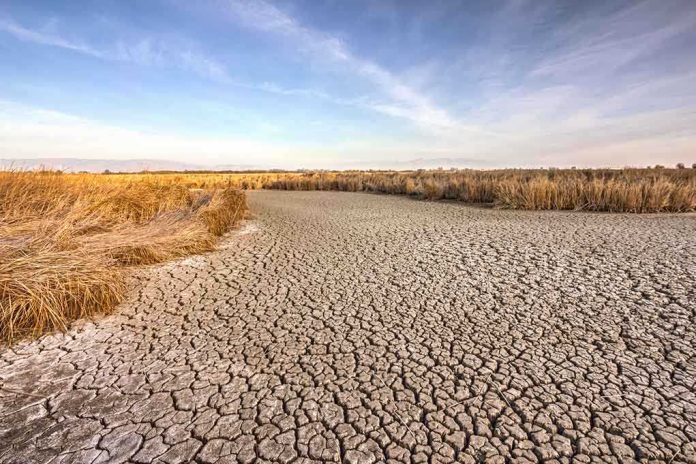
Florida faces its worst drought in fifteen years, with 84 percent of the state parched and water supplies critically depleted—yet many wonder if government agencies could have done more to prepare communities for this crisis.
Story Snapshot
- Over 70 percent of Florida experiencing extreme to exceptional drought conditions, affecting 18.1 million residents
- Rivers drying up and aquifers critically depleted across northern and central regions since September 2025
- Water restrictions imposed statewide as wildfires increase and agricultural crops suffer severe damage
- Forecasts predict worsening conditions through late April before potential slight May improvement
Drought Reaches Critical Levels Across State
Florida confronts its most severe drought since 2012, with approximately 84 percent of the state experiencing drought conditions as of April 2026. Over 70 percent of Florida faces extreme to exceptional drought levels, with northern and central regions hit hardest. The crisis stems from persistent below-average rainfall since September 2025, with many areas receiving less than 50 percent of normal precipitation. St. Petersburg recorded only 7.7 inches of rain compared to the typical 19-inch norm during this period, exemplifying the widespread water deficit.
Natural Factors Compound Water Shortage
A combination of meteorological factors created conditions for this crisis. The absence of tropical storms throughout 2025 eliminated a crucial rainfall source that typically replenishes water supplies. La Niña weather patterns during winter 2025-2026 further intensified dry conditions across the state. A stationary high-pressure ridge has dominated the region since fall 2025, blocking rain systems and maintaining clear skies. By early 2026, 98 percent of Florida experienced unusually dry conditions, which rapidly escalated to severe drought levels affecting 71 percent of the state by April.
Water Management Agencies Impose Restrictions
Florida water management districts responded by implementing mandatory water restrictions affecting residential and commercial users. Residents face limitations on lawn watering schedules and car washing activities as authorities work to preserve dwindling supplies. February’s hard freezes compounded agricultural damage, threatening crop irrigation systems already strained by depleted aquifers. The Big Cypress wildfire in February highlighted growing fire risks as vegetation becomes increasingly dry. These government-imposed restrictions impact daily life for millions, raising questions about whether agencies anticipated and adequately planned for such severe conditions.
Ecosystems and Communities Face Mounting Pressures
The Everglades ecosystem shows visible signs of stress as water levels drop dramatically. Northern and central Florida aquifers have reached critically low levels, requiring weeks or months of sustained rainfall to recharge properly. University of Florida geography professor Esther Mullens noted the rapid deterioration, explaining that severe drought conditions jumped from 4 percent coverage three months prior to 71 percent by mid-April. Drought experts warn that even with forecasted slight improvement in May as the high-pressure ridge shifts eastward, full recovery likely requires a tropical storm. March 2026 ranked as the 41st driest March since 1895.
Economic impacts extend across multiple sectors, from agriculture facing irrigation challenges to tourism affected by wildfire risks and degraded natural attractions. While this drought remains less severe than the historic 2000-2001 event, it rivals 2012 conditions in extent and intensity. The combination of natural weather variability with potential climate influences underscores vulnerabilities in water infrastructure and planning. Americans across the political spectrum increasingly recognize that government agencies must prioritize resilient infrastructure and transparent resource management over bureaucratic inertia if communities are to weather future environmental challenges effectively.
Sources:
Florida is facing its most intense drought in 15 years
Drought Parches Florida – NASA Earth Observatory
Florida Drought Conditions and Forecasts – Drought.gov