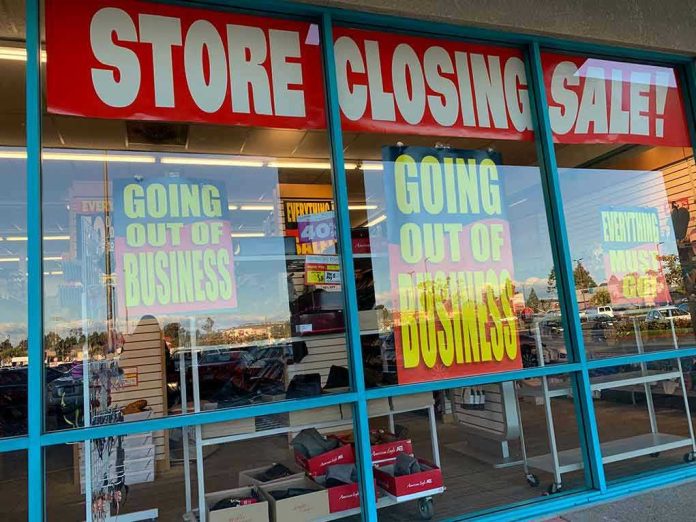
An 88-year-old American institution just vanished overnight, and nobody filed for bankruptcy—a stark reminder that longevity means nothing when the market shifts beneath your feet.
Quick Take
- K&W Cafeteria closed all locations effective December 1, 2025, ending nearly nine decades of continuous operation without bankruptcy proceedings
- The closure eliminated approximately 300 jobs across the entire chain in a single day with no transition period
- Casual dining chains face systemic oversupply and a customer base eroding due to economic pressure and reduced disposable income
- Multiple established chains contracted simultaneously in 2024-2025, signaling industry-wide structural problems rather than isolated company failures
When Legacy Meets Market Reality
K&W Cafeteria’s sudden shutdown represents more than a single restaurant failure. The chain operated for 88 years, weathering the Great Depression, multiple recessions, and seismic shifts in American dining preferences. Yet none of that history mattered when December 1st arrived. All locations closed immediately, doors locked, employees notified they no longer had jobs. The absence of bankruptcy filings makes this closure particularly striking—this wasn’t a slow financial deterioration ending in court proceedings. This was a deliberate decision to cease operations entirely.
The Casual Dining Squeeze
K&W’s collapse didn’t occur in isolation. The casual dining sector faces a crushing vice: customers with shrinking disposable income are abandoning these establishments precisely when restaurants need them most. Families that once made weekly visits to affordable sit-down restaurants now cook at home or opt for cheaper fast-casual alternatives. Meanwhile, restaurants raised menu prices to offset operational costs, pricing out the very demographic they depend on. This dynamic particularly devastates cafeteria-style concepts like K&W, which built their entire business model on value and accessibility. When you can’t compete on price and your customer base is broke, the math stops working.
A Pattern, Not an Anomaly
K&W represents the latest casualty in a broader industry contraction. Uno’s, another 88-year-old chain, closed more than 25 percent of its locations between 2024 and 2025, shrinking from 53 U.S. restaurants to just 39. Romano’s Macaroni Grill shuttered more than half its locations in a single year, leaving only nine restaurants standing. These aren’t random failures. They reflect a systematic problem: the casual dining industry expanded aggressively after 2020, adding capacity to a market that already suffered from oversupply before the pandemic even began. Too many restaurants chasing too few customers with too little money to spend.
Restaurant Business analyst Jonathan Maze captured the industry’s fundamental challenge: “The industry had too many locations in 2019. The pandemic led to a lot of closures. But the industry has been aggressively opening restaurants since 2020.” This observation reveals the trap casual dining operators created for themselves. Rather than accepting that the market had fundamentally shifted, chains doubled down on expansion, betting they could recapture pre-pandemic traffic levels that never materialized.
The Human Cost Rarely Discussed
Behind K&W’s closure stands approximately 300 employees who discovered their employment ended without warning. These weren’t corporate executives with severance packages and golden parachutes. These were line cooks, servers, dishwashers, and managers whose livelihoods evaporated in a single announcement. The closure provided no transition period, no severance discussion, no time to job hunt while still employed. Loyalty to an 88-year institution provided zero protection against market forces that didn’t care about tenure or tradition.
What Comes Next
K&W’s closure accelerates consolidation in casual dining. Weaker players exit the market while stronger competitors absorb remaining market share. Commercial real estate markets must absorb dozens of suddenly vacant restaurant spaces. Communities that relied on K&W as a dining anchor lose that option. The closure serves as a cautionary precedent for other established chains facing similar pressures—no amount of history guarantees survival when fundamentals deteriorate. The casual dining sector will continue contracting until supply matches the reduced demand from an economically stressed consumer base. K&W simply reached that reckoning point first.
Sources:
The Street: 82-Year-Old Comfort Food Chain Closed Over 25% of Its Restaurants
Rolling Out: K&W Cafeteria Shuts Down After 88 Years