
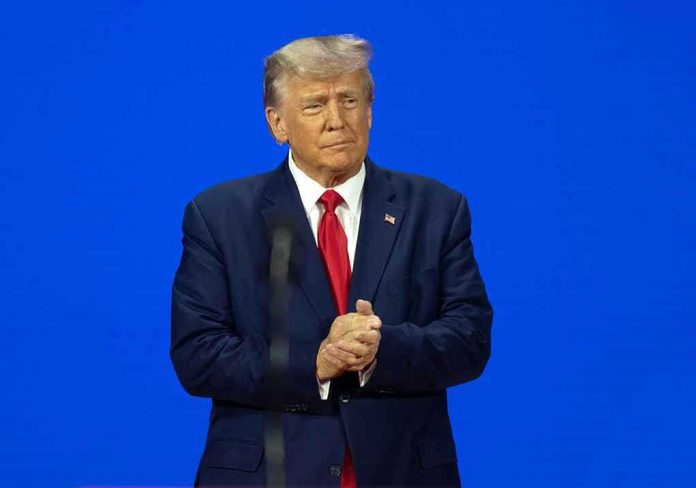
When the president uses dehumanizing language about an entire immigrant community during a cabinet meeting, it signals a fundamental shift in how America’s leadership frames citizenship, belonging, and human worth.
Quick Take
- President Trump called Somali immigrants “garbage” and said they “come from Hell” during a December 2, 2025 cabinet meeting at the White House
- The remarks targeted both the Somali immigrant community in Minnesota and Representative Ilhan Omar, whom Trump called “a real terrible person”
- Trump’s statements occurred within the context of reported fraud scandals involving Somali refugees and planned ICE enforcement actions affecting hundreds of individuals
- The inflammatory rhetoric represents an escalation in presidential language directed at specific immigrant communities and political opponents
The Cabinet Room Statement That Changed the Conversation
During what was described as a final 2025 cabinet meeting at the White House, President Donald Trump responded to questions about Minnesota Governor Tim Walz and reported fraud involving Somali refugees by launching into a broader critique of the Somali immigrant community itself. Trump characterized Governor Walz as “a grossly incompetent man” before pivoting to describe Somali immigrants as individuals who “ripped off that state for billions of dollars, billions every year.” The president claimed an 88 percent welfare dependency rate among this population and stated directly, “I don’t want them in our country.”
What distinguishes these remarks from typical political criticism is their dehumanizing quality. Trump didn’t limit his critique to specific criminal behavior or policy failures. Instead, he applied categorical language that stripped an entire ethnic and religious community of individual identity and agency. This rhetorical move transforms a policy debate into something far more personal and divisive.
When Rhetoric Becomes Policy Direction
The timing of Trump’s statements matters considerably. They arrived not as isolated commentary but as apparent prelude to coordinated enforcement action. The research topic references ICE planning “hundreds of arrests,” suggesting these inflammatory remarks serve as political cover for large-scale immigration enforcement operations targeting the Somali community specifically. Presidential rhetoric at this scale rarely emerges without corresponding policy machinery preparing to act.
Trump’s specific characterization of Representative Ilhan Omar, calling her “garbage” and directing her to “go back to where they came from and fix it”, demonstrates how these statements function simultaneously as community targeting and political attack. Omar, a sitting member of Congress representing Minnesota’s Fifth District, becomes both a symbol of immigrant integration and a convenient political opponent.
The Minnesota Context That Matters
Minnesota hosts one of America’s largest Somali diaspora communities, a population that began significant settlement following the Somali Civil War in the 1990s. This community has developed networks, businesses, and institutional presence over three decades. Yet Trump’s framing suggests none of this integration matters when fraud scandals emerge within any segment of the population.
The reported fraud involving Somali refugees—which Trump cited as justification for his broader condemnation—deserves serious examination and appropriate enforcement. Fraud is fraud regardless of perpetrator ethnicity. However, the logical flaw in Trump’s argument becomes apparent: criminal behavior by some members of an ethnic community does not justify categorical dehumanization of that entire community. By that standard, no demographic group in America could survive scrutiny.
What Dehumanizing Language Signals
Political scientists and historians recognize that dehumanizing language—describing groups as “garbage” or as coming from “Hell”—historically precedes escalated state action against those communities. When leaders strip groups of human dignity through language, they create rhetorical permission for harsher treatment and reduced legal protections. The ICE enforcement actions mentioned in this story don’t emerge in a vacuum; they follow and are justified by this presidential framing.
For the Somali community in Minnesota, these statements carry practical consequences. They increase social vulnerability, create permission for discrimination, and signal that federal enforcement will prioritize this community regardless of individual circumstances or contributions. They also affect how other Americans perceive their Somali neighbors, potentially triggering discrimination in employment, housing, and social interaction.