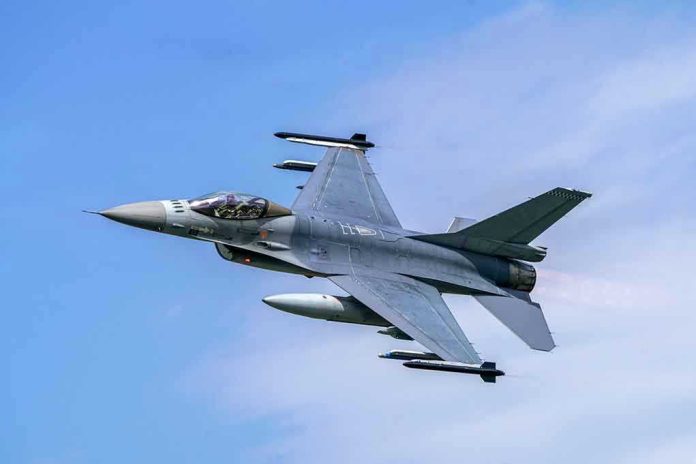
Trump’s unexpected declaration of Venezuela’s airspace as closed challenges international boundaries and raises global eyebrows.
Story Overview
- Trump declared Venezuela’s airspace “closed” on November 29, 2025, escalating U.S.-Venezuela tensions.
- The declaration lacks legal authority under international law, challenging norms of national sovereignty.
- This move is part of Trump’s broader drug interdiction strategy, targeting Venezuelan traffickers.
- Potential military escalation looms as U.S. forces are already active in the region.
U.S.-Venezuela Relations: A Historical Strain
U.S.-Venezuela relations have long been fraught, especially since Hugo Chávez’s rise to power in 1999, which initiated the Bolivarian Revolution. Under Nicolás Maduro’s presidency, the situation worsened as the Trump administration imposed extensive sanctions on Venezuela’s oil industry and government officials. Trump’s latest move to declare Venezuela’s airspace closed adds a new layer of tension, signaling a significant shift in U.S. policy rhetoric and challenging the core principles of national sovereignty.
Trump’s airspace declaration follows a pattern of increased military activity targeting drug trafficking. Since September 2025, U.S. forces have conducted numerous strikes on vessels in the Caribbean and Eastern Pacific, resulting in an estimated 80 deaths. This forceful approach appears part of a broader strategy to combat drug smuggling, with warnings issued to traffickers to cease operations. However, the declaration’s legality remains questionable, raising concerns about the precedent it sets for international relations.
Legal and Strategic Implications
The declaration challenges established norms under the Chicago Convention on International Civil Aviation, which grants nations sovereignty over their airspace. With no legal basis, Trump’s move is unprecedented, amplifying geopolitical tensions. The U.S. military’s substantial presence in the region suggests readiness for potential enforcement, though the actual implementation and Venezuelan response remain uncertain. This situation could mark a turning point in U.S. foreign policy, reflecting a more assertive stance in Latin America.
The potential for military confrontation looms if Venezuela resists the declaration. The asymmetrical power dynamics between the U.S. and Venezuela complicate the situation, with Venezuela’s capacity to respond being a critical factor. The declaration also poses risks to commercial aviation, potentially disrupting regional air travel if enforced. These developments underscore the tension between maintaining national sovereignty and addressing international security concerns.
Broader Impacts and Reactions
The implications of this airspace closure are wide-reaching. For the Venezuelan civilian population, the risk of military escalation is a primary concern. Commercial aviation operators face potential route disruptions, and drug trafficking organizations may adapt their strategies in response to increased enforcement. Regional nations are likely on edge, concerned about spillover effects and the potential destabilization of neighboring countries. The humanitarian impact is also significant, with civilian casualties a real risk in military operations.
Experts are divided on the effectiveness of military-based drug interdiction strategies. While the Trump administration frames the declaration as a national security measure, critics argue it may not address the root causes of drug trafficking. The situation raises questions about the balance between military intervention and diplomatic solutions, as well as the potential long-term consequences for U.S.-Latin America relations.
Sources:
Trump says ‘don’t read anything into it’ when asked about declaring Venezuela’s airspace closed