A former California teacher armed with multiple weapons and an anti-Trump manifesto opened fire at the White House Correspondents’ Dinner, marking the third assassination attempt on President Donald Trump and raising urgent questions about political violence and security screening at America’s most prestigious media gatherings.
Story Snapshot
- Cole Thomas Allen, 31, shot a Secret Service agent outside the Washington Hilton during the annual White House Correspondents’ Dinner on April 25, 2026, while President Trump attended inside
- Allen traveled cross-country by train, booked a hotel room at the venue, and left a manifesto calling Trump a “pedophile, rapist, and traitor” while mocking event security measures
- The suspect faces federal charges including assault on a federal officer and using a firearm during a crime of violence, with terrorism charges anticipated and a potential 20-year sentence
- Allen’s brother reported concerns to Connecticut police, but the warning came too late to prevent the attack, highlighting gaps in threat response systems
- The wounded Secret Service agent survived due to body armor and was released from the hospital; Trump and other attendees remained unharmed inside the ballroom
When Security Theater Meets Deadly Intent
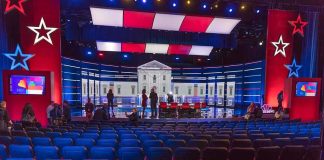
The Washington Hilton has hosted the White House Correspondents’ Association Dinner since 1921, a glittering annual celebration where journalists, politicians, and celebrities mingle in black-tie attire to honor press freedom. Security has always been tight at this high-profile gathering, yet Cole Thomas Allen’s attack exposed vulnerabilities that his own manifesto mockingly predicted. Allen charged the main magnetometer screening checkpoint with guns and knives, opening fire before breaching the ballroom perimeter. That a former teacher with zero criminal history could execute such meticulous planning while family members frantically tried to sound alarms raises disturbing questions about how threats slip through institutional cracks.
The Cross-Country Journey to Violence
Allen’s preparation reveals chilling calculation. He departed Los Angeles by train, traveling through Chicago before arriving in Washington, D.C., one to two days ahead of the April 25 dinner. He secured lodging at the Washington Hilton itself, the very venue hosting his intended targets. Before embarking, he sent messages to family members detailing plans to target Trump administration officials “from highest ranking to lowest.” His brother in New London, Connecticut, alerted local police, but the warning failed to reach federal authorities in time. This breakdown in information sharing between local and federal law enforcement echoes failures seen in previous mass casualty events, where red flags existed but coordination lagged fatally behind intent.
A Manifesto Mocking the System
Allen’s written manifesto drips with contempt for both his targets and the security apparatus meant to stop him. He branded President Trump a pedophile, rapist, and traitor, framing his attack as righteous intervention against corruption. Yet perhaps more telling, he ridiculed the event’s security screening measures, suggesting confidence he could exploit weaknesses. Federal investigators now comb through his writings and electronic devices, searching for co-conspirators or broader networks. Acting Attorney General Todd Blanch confirmed authorities believe Allen acted alone, but the manifesto’s detailed reconnaissance suggests someone willing to study vulnerabilities systematically, not a spontaneous actor driven by impulse.
U.S. Attorney Janine Piro announced charges under federal statutes 924(c) for using a firearm during a violent crime and 111 for assaulting a federal officer with a dangerous weapon. Conviction on the assault charge alone carries up to 20 years imprisonment. Piro indicated additional charges are likely, with terrorism enhancements under active consideration. These potential upgrades matter not just for sentencing severity but for investigative tools, allowing prosecutors to probe financing, communications, and ideological networks with counterterrorism resources. The legal architecture treating this as terrorism rather than mere assault acknowledges the attack’s political motive and its targeting of constitutionally protected government functions.
Trump’s Third Brush with Assassination
In a 60 Minutes interview aired shortly after the incident, President Trump confirmed this marked the third attempt on his life. He downplayed personal fear during the shooting, emphasizing confidence in Secret Service protection. That calm may reflect genuine security trust or political optics, but the frequency of these attempts is historically anomalous. No modern president has faced three assassination plots in such rapid succession. Each incident fuels Trump’s narrative of embattled leadership standing against radical opposition, a story resonating deeply with conservative voters who view media and institutional elites as hostile forces. Whether Allen’s attack emboldens Trump’s base or prompts broader national soul-searching about political rhetoric remains to be seen.
The Secret Service Agent Who Stood the Line
The unnamed Secret Service agent struck by Allen’s gunfire owes his life to a bulletproof vest. Shot in the chest at close range, he absorbed the impact, subdued the attacker with fellow agents, and walked out of the hospital hours later. His survival underscores the value of protective equipment and training, yet also the razor-thin margin separating tragedy from heroism. Had Allen bypassed that checkpoint or had the vest failed, the death toll and national trauma would have eclipsed the current crisis. D.C. Metropolitan Police confirmed the agent sustained non-life-threatening injuries, a clinical description that belies the violence of being shot while protecting constitutional governance and press freedom.
Allen’s Monday court appearance in federal district court in Washington, D.C., offers the first public glimpse of the suspect beyond investigative leaks and manifesto excerpts. Observers will scrutinize his demeanor, legal representation, and any statements for clues about mental state, ideology, or remorse. Simultaneously, the White House press briefing provides the administration’s official response, framing the incident within broader security and political contexts. This dual spectacle of courtroom procedure and executive messaging encapsulates the collision of justice, media, and governance that defines modern American crises. For conservatives, the episode reinforces concerns about left-wing political violence targeting elected leaders, though Allen’s precise ideological affiliations remain under investigation pending full manifesto release and background vetting.
Sources:
White House Live Press Briefing